
When I think about the culture of Thailand , there is something that seems especially interesting to me: it is impossible to reduce it to golden temples, paradisiacal beaches and spicy food. Thailand has a much more complex cultural identity, built from Theravada Buddhism, local traditions, influences from India, China and other peoples of Southeast Asia, family customs and enormous regional diversity.
Furthermore, the more I research about the country, the more evident it becomes to me that many customs that from the outside seem simply “exotic” have a fairly deep logic behind them. The greeting wai , the importance of family, the way of entering a temple, respect for elders or even the way of eating are part of a coherent cultural system.
And that is precisely what I want to explain here: what the culture of Thailand is like , what its main traditions are, what role Buddhism plays, what it eats, what its festivities are like and what customs it is worth knowing to better understand Thai society.
What is the culture of Thailand like?
Thai culture is the result of centuries of exchanges between different peoples and traditions. Current culture has received Indian, Chinese, Laotian, Burmese and Cambodian influences, among others.
Something that I think is essential to understand is that Thailand does not have a completely uniform culture . The cultural experience of Bangkok can be very different from that of Chiang Mai, Isan, Phuket or the far southern provinces.
There are common elements that appear practically throughout the country:
- Theravada Buddhism.
- Respect for the elderly.
- The importance of family.
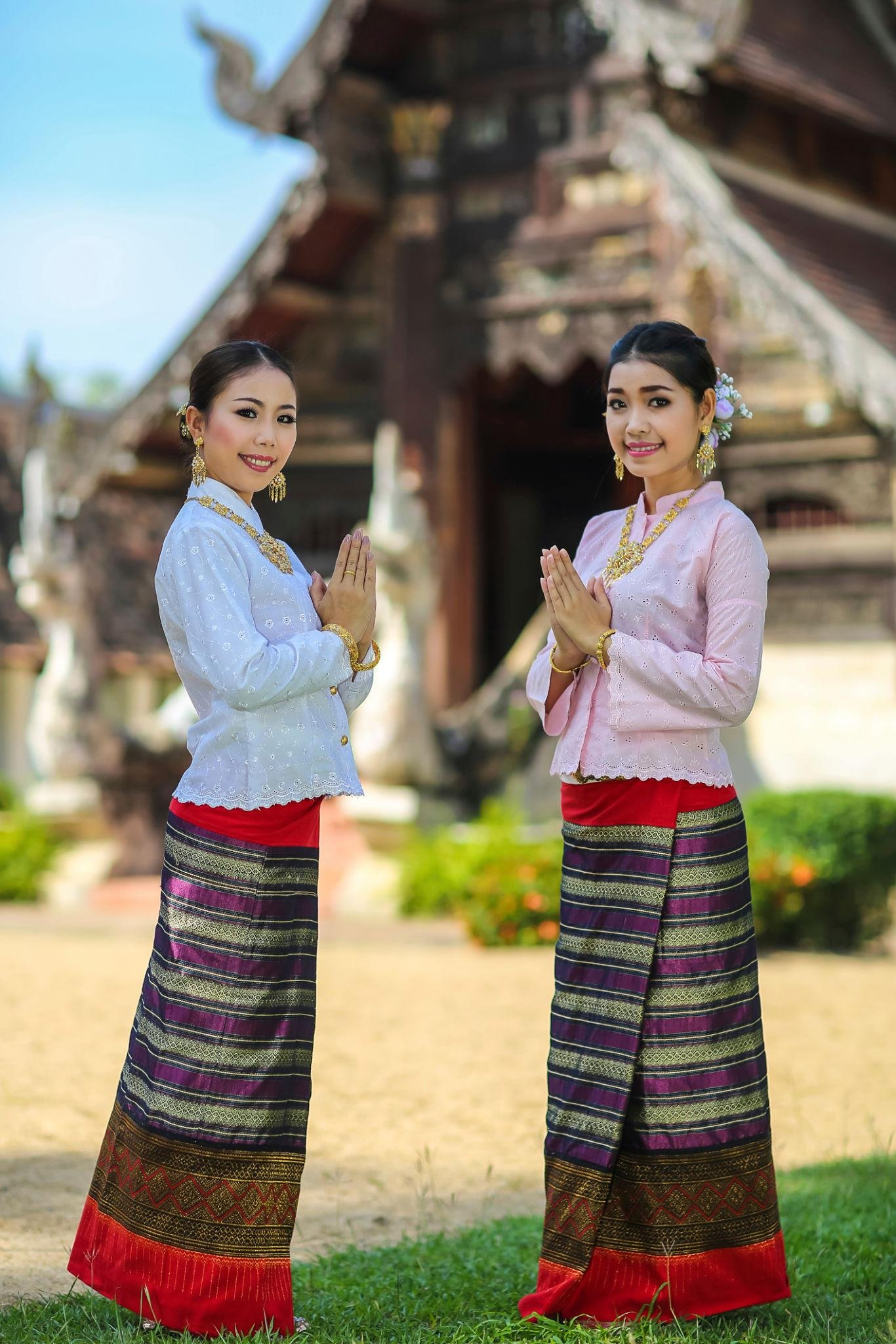
- Greeting wai .
- Gastronomy as part of social life.
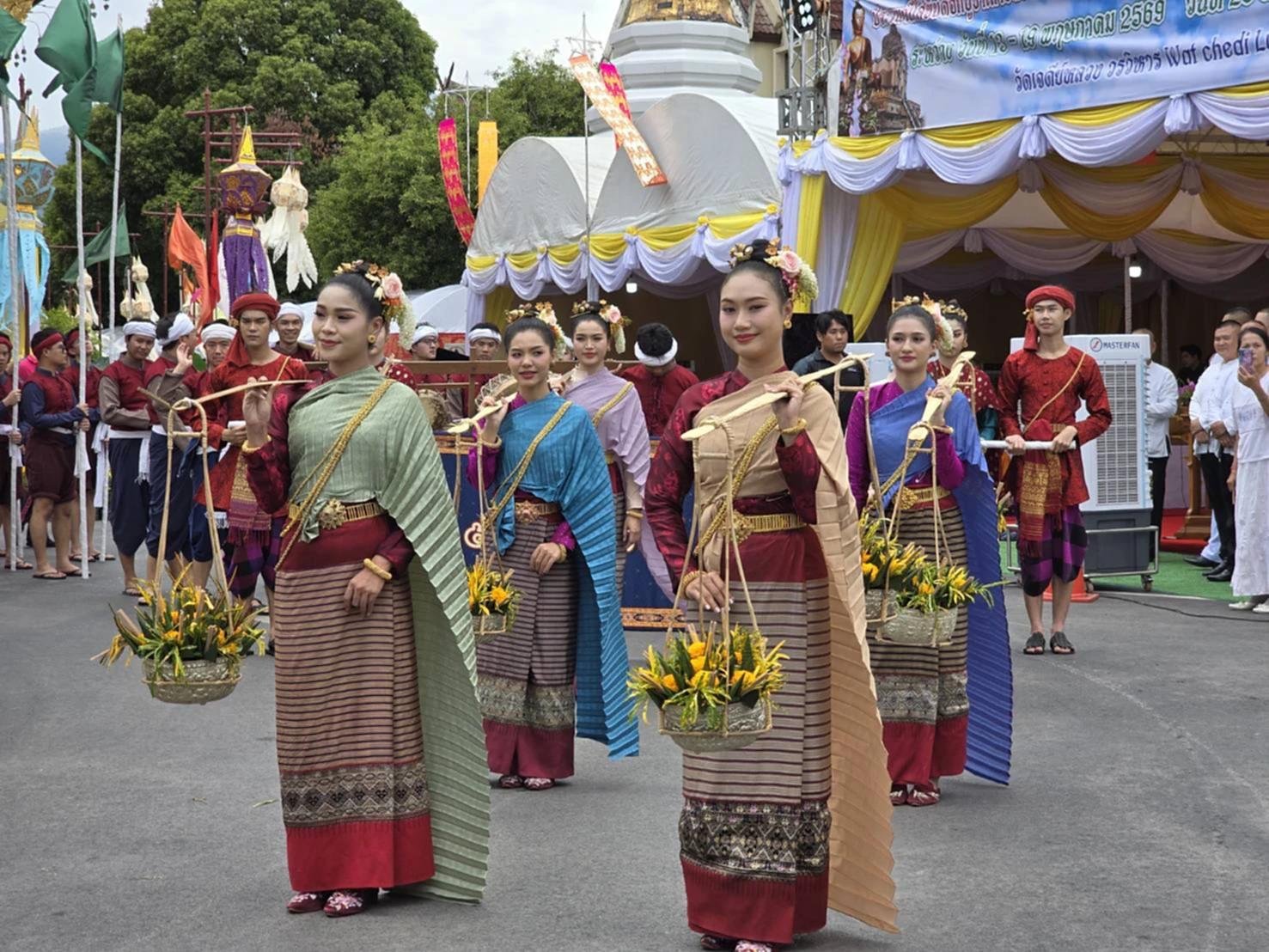
- Traditional festivities.
- Respect for temples and religious images.
- A strong artisan tradition.
- The coexistence between ancient traditions and modern culture.
That’s why when I study Thai culture, I prefer to talk about regional cultures within a common Thai identity .
The cultural diversity of Thailand
One of the most common mistakes when talking about Thailand is imagining that the entire country functions culturally in the same way.
Not so.
The north has a historical identity related to the ancient kingdom of Lanna. The northeast, known as Isan, has a strong cultural and linguistic connection with Laos. Bangkok represents a much more urban and globalized society, while the south presents much more visible Malay and Muslim influences.
There are also different ethnic and linguistic communities.
The Thai Government’s own official website points out that, although Thai is the national language, there are important regional differences in pronunciation and vocabulary, including northern, northeastern and southern varieties.
This is something I like to highlight because it helps avoid an overly simplified view of the country.
Northern Thailand
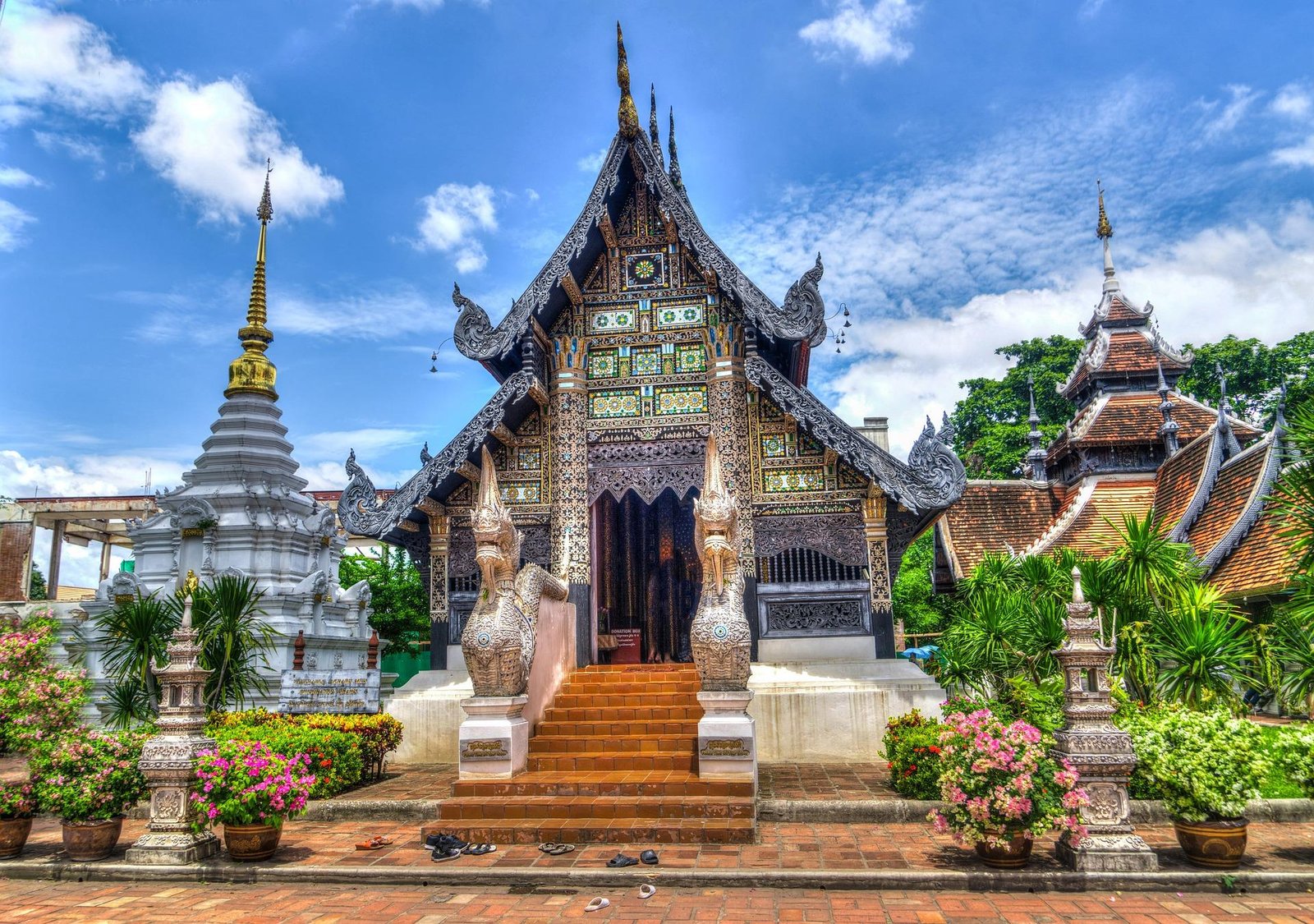
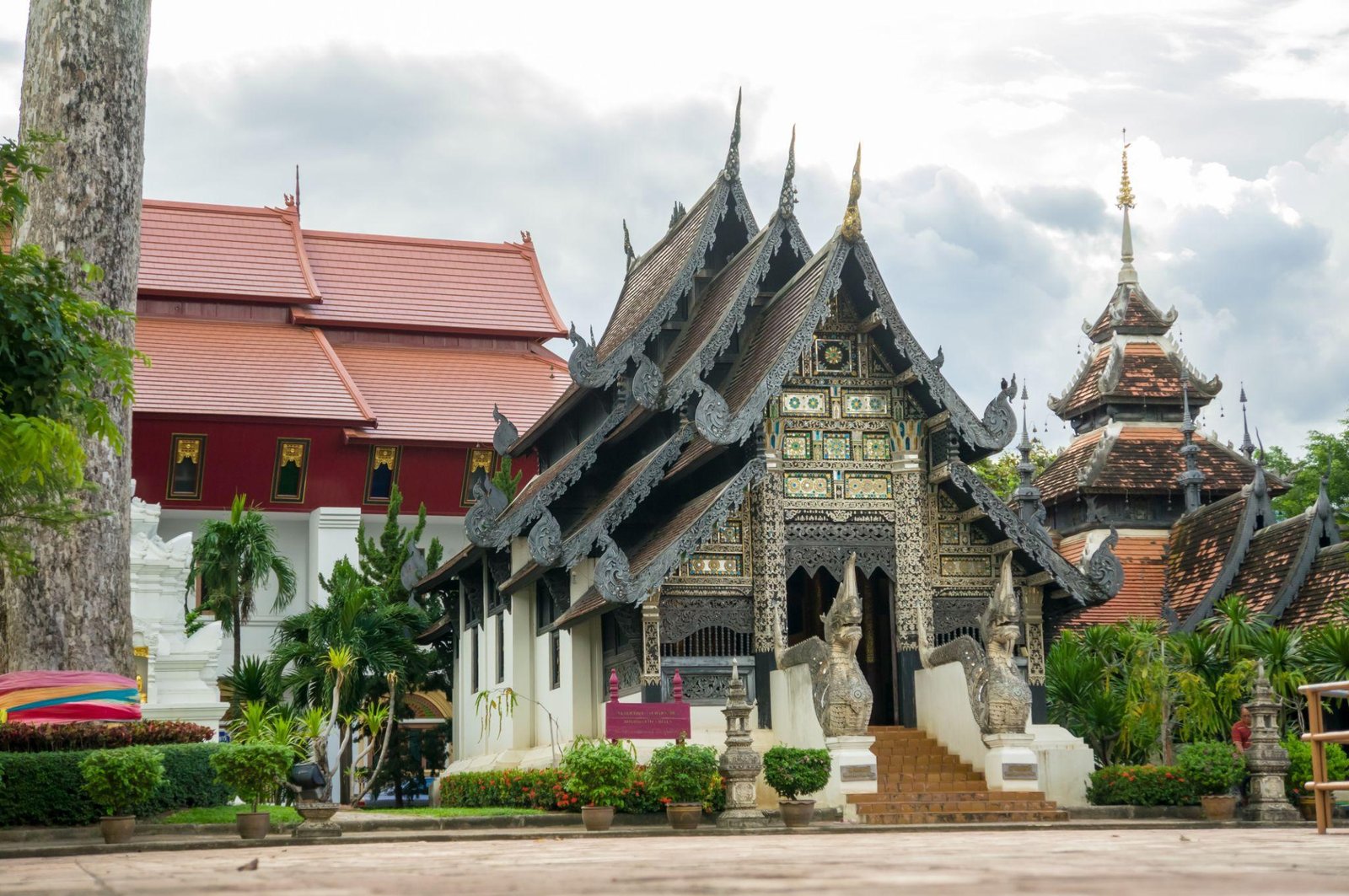
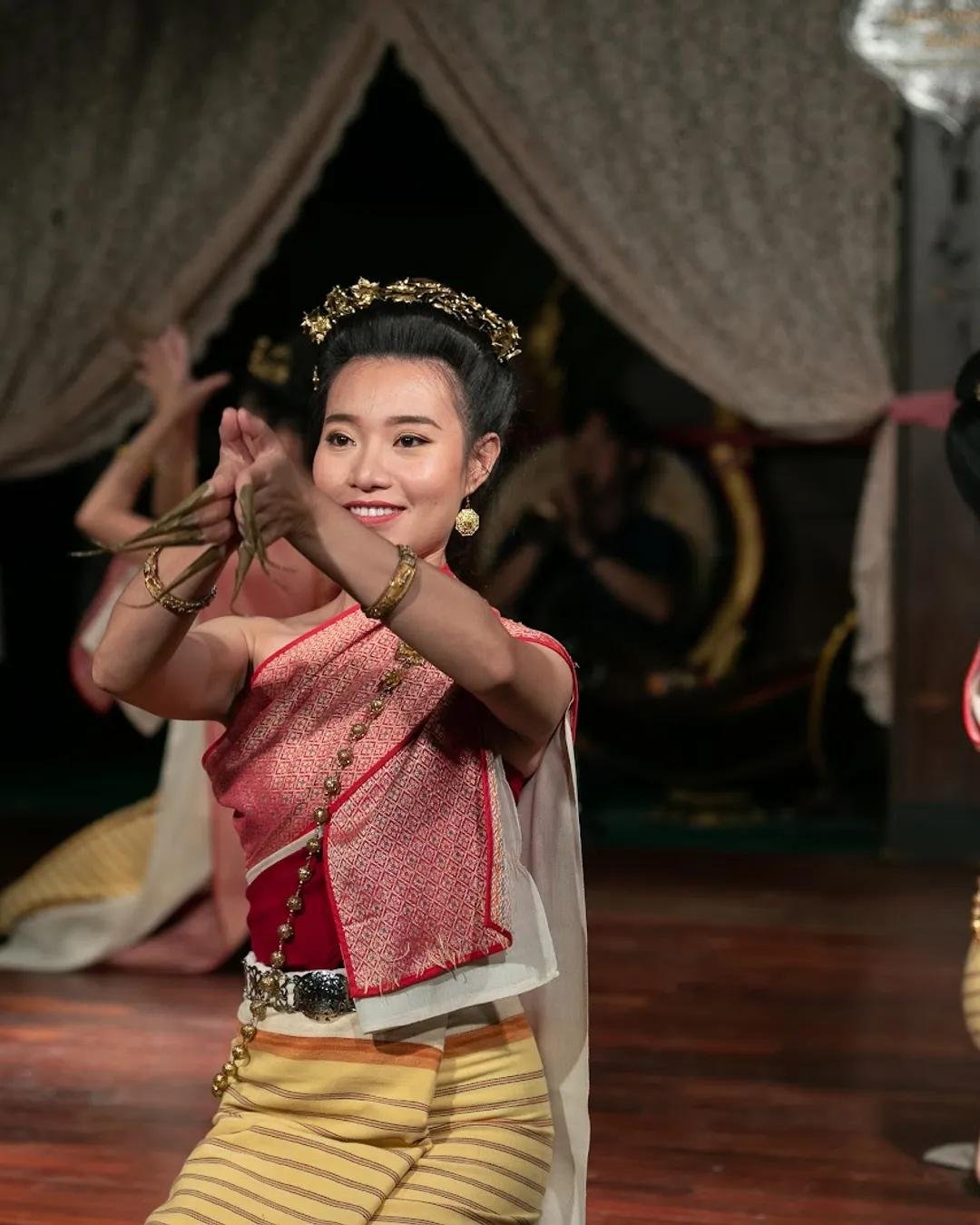
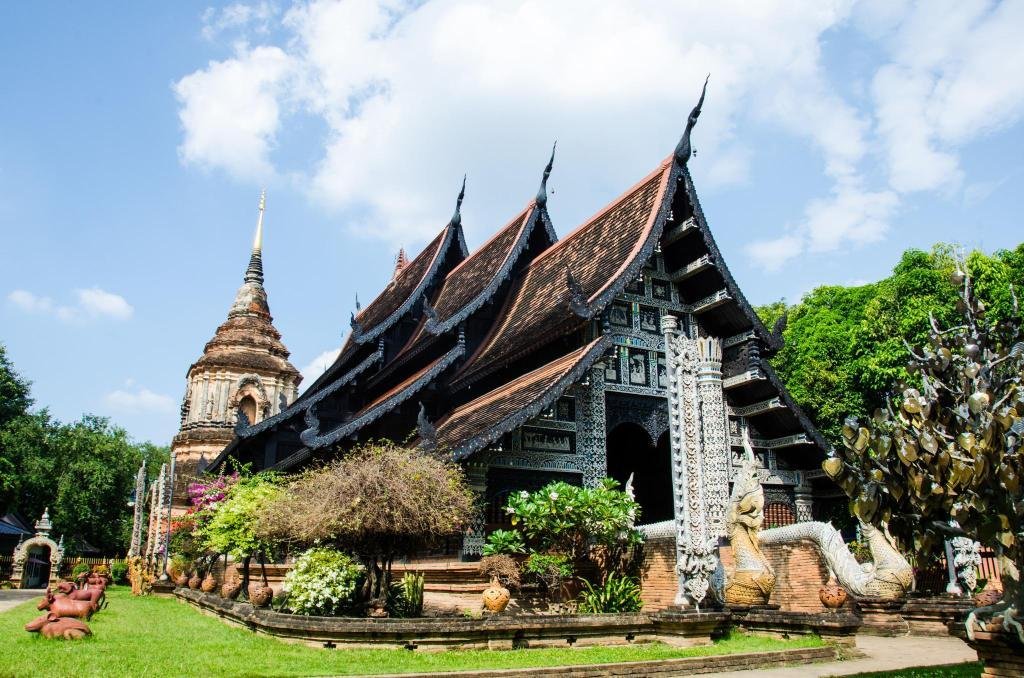
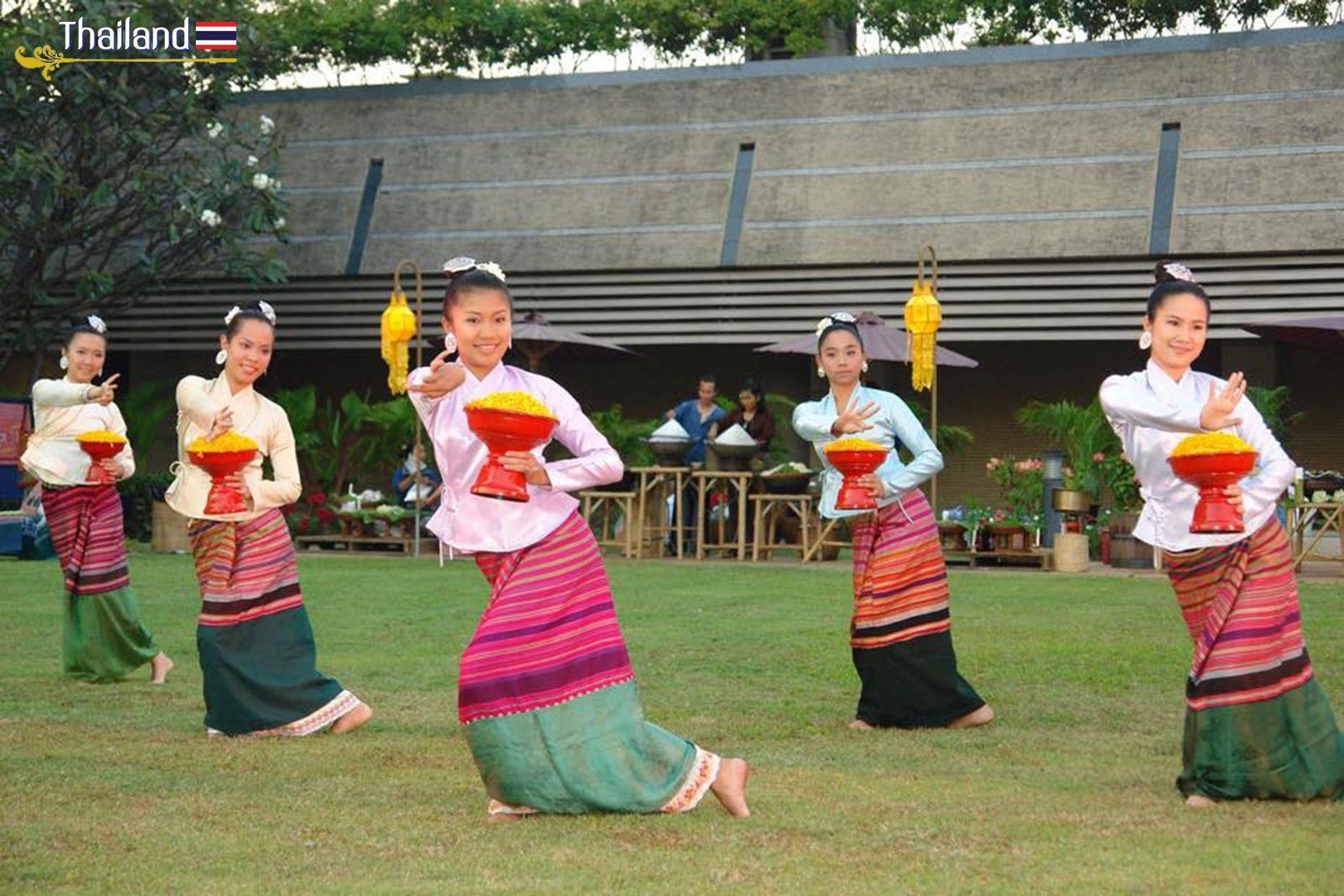
In the north we find the Lanna heritage, especially visible in:
- Temple architecture.
- Crafts.
- Music.
- Holidays.
- Gastronomy.
- Ways of speaking.
- Community traditions.
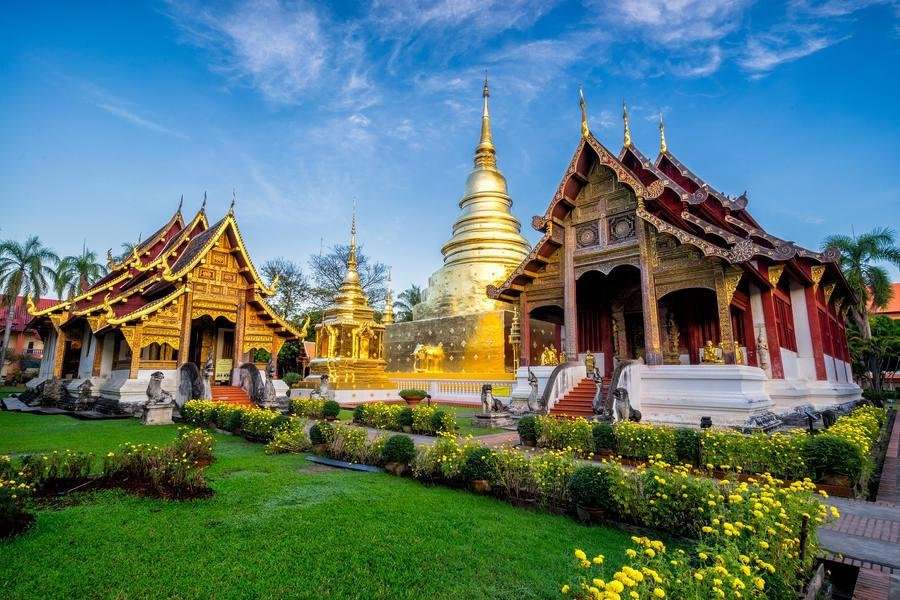
Chiang Mai is probably one of the best examples of this cultural identity.
Isan: the identity of the northeast
The Isan region has a very strong cultural personality and maintains strong historical and cultural connections with Laos.
Here they stand out especially:
- The music mor lam.
- Spicy gastronomy.
- Rural traditions.
- Local festivities.
- Laotian linguistic influences.
- Agricultural communities.
If one wants to truly understand the diversity of Thai culture, Isan is a region that should not go unnoticed.
Southern Thailand
The south also has particular characteristics. In some provinces there is a significant Muslim population and Malay cultural influences can be seen.
This shows again that being Thai does not mean belonging to a single cultural tradition .
Buddhism in the culture of Thailand
If I had to choose one element to explain Thai society, I would probably choose Theravada Buddhism .
The majority of the Thai population practices Theravada Buddhism, although Thailand also recognizes and hosts Muslim, Christian, Hindu, and Sikh communities. According to official data cited by the Government of Thailand, Buddhism represents the vast majority of the population.
But here’s something important: Buddhism is not limited to entering a temple and praying .
Their values have influenced everyday behaviors, festivities, family ceremonies and ways of relating.
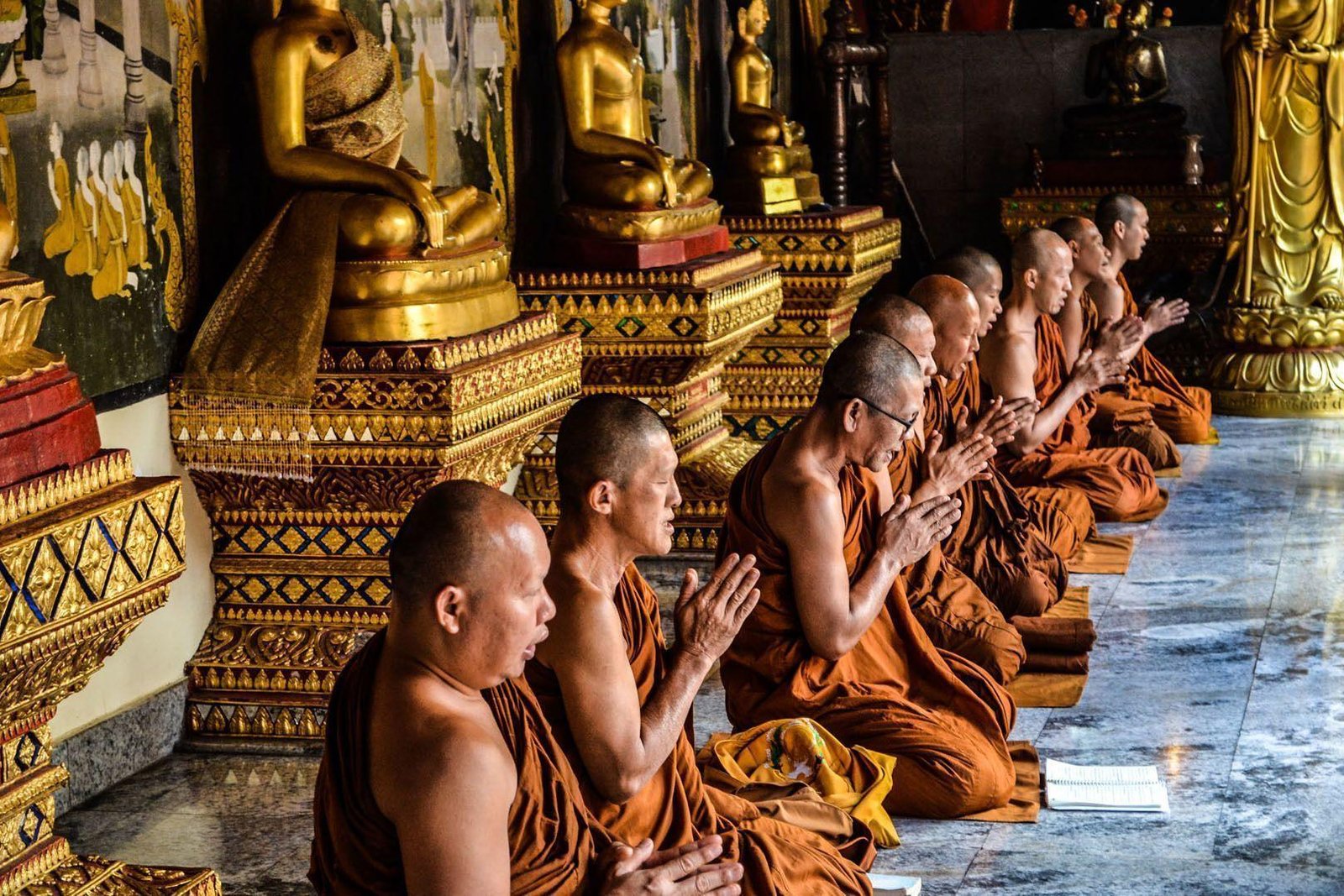
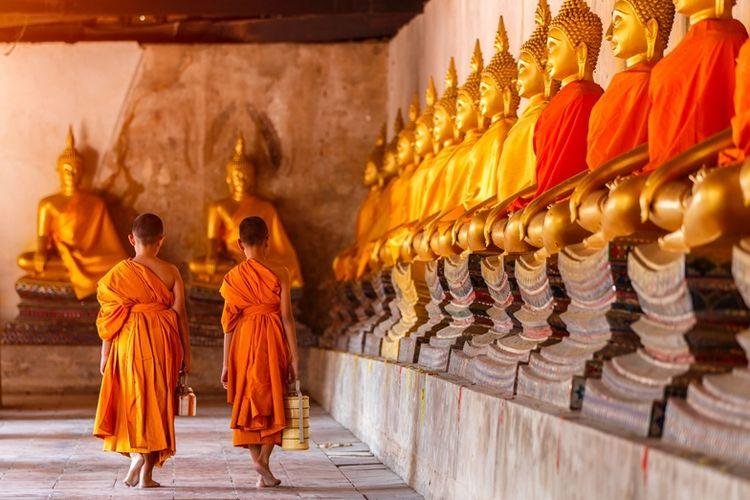
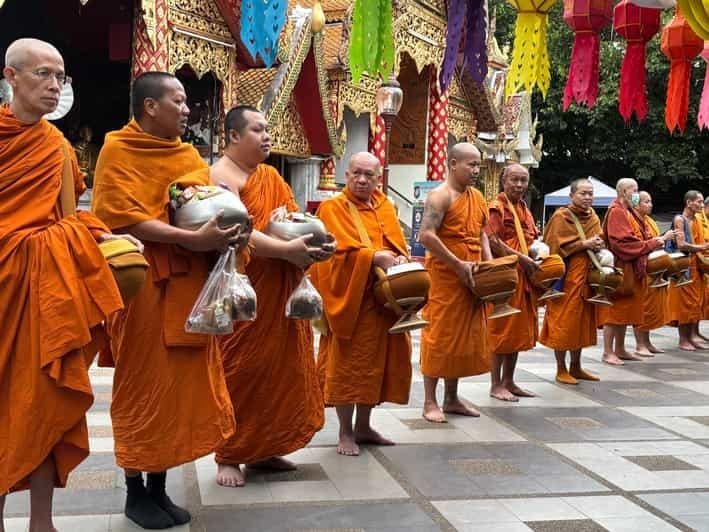
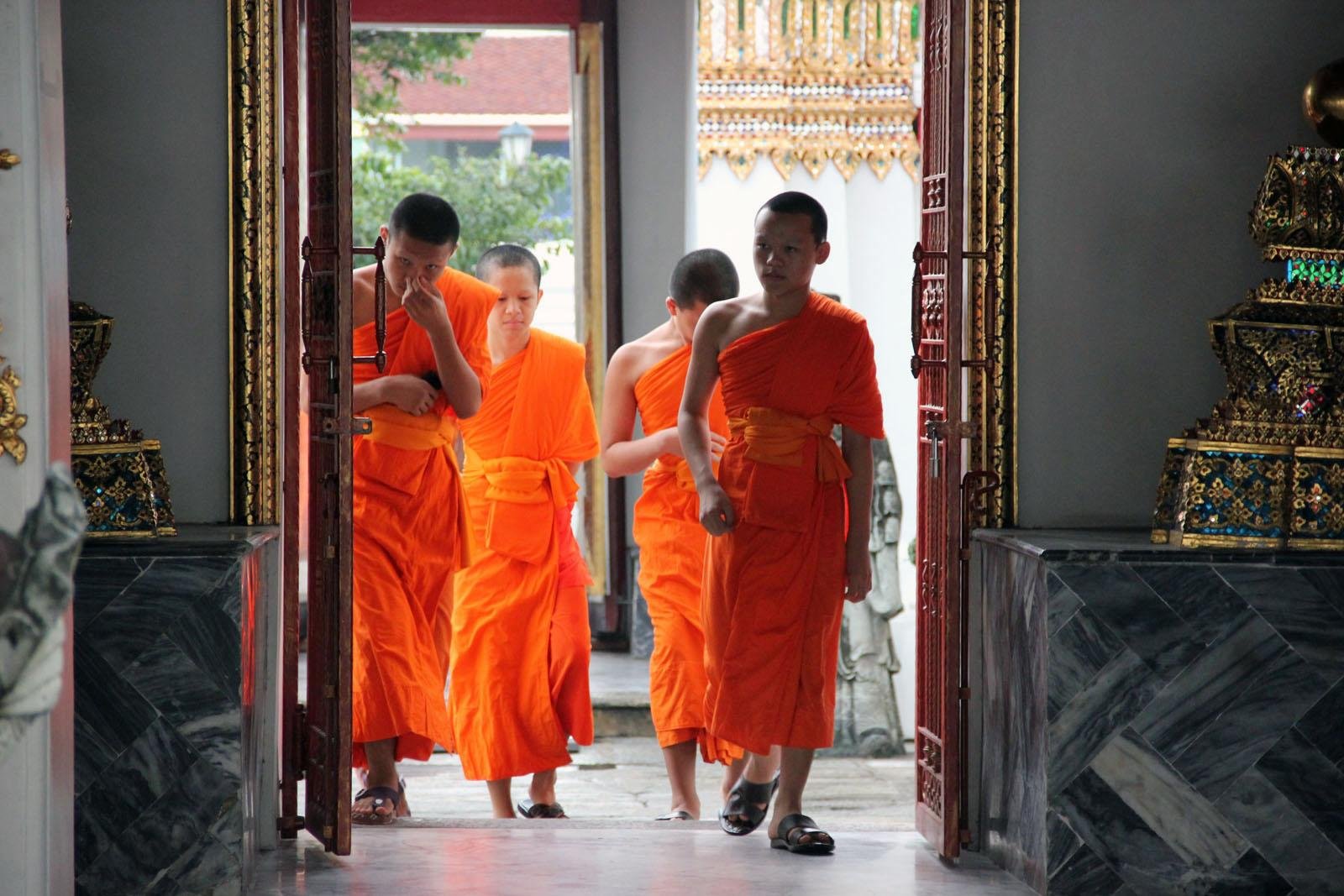
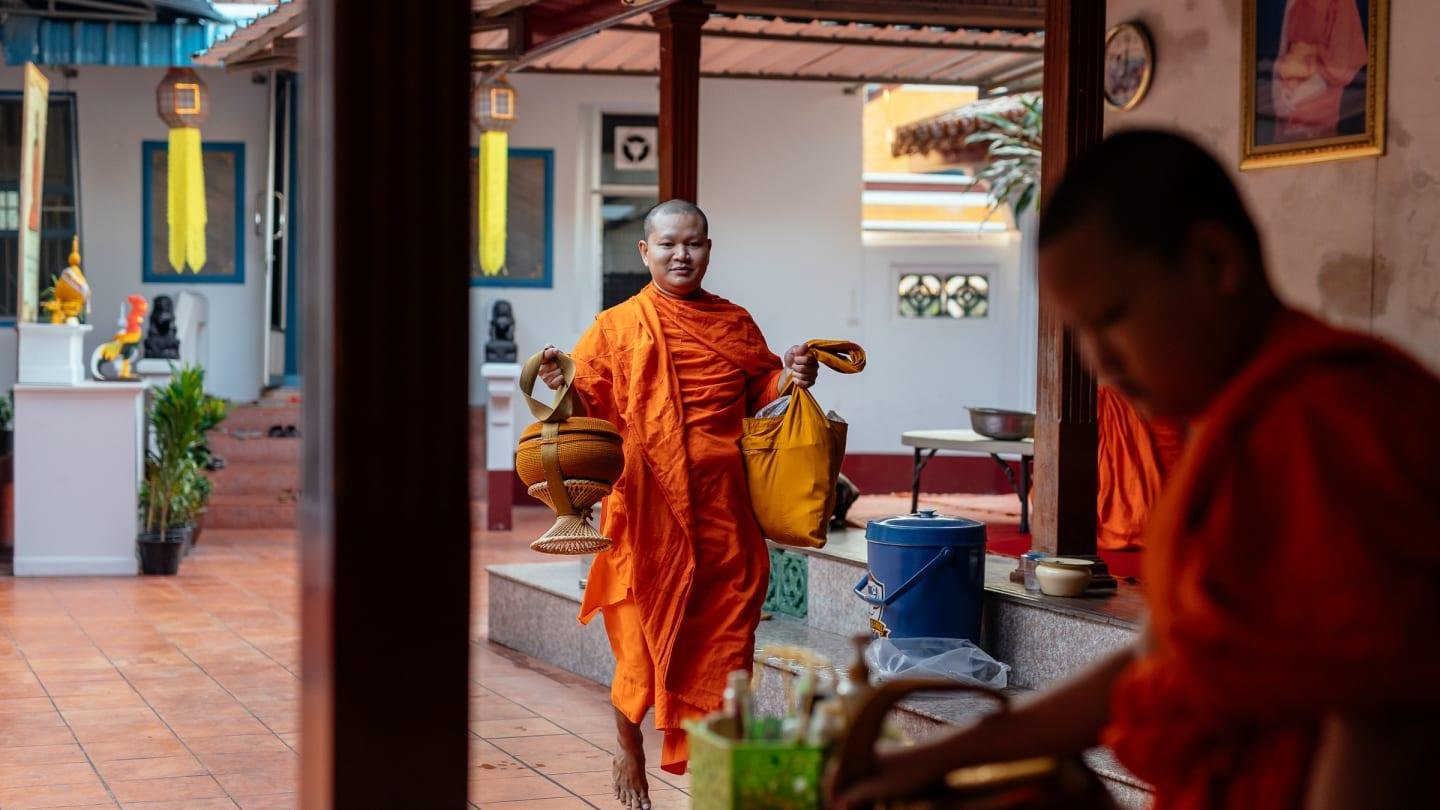
The temples, known as wat , function as religious and cultural spaces. Many are also monasteries where monks live.
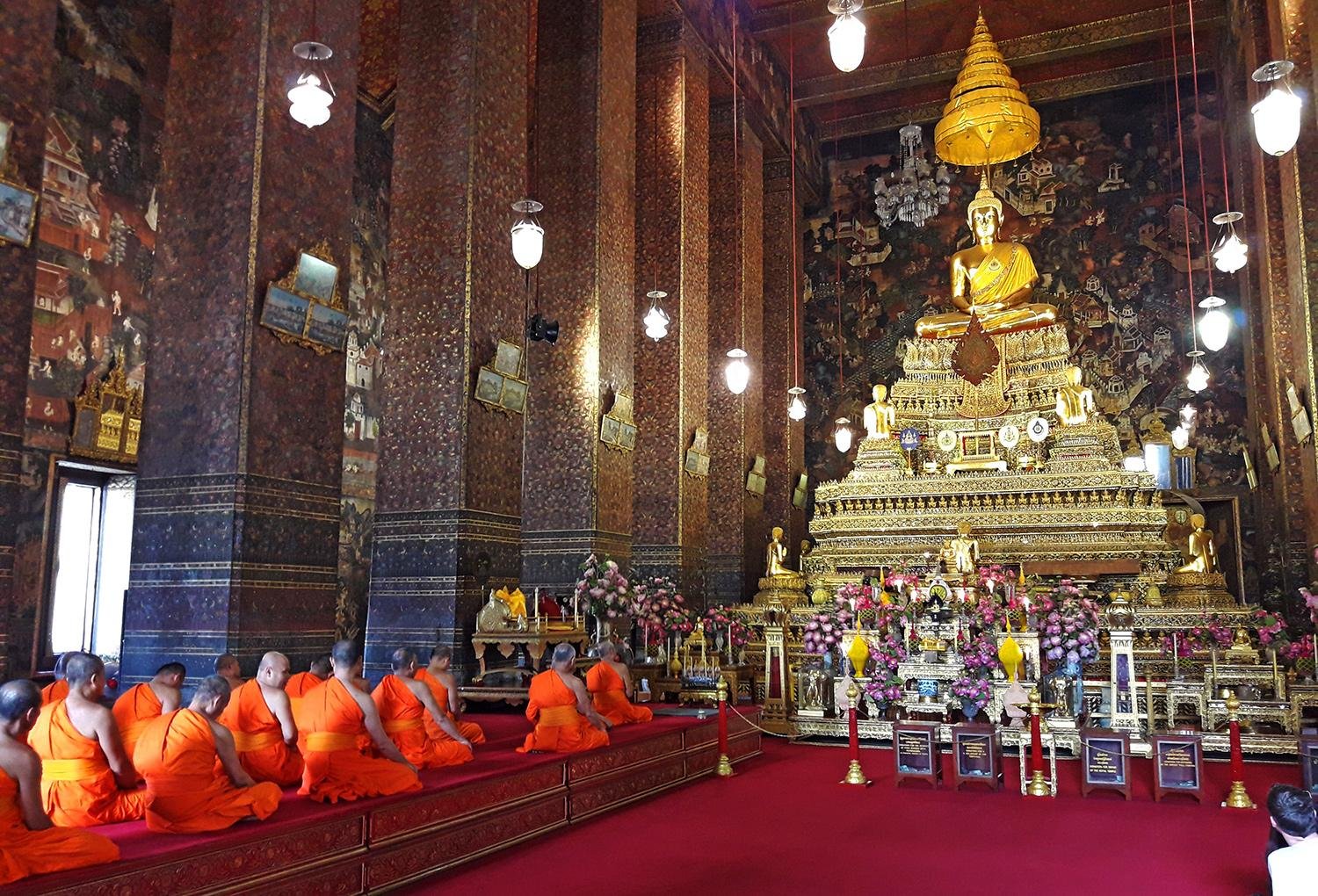
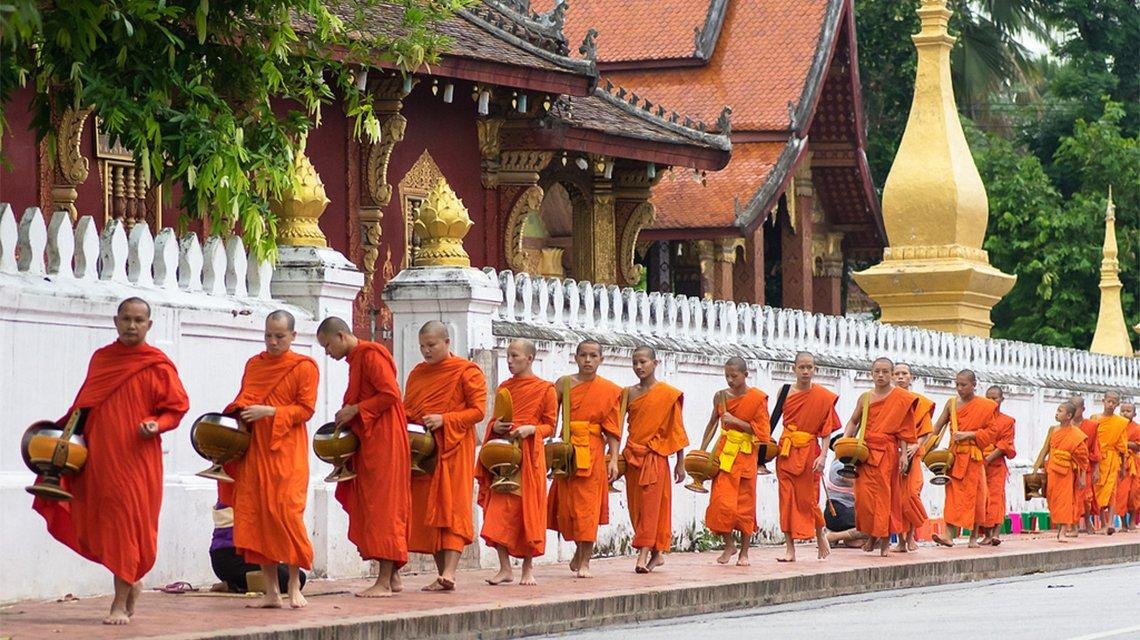
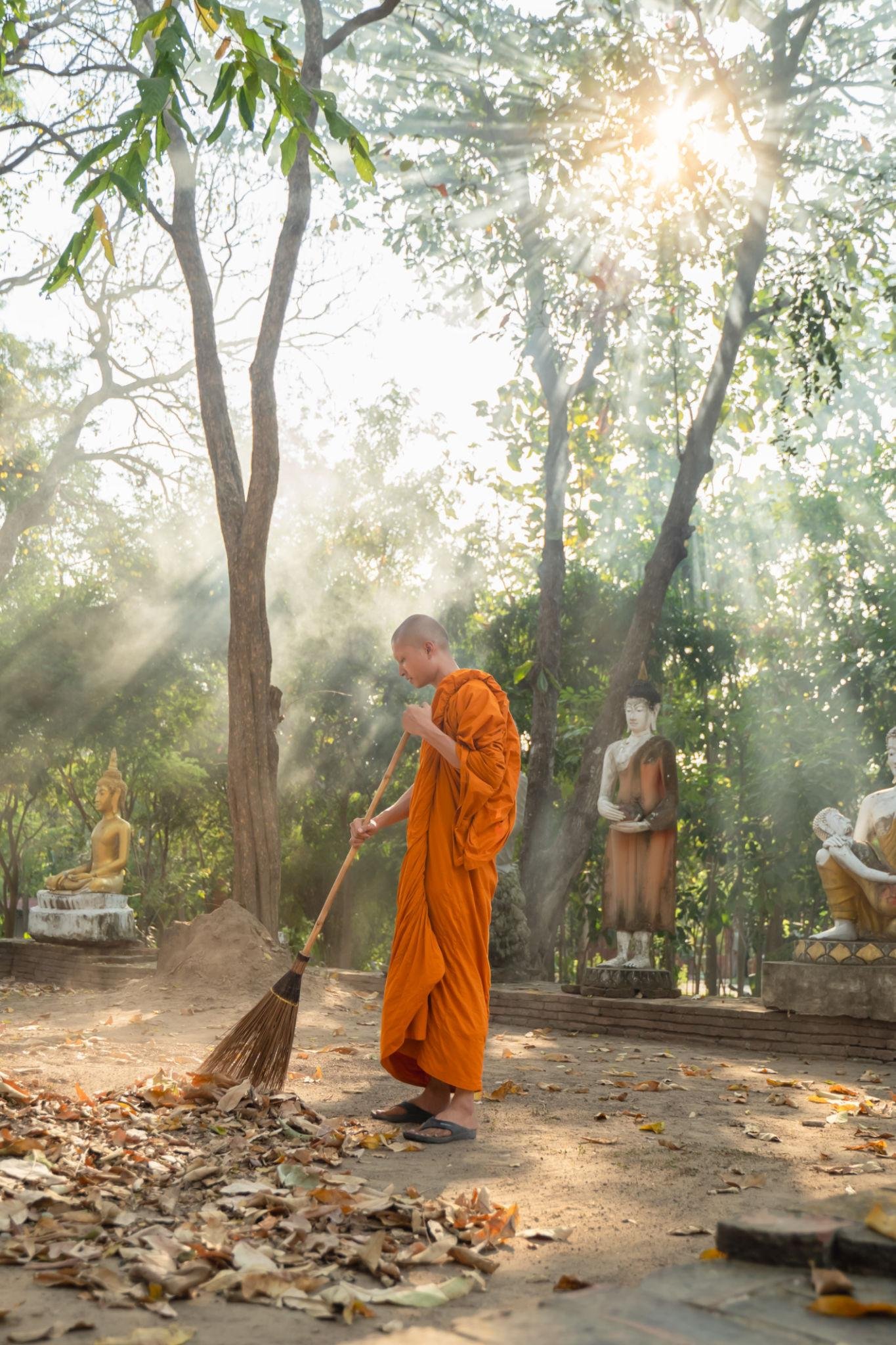
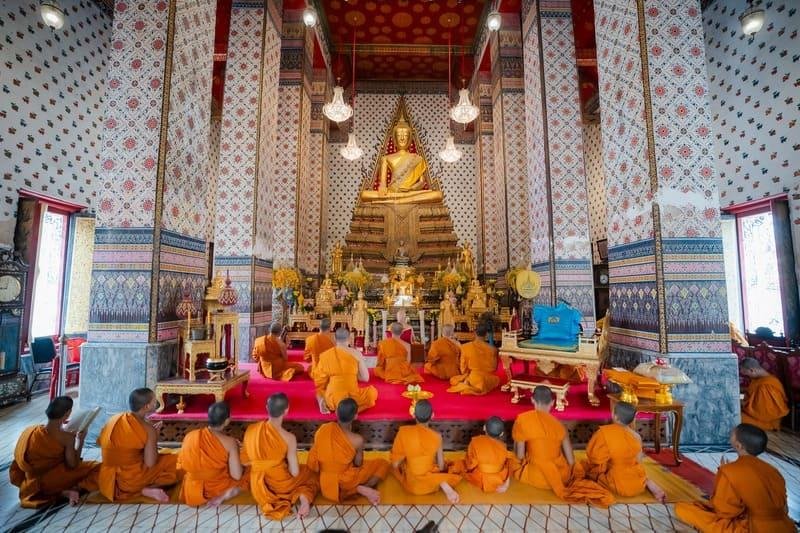
What does it mean to make merit in Thailand?
A practice that frequently appears in religious life is the realization of merits, known in the Buddhist context as tham bun .
May include:
- Donations.
- Give food to monks.
- Participate in ceremonies.
- Help other people.
- Make offerings.
- Participate in temple activities.
The idea of generating merit connects religious practice with daily and community life.
Respect in Thai culture
Here we come to one of the parts that I consider most useful for anyone who wants to understand the customs of Thailand .
Respect carries a lot of weight.
It doesn’t mean that Thais are permanently serious or that there is a rigid etiquette for absolutely everything. Rather, there are certain situations in which a person is expected to behave considerately.
The greeting wai
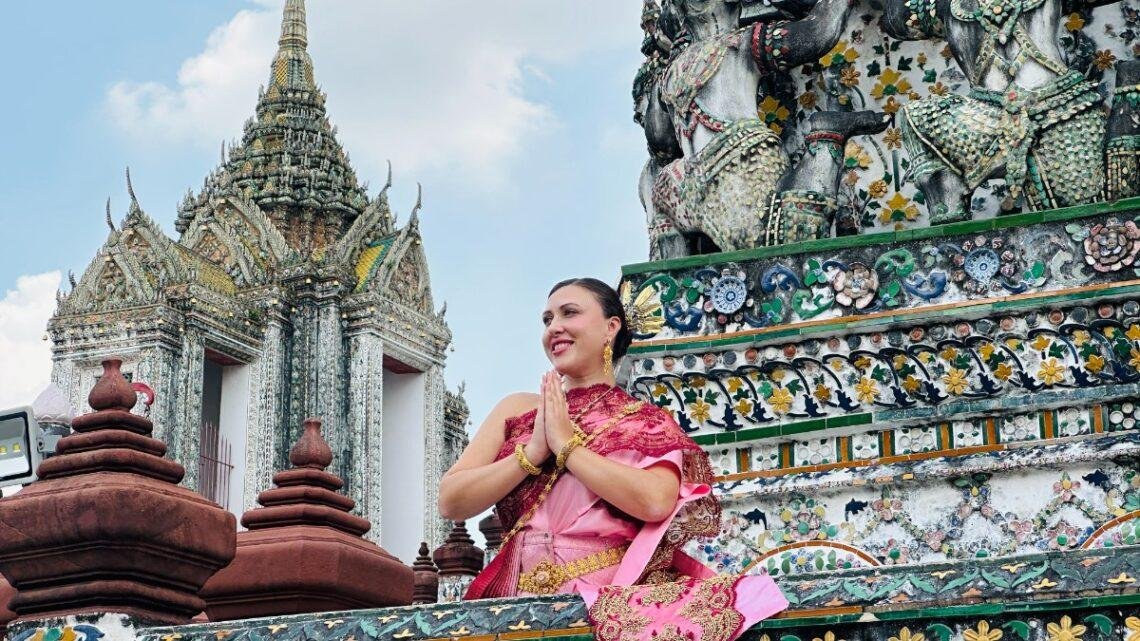
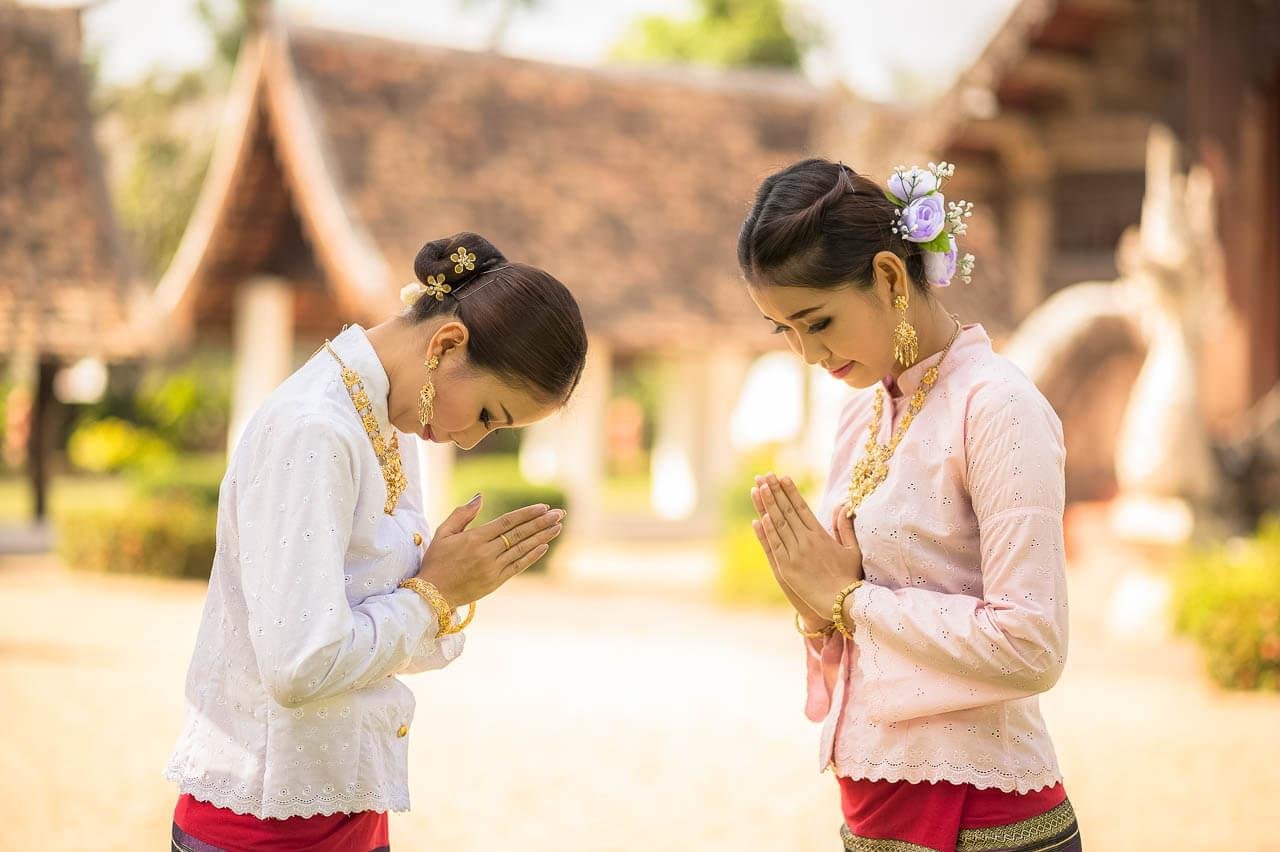
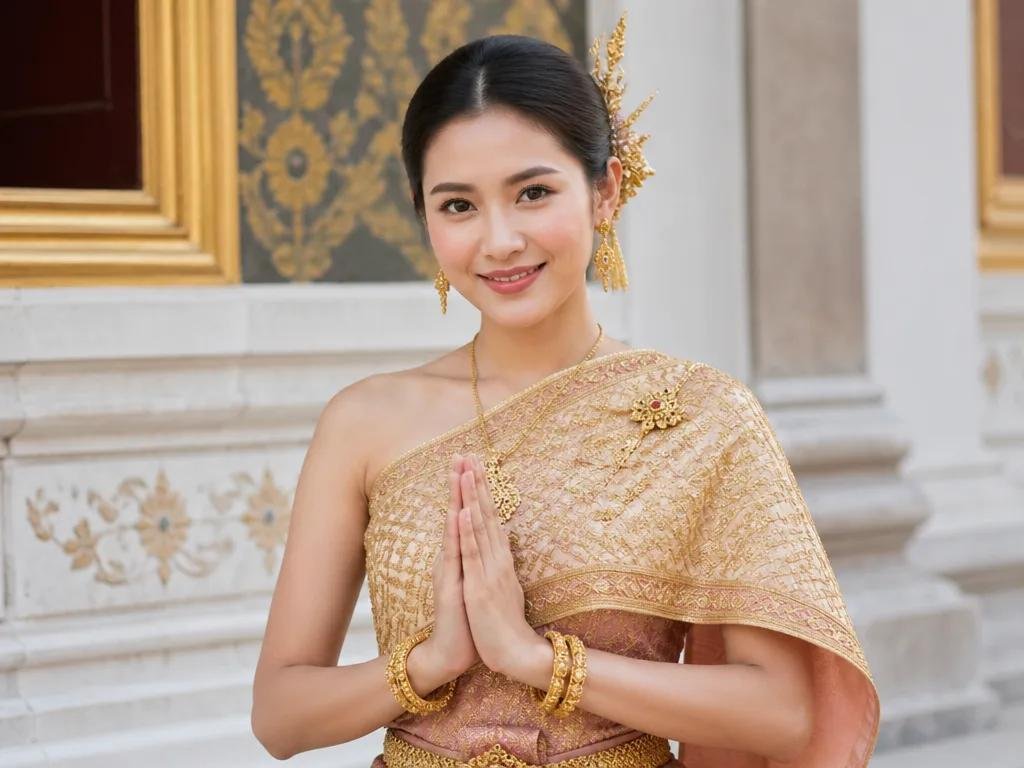
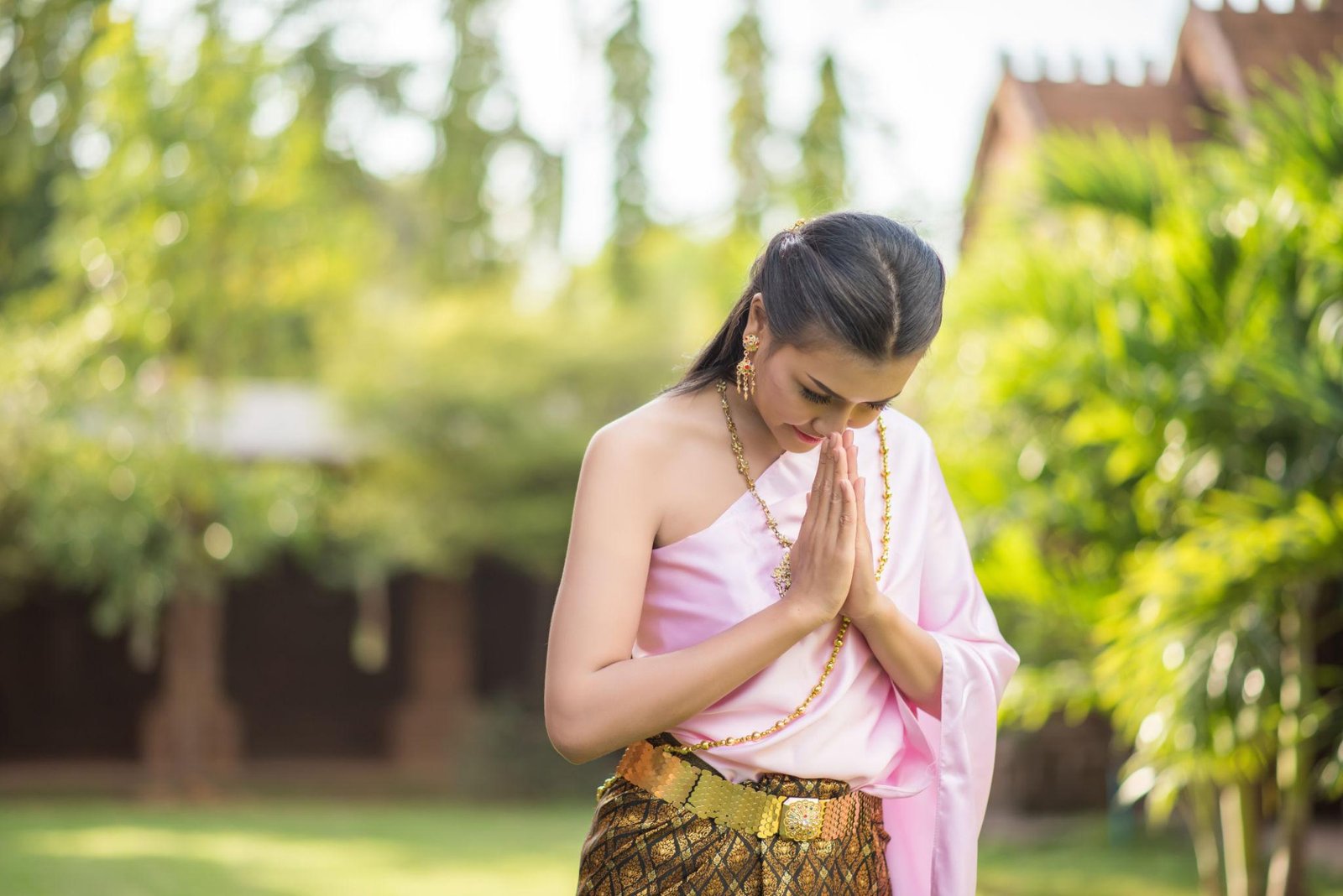
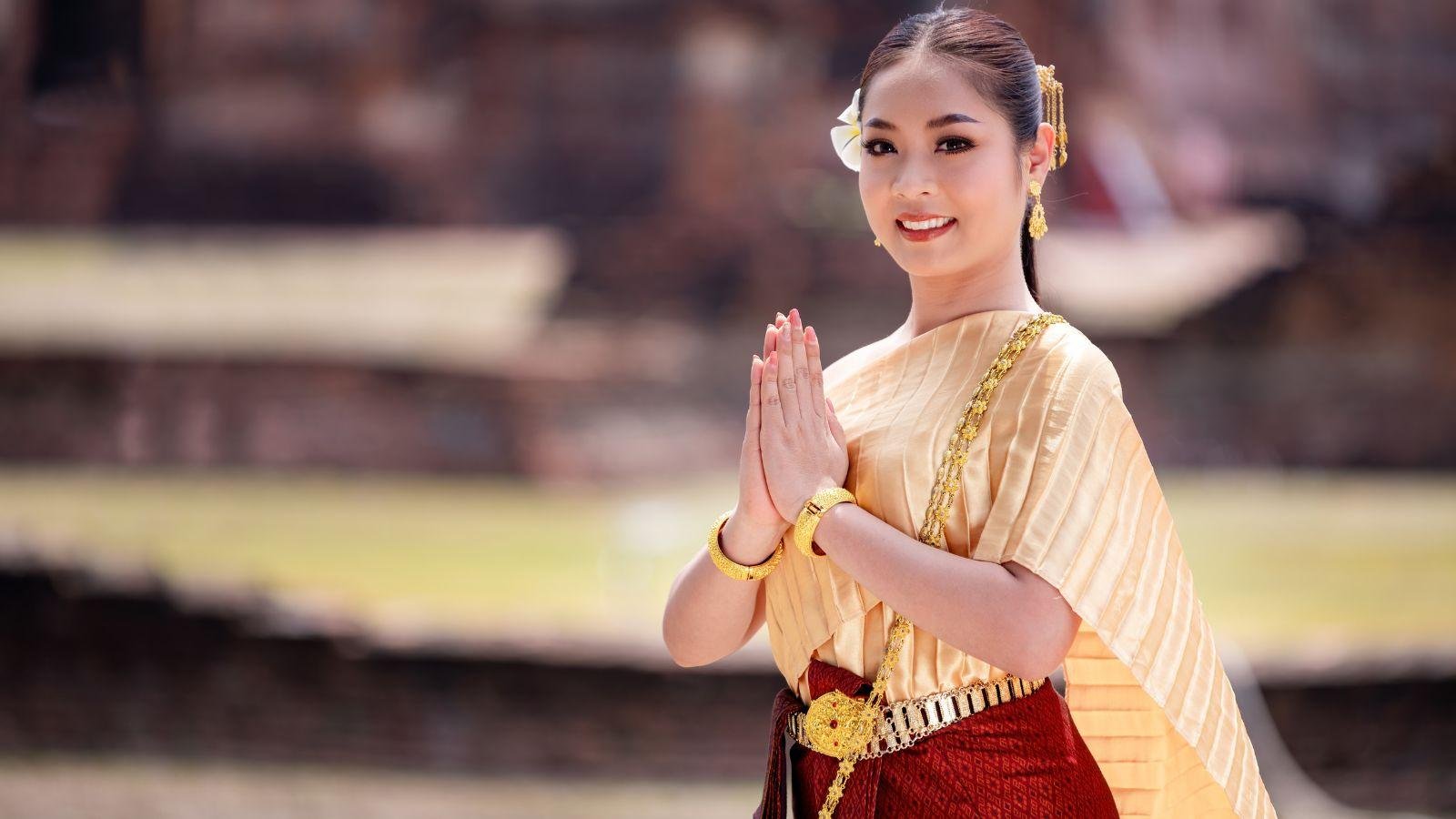
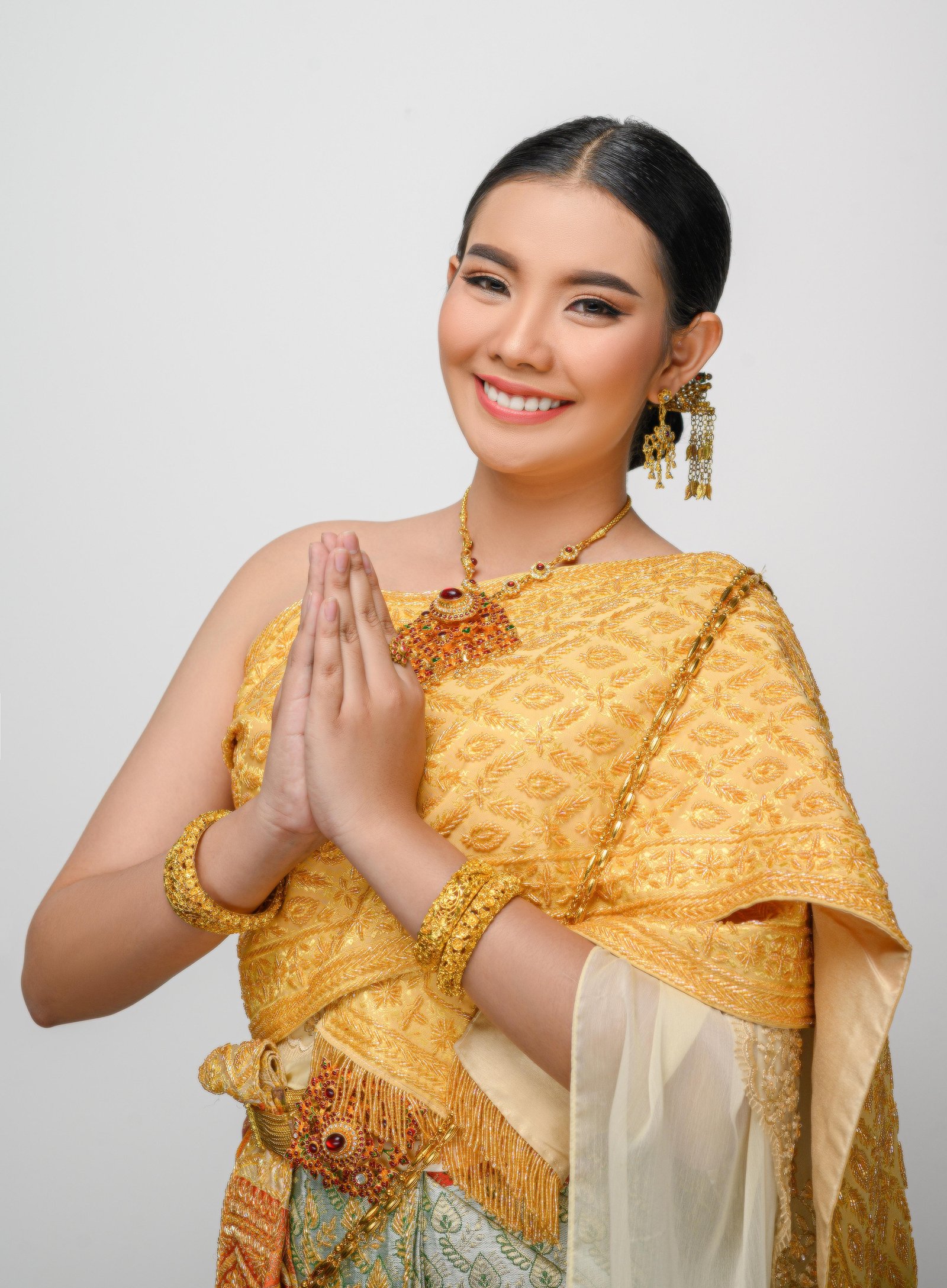
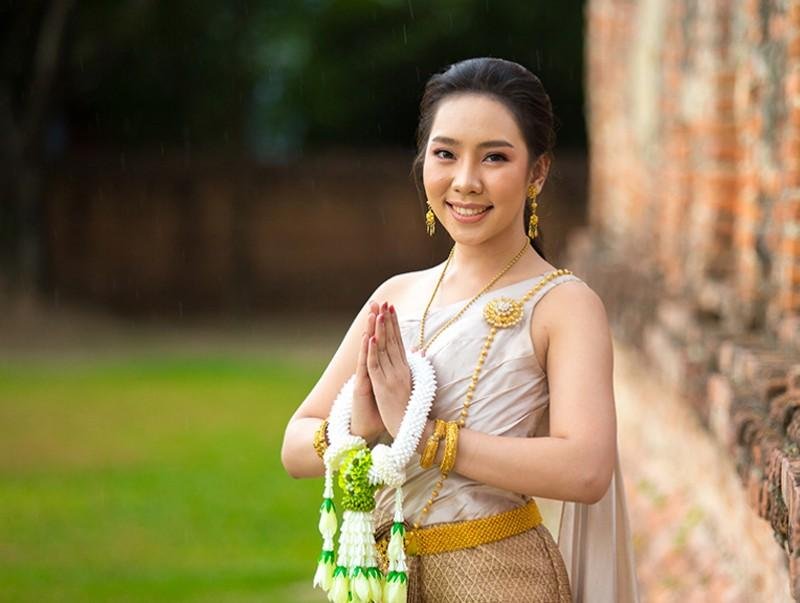
The wai is probably the best-known Thai cultural gesture.
It consists of joining the hands in front of the body and tilting the head slightly. Its specific form may vary depending on the relationship between people and the context.
It is not simply an equivalent of our handshake.
The wai expresses respect and courtesy, and is also related to age and social position. ( Wikipedia )
The head and feet
There are two cultural concepts that usually attract a lot of attention from visitors.
The head is considered an especially important part of the body, while the feet are held in much less honorable regard.
That is why it is recommended:
- Do not touch another person’s head without trust.
- Do not point at objects or people with your feet.
- Do not point the soles of your feet towards a person.
- Do not direct your feet towards an image of Buddha.
- Avoid using your feet to move objects or call someone.
Nomad World also highlights these customs as important elements of Thai etiquette.
It may seem strange at first, but when you understand the cultural significance of certain body parts, it stops seeming like a collection of random rules.
Taking off shoes
Taking off your shoes before entering certain places is another common custom.
Especially in:
- Temples.
- Private houses.
- Some establishments.
- Religious spaces.
I would say the rule of thumb is simple: if you see everyone taking off their shoes, do the same .
Family in Thai culture
The family occupies a central place within Thai society.
Relationships between parents, children, grandparents and other family members can be very close, and there is a strong tradition of respect for older people.
This is reflected even in celebrations such as Songkran, where one of the traditional practices consists precisely of gathering with family and showing respect to elders and ancestors.
This family dimension seems especially interesting to me because it shows that some festivals that we see today as great tourist spectacles originally had a much more intimate meaning.
Songkran: the Thai New Year
If we talk about traditions of Thailand , it is impossible not to talk about Songkran.
And yes, it is the famous celebration where everyone ends up soaked.
But reducing Songkran to a gigantic water war would be staying on the surface.
Songkran is the traditional Thai New Year and is celebrated in April. The tradition is related to renewal, purification, family, respect for elders and Buddhist rituals.
UNESCO inscribed Songkran in Thailand, traditional Thai New Year festival on the Representative List of the Intangible Cultural Heritage of Humanity in 2023.
During the celebration, activities such as:
can be carried out- Clean and decorate houses.
- Visit temples.
- Make merit.
- Give food to monks.
- Pay tribute to the elderly.
- Bath images of Buddha.
- Meet with family.
- Participate in community games and celebrations.
- Throwing water.
Water symbolizes cleansing, purification and good fortune.
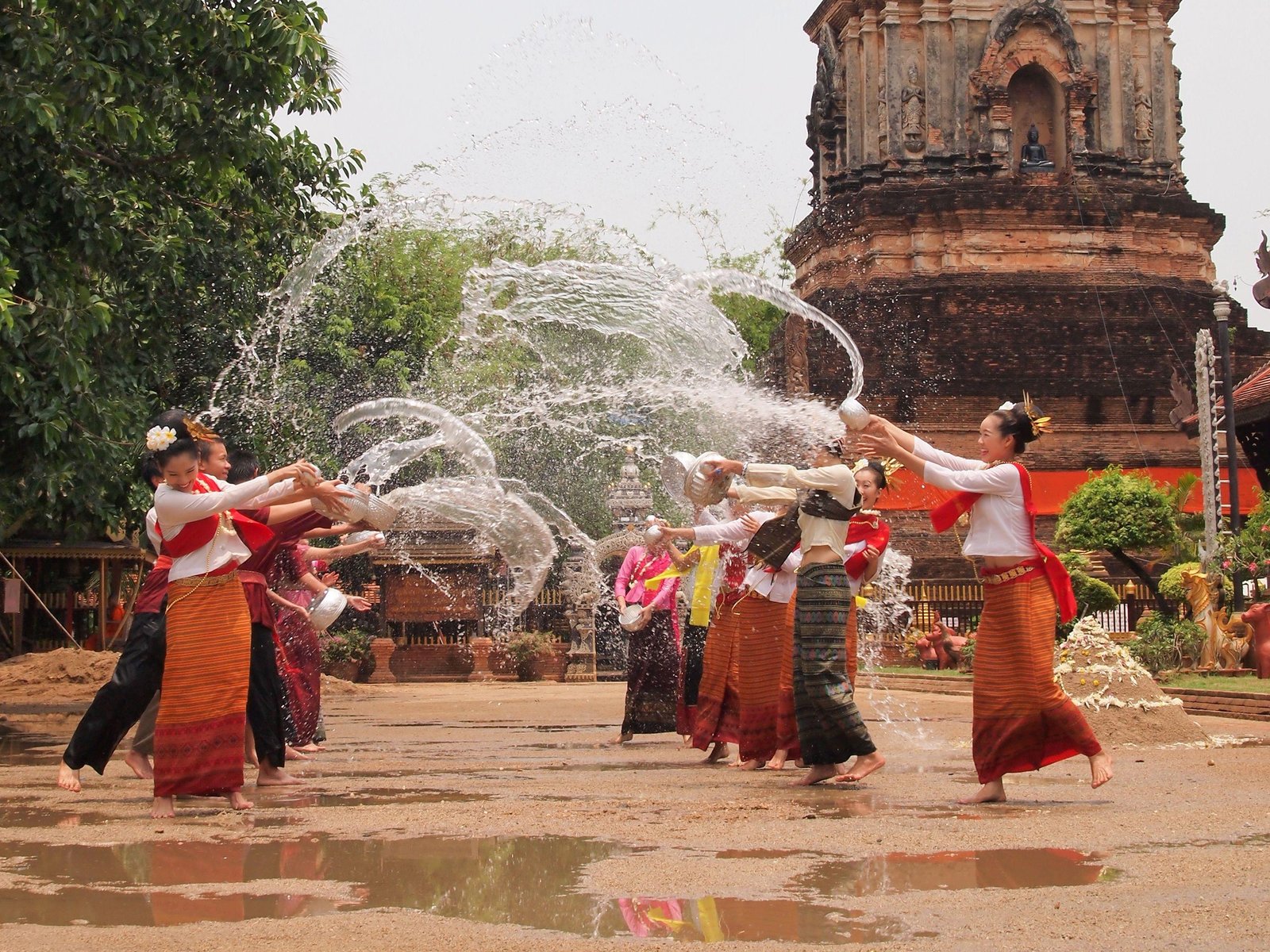
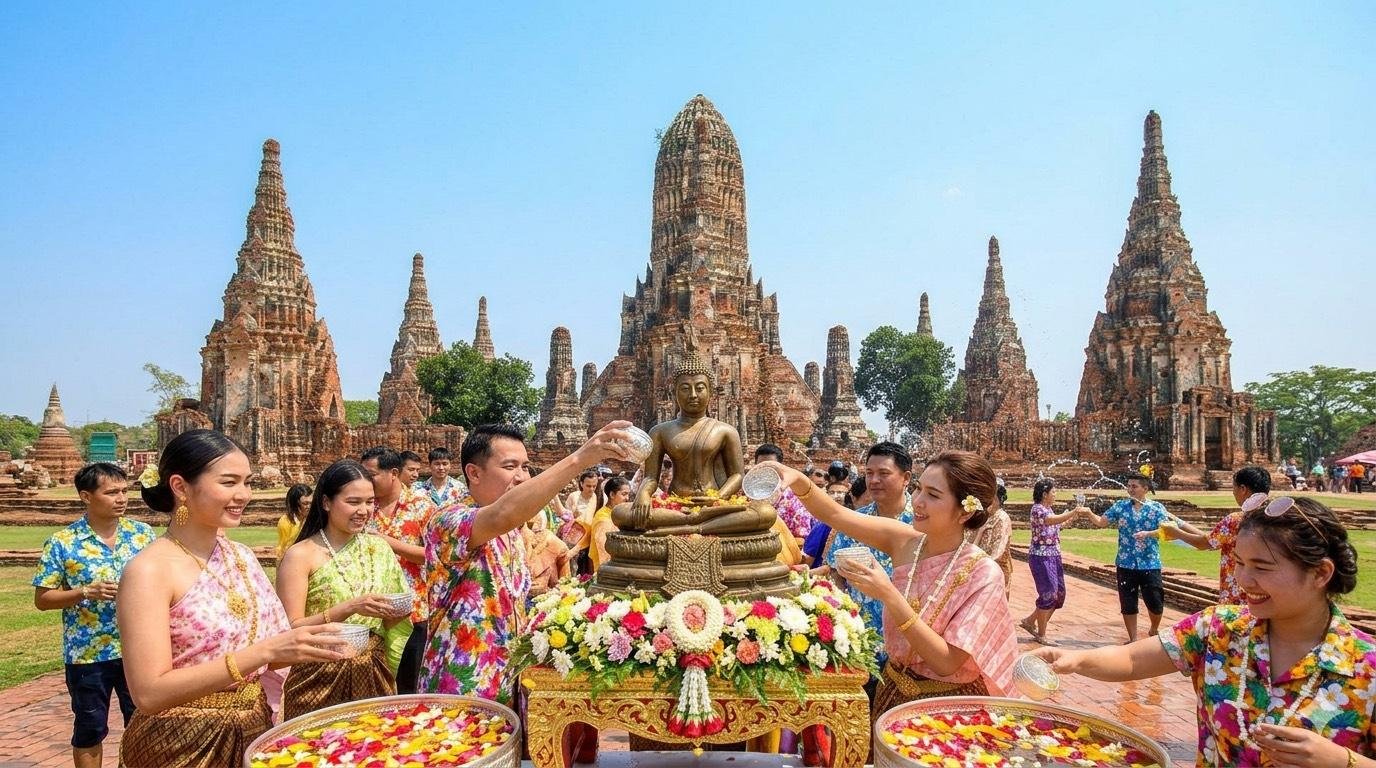
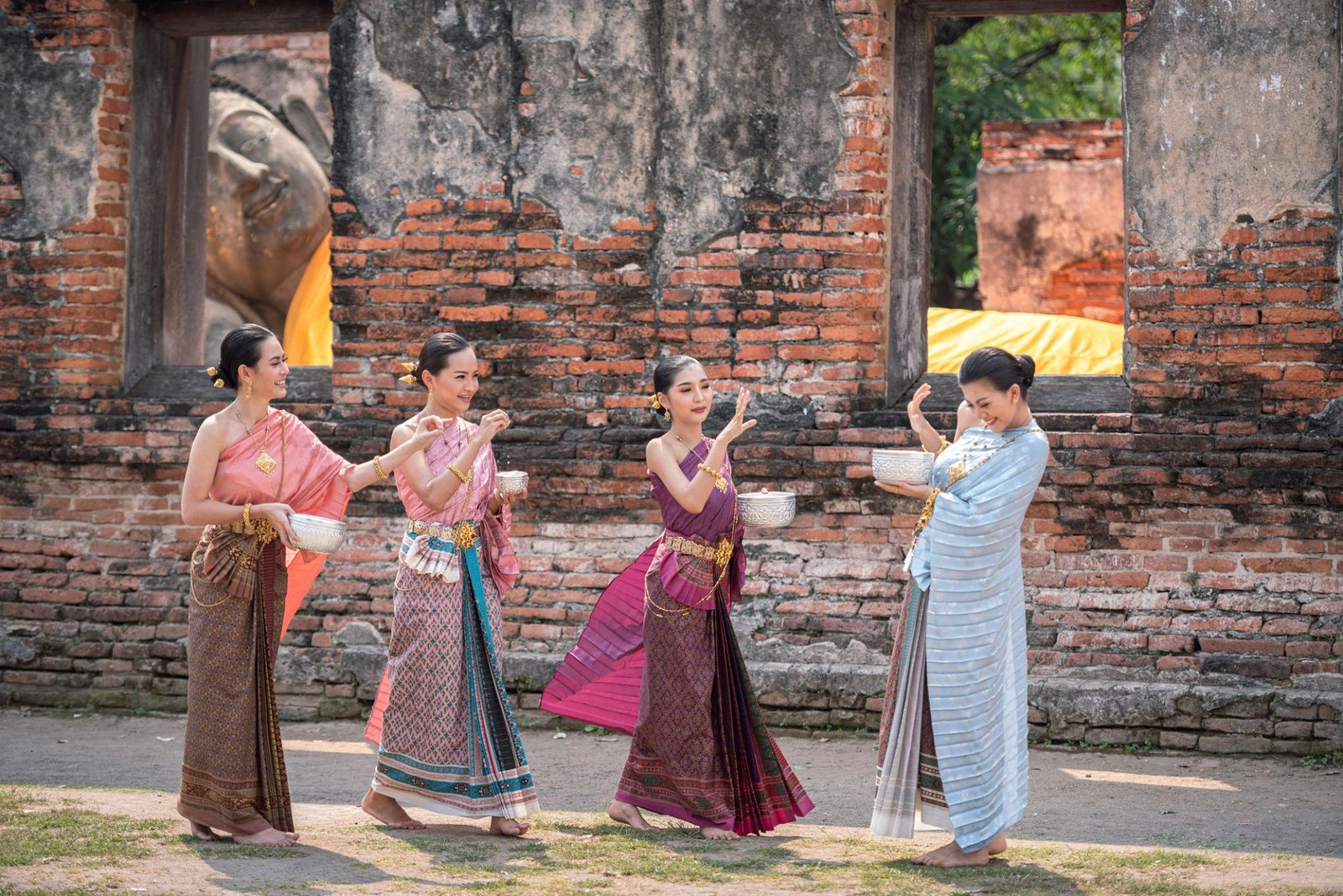
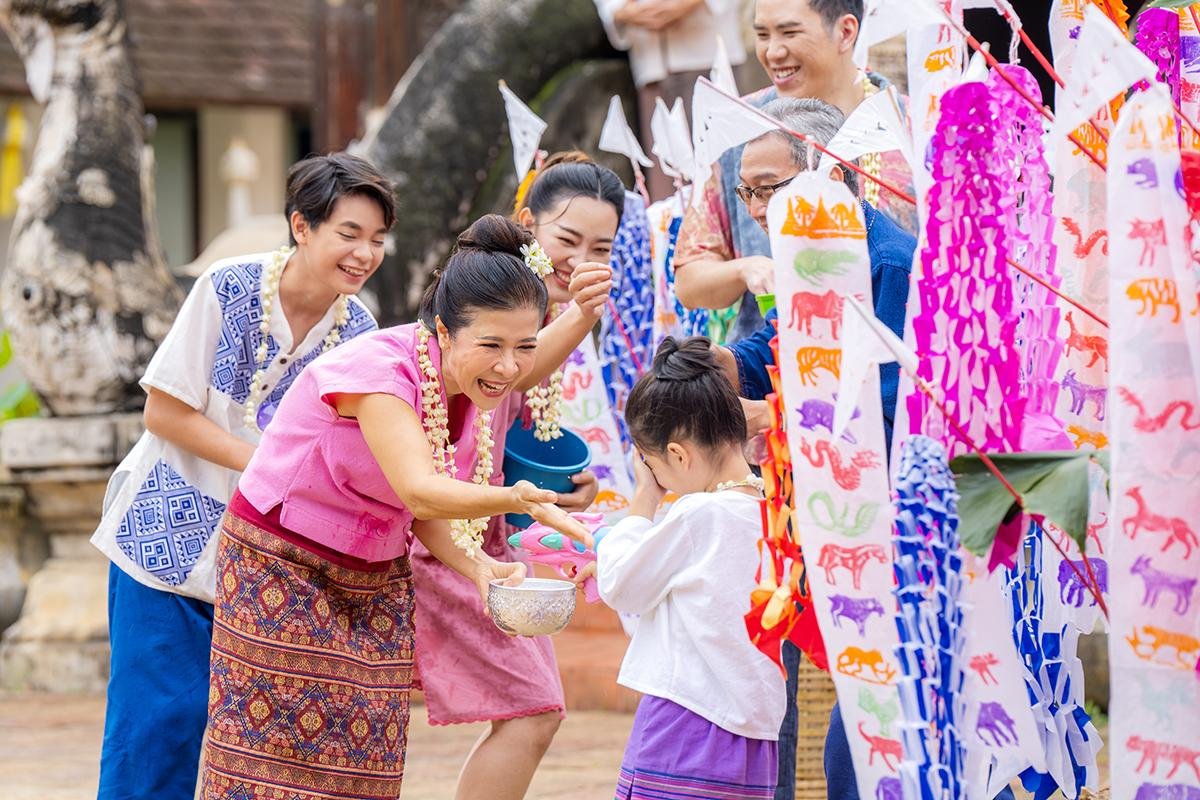
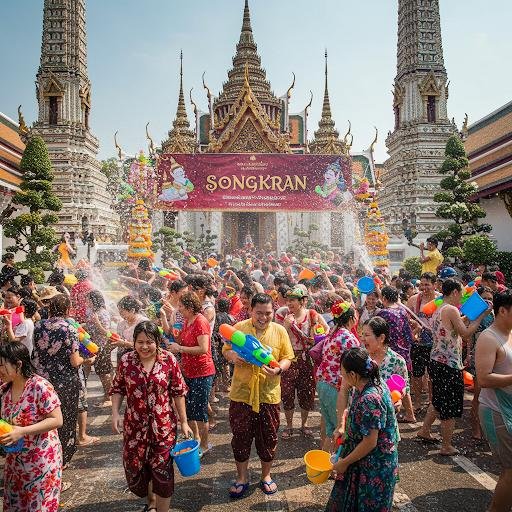
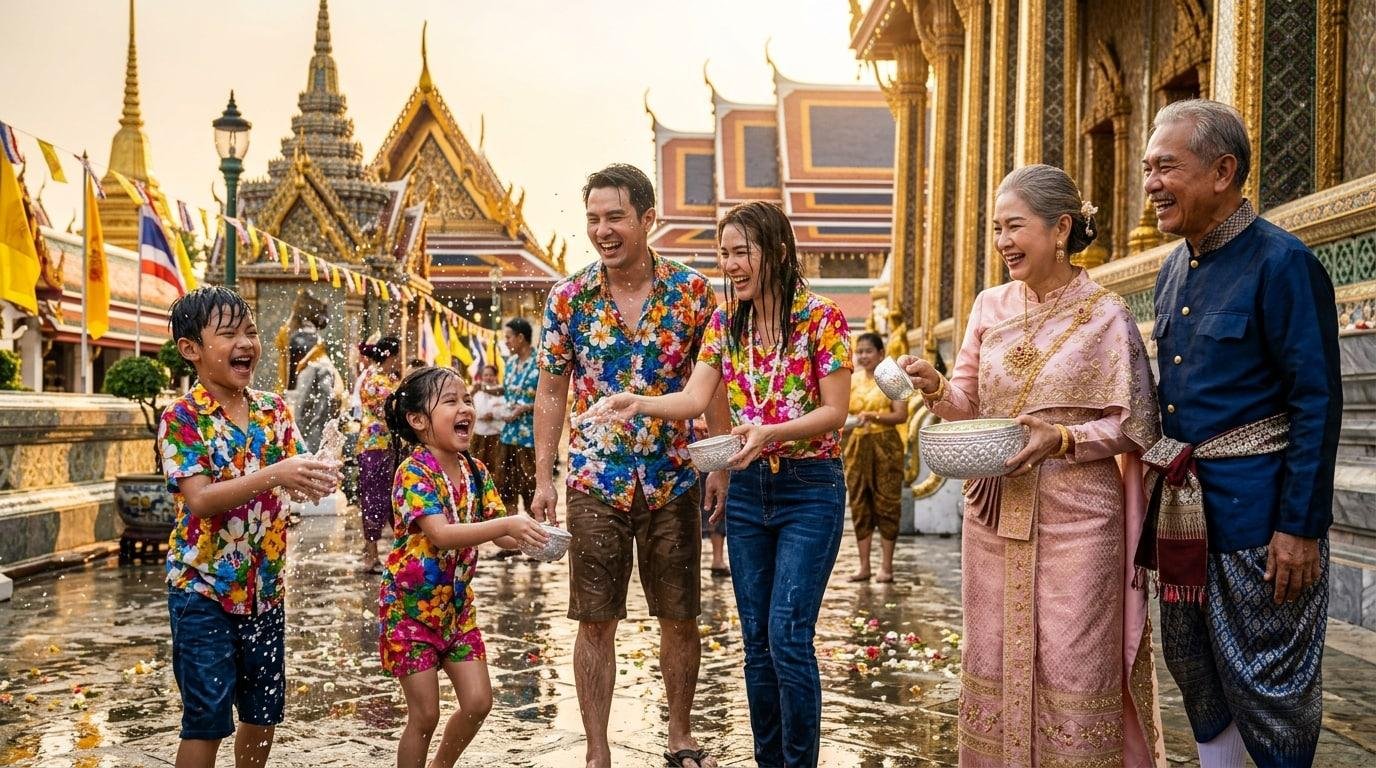
The interesting thing is that the modern and spectacular festival that we see in tourist videos coexists with much more traditional religious and family practices.
Other traditional festivals of Thailand
Songkran is not the only important celebration.
Loy Krathong
Loy Krathong is another of the best-known festivals in the country.
During the celebration, small floating offerings, called krathong , are placed on the water.
It is a particularly photogenic tradition, but behind the lights and flowers there is a whole symbolic component related to water, gratitude and renewal.
Phi Ta Khon
In the northeast we find Phi Ta Khon, a festival famous for its colorful masks.
The tradition is especially linked to Dan Sai, in Loei province. The masks have very characteristic designs and their production maintains artisanal knowledge transmitted between generations.
Religious and regional festivals
In addition, practically each region has its own celebrations.
This is important for SEO and also for understanding the culture: when someone searches for traditional festivals of Thailand , we should not limit the answer to Songkran and Loy Krathong.
There is a huge variety of local festivities.
Gastronomy within the culture of Thailand
I could spend hours talking here.
Thai gastronomy is one of the most internationally recognizable cultural elements and is characterized by combining flavors that may seem completely opposite.
Sweet.
Acid.
Salty.
Spicy.
And, on many dishes, all at the same time.
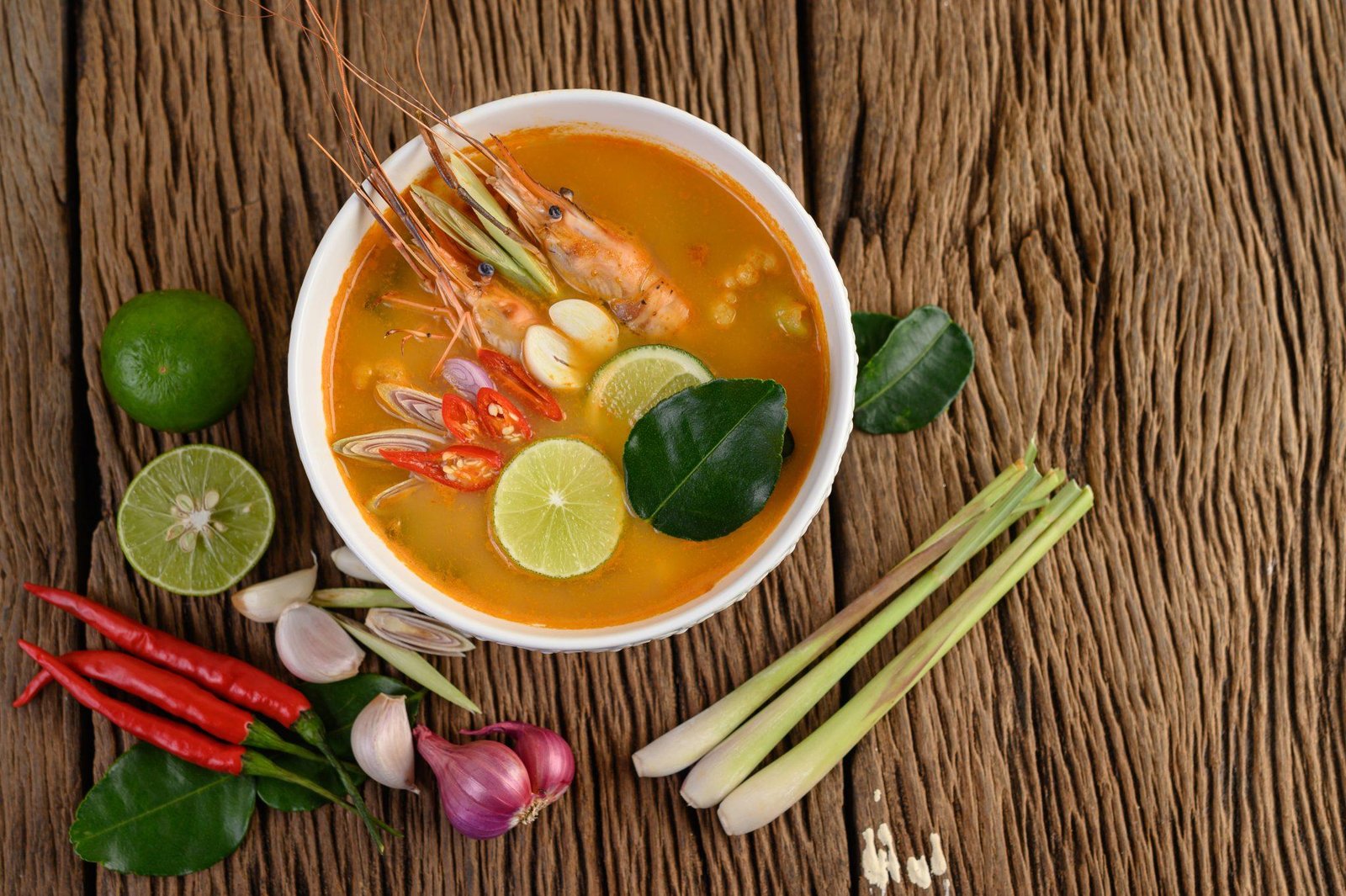
Thai cuisine uses ingredients such as:
- Lemongrass or lemongrass.
- Galangal.
- Lima.
- Chile.
- Thai Basil.
- Coconut milk.
- Curry paste.
- Fish sauce.
- Tamarind.
- Rice.
- Noodles.
- Fresh herbs.
The combination of these ingredients produces a tremendously aromatic gastronomy.

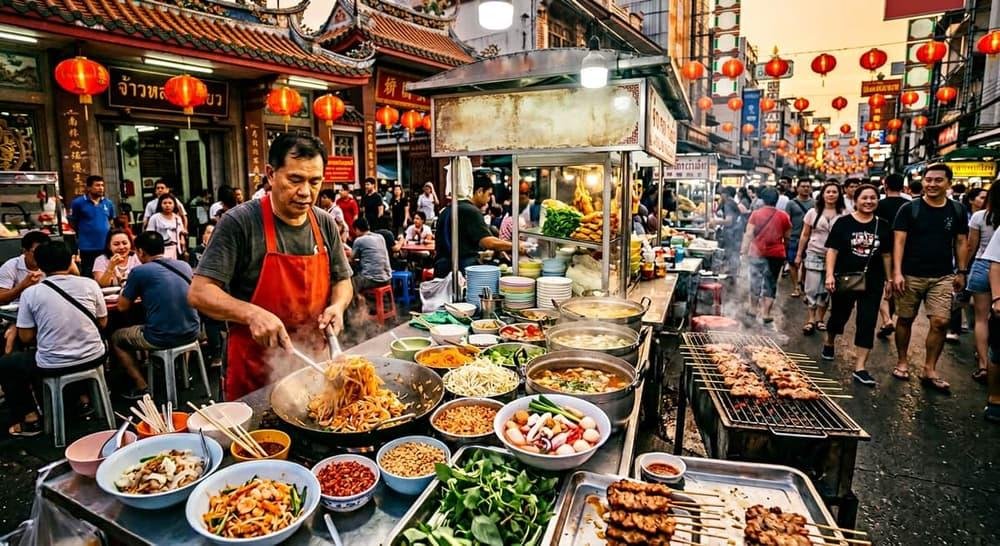
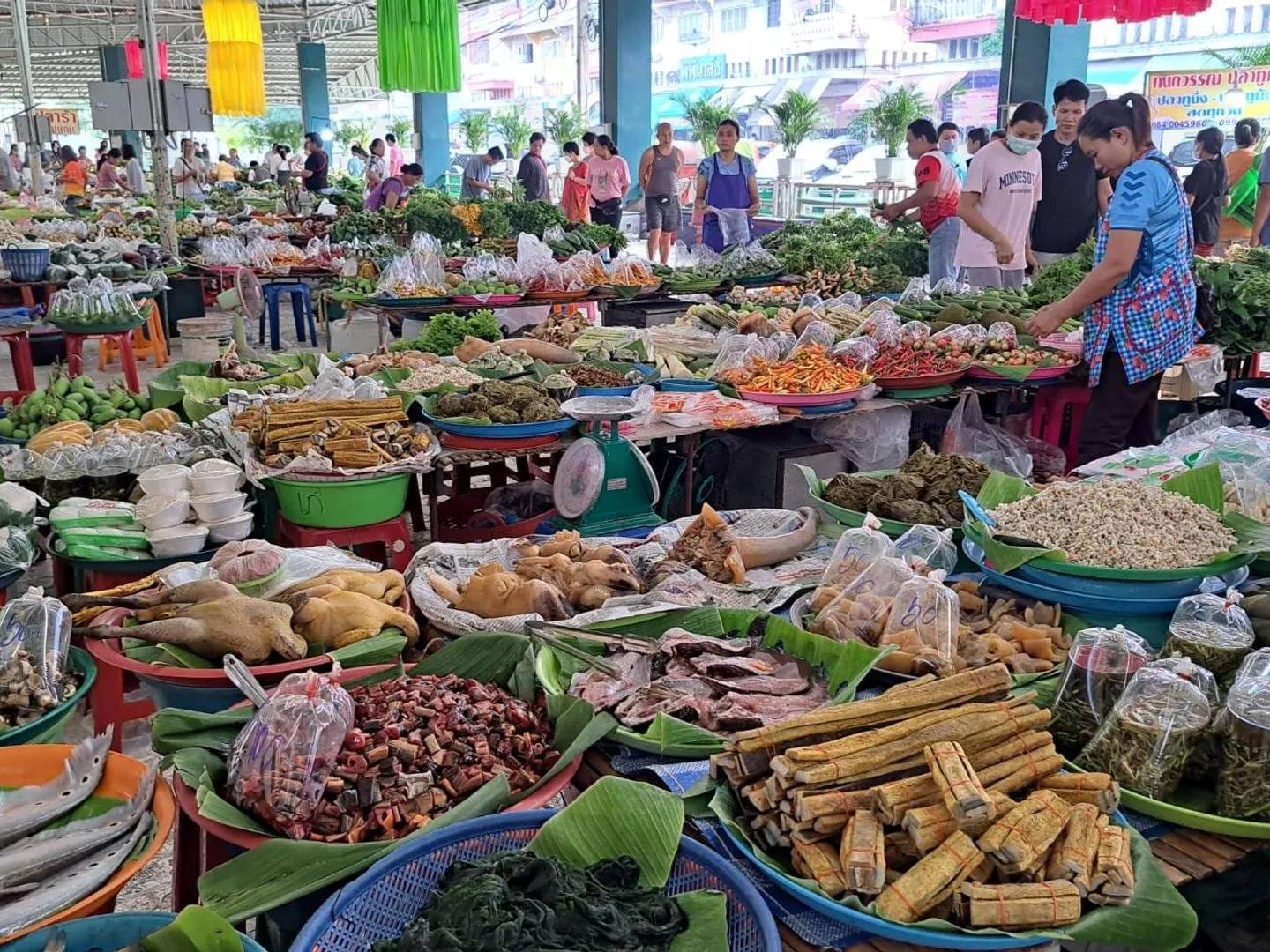
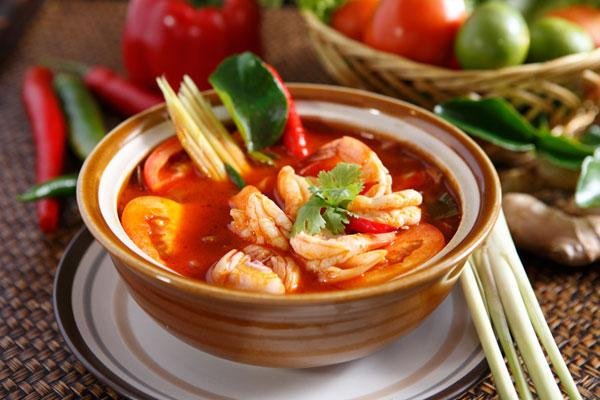
Typical Thai dishes
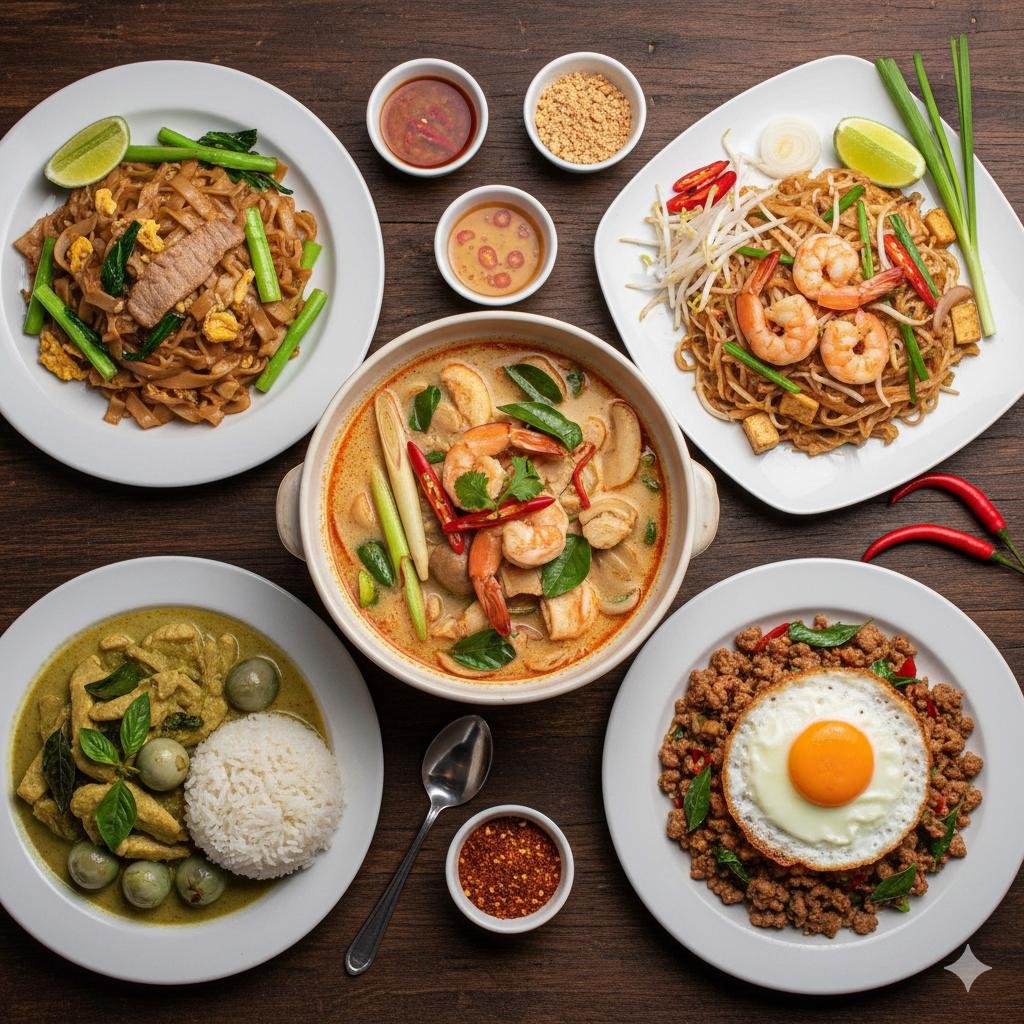
If you are researching what to eat to get closer to Thai food culture, I would start with these:
Pad Thai: rice noodles stir-fried with different ingredients, usually accompanied by egg, tofu, proteins, bean sprouts, peanuts and lime.
Tom Yum: aromatic, sour and spicy soup usually prepared with shrimp or other ingredients.
Tom Kha: soup with coconut milk and aromatic herbs.
Green Curry: green curry with an aromatic paste and usually coconut milk.
Red Curry: curry made with red chili paste.
Som Tam: green papaya salad especially popular in Thailand.
Mango Sticky Rice: sticky rice with mango and coconut milk.
And something that seems fundamental to me: Thai cuisine is not just Pad Thai .
If you stick only to the dishes that appear in tourist restaurants, you miss out on a huge part of the country’s culinary culture.
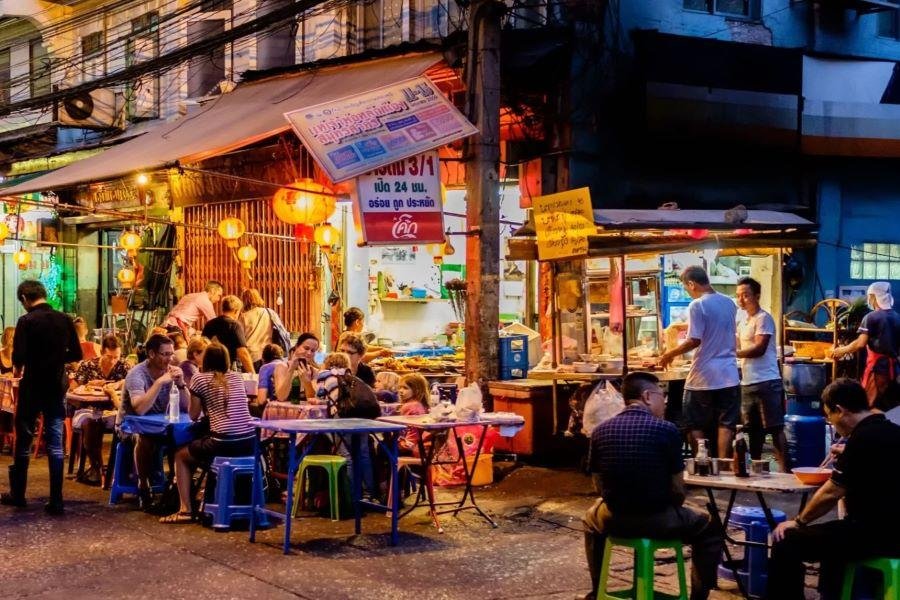
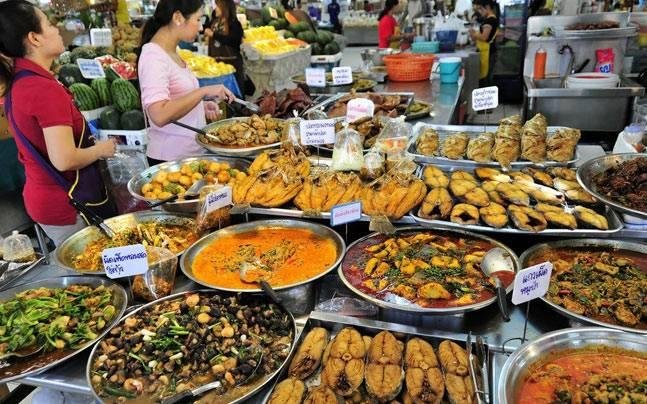
Street food and markets
Markets are another fundamental piece.
Street food is part of everyday experience and the markets allow you to see something more interesting than simply what Thais eat: how they relate to food .
Small stalls, fast foods, soups, skewers, curries, fruits, sweets and freshly prepared dishes are part of the urban landscape.
This also explains why gastronomy is so visible within contemporary Thai culture.
The Thai language
The official language is Thai , a tonal language that uses its own writing system.
For someone who speaks Spanish, the language can be quite complicated initially, especially because of the tones and the writing system.
But there are some expressions that are worth knowing:
- Sawasdee — Hello.
- Khop khun — Thank you.
- Mai pen rai — Nothing happens / no problem.
- Chai — Yes.
- Mai chai — No.
- Khor thot — Sorry / apology.
An interesting peculiarity is that the polite way of ending a sentence can vary depending on the gender of the speaker: kha and khrap are widely known polite particles.
You don’t need to learn Thai to travel, obviously, but learning a few words changes your interaction with people a lot.
Thai writing
One of the first things that catches your attention when arriving in Thailand is its writing.
It does not use the Latin alphabet, but rather its own system historically derived from writings from South Asia and Southeast Asia.
The Government of Thailand points out that Thai has 44 graphic consonants, although not all are in current use, and distinguishes important regional varieties.
For me, visually, it is one of the characteristics that makes Thailand have such a recognizable identity.
Traditional Thai dance and music
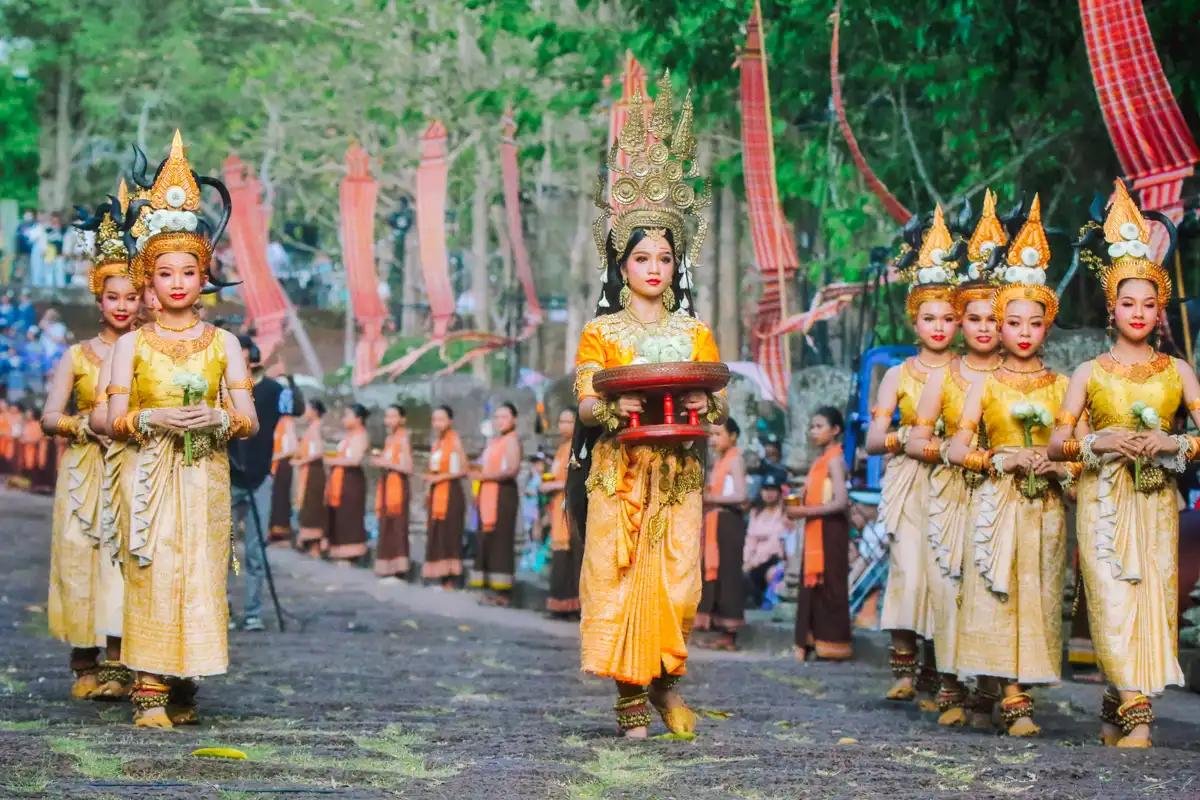
Music and dance occupy an important place within the traditional arts.
One of the best-known forms is Khon , a masked dance-drama related to Ramakien , the Thai version of an epic tradition of Indian origin.
UNESCO included the Khon in the Representative List of the Intangible Cultural Heritage of Humanity in 2018.
We also find other expressions such as:
- Lakhon.
- Nora.
- Ram Wong.
- Likay.
- Traditional music with instruments like the ranat .
- Shadow theater.
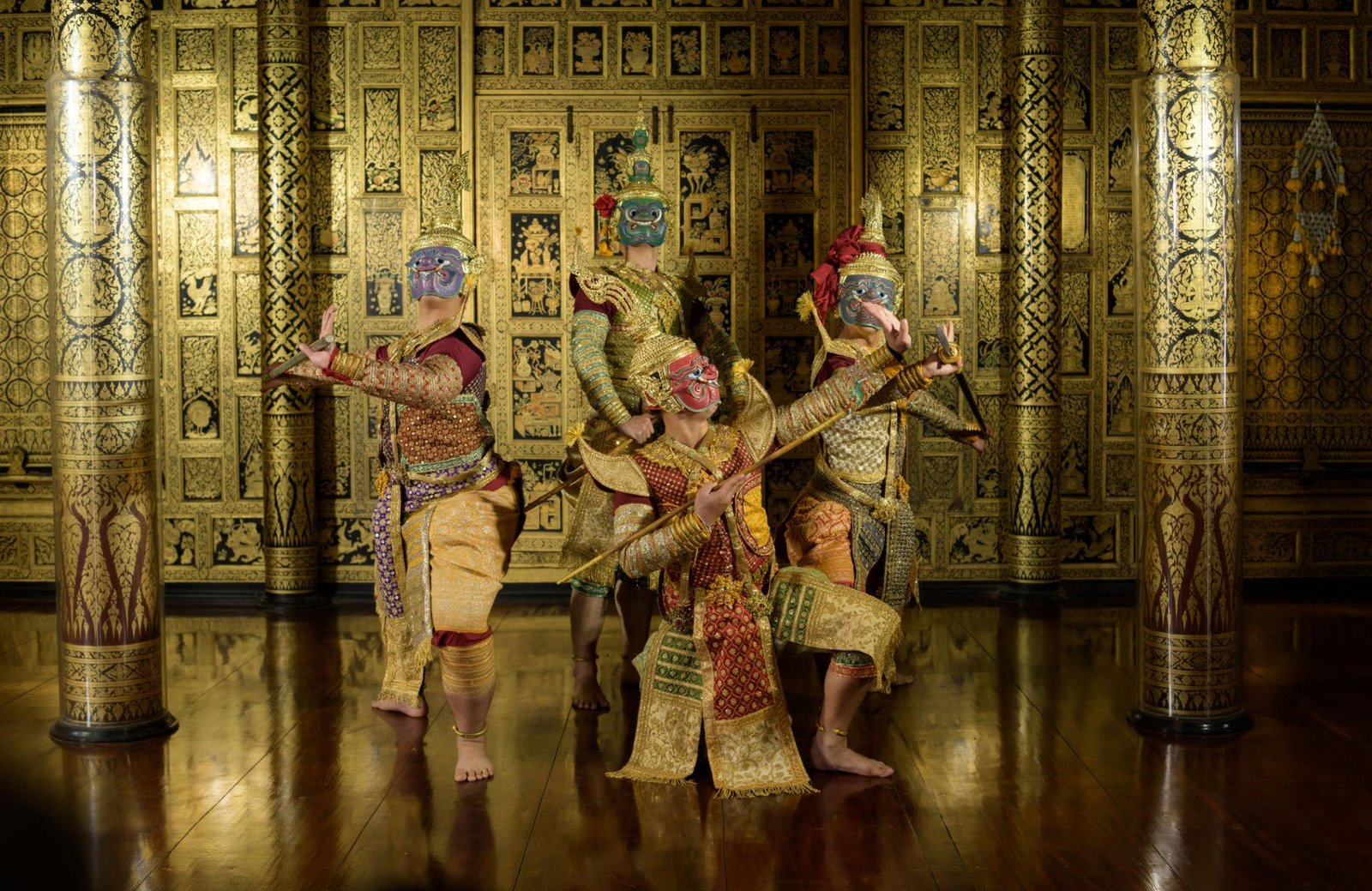
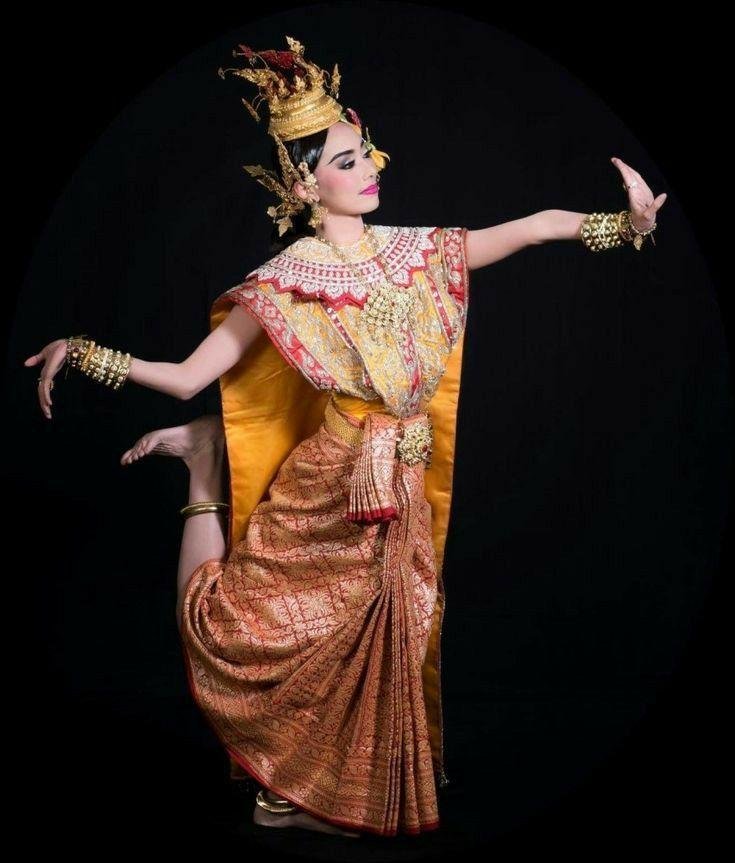
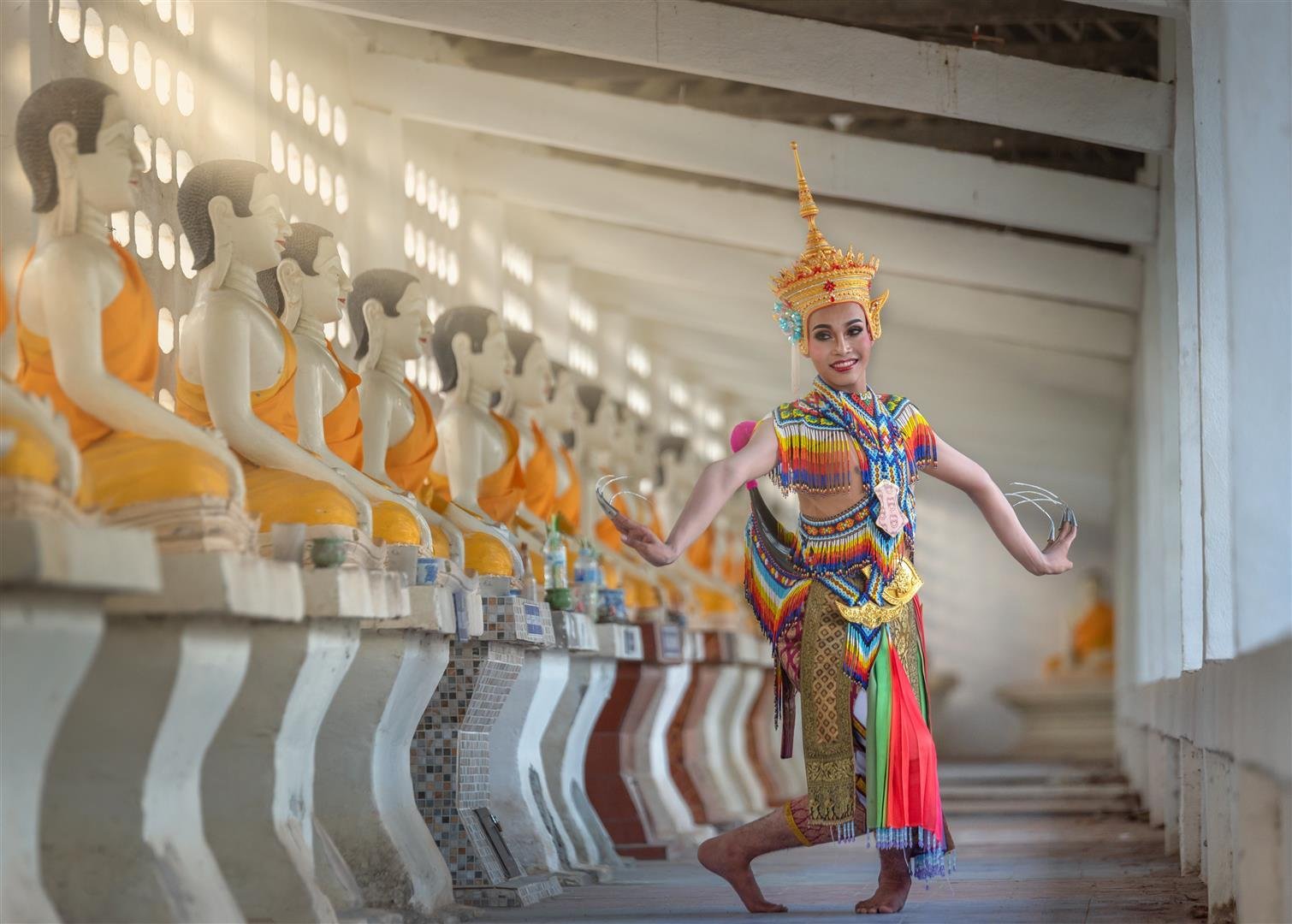
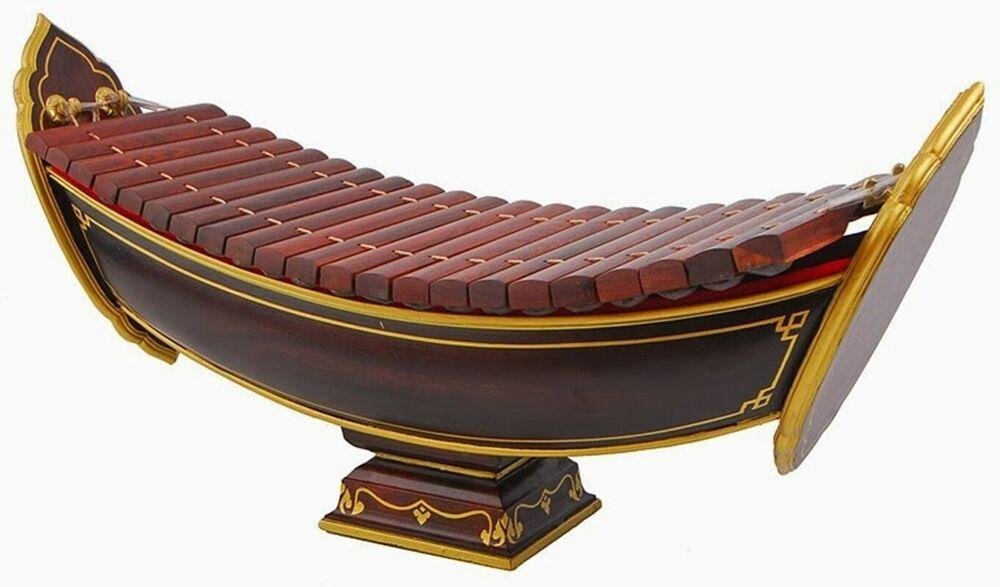
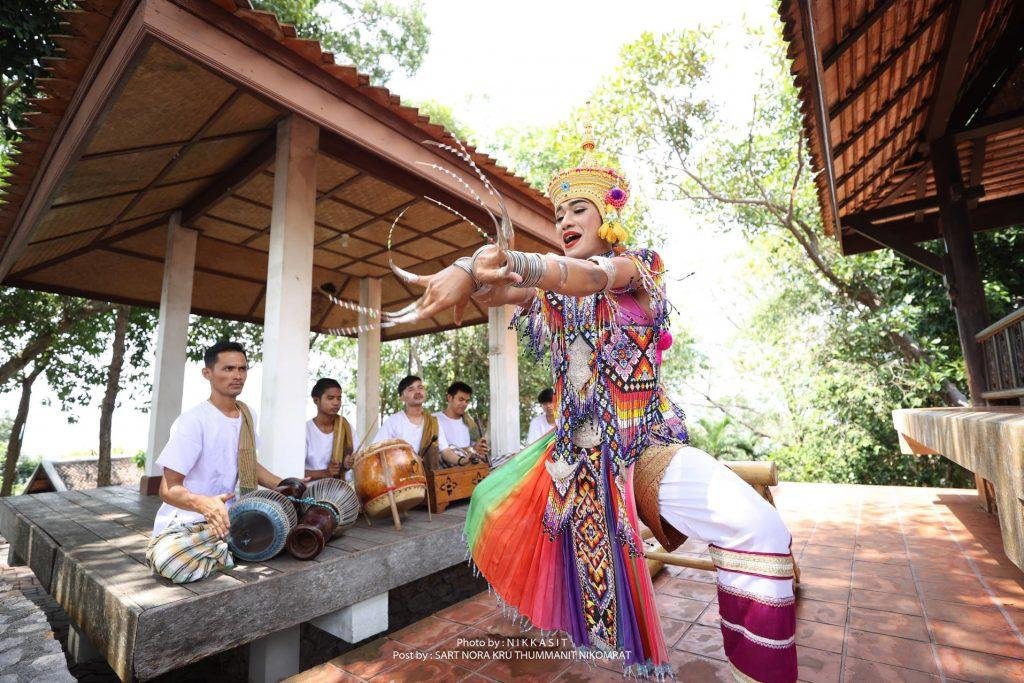
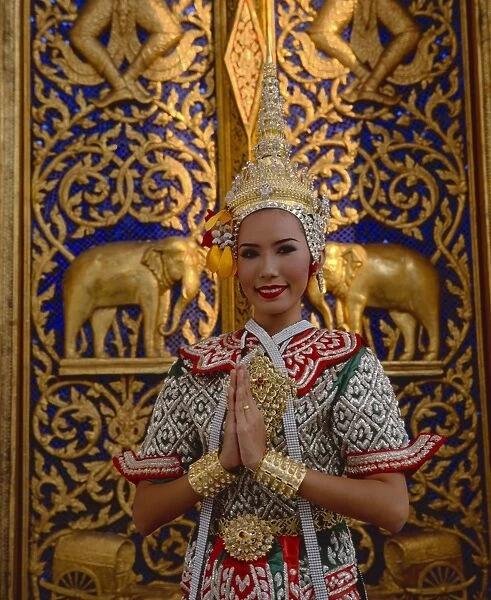
The beauty of these demonstrations is that many are not simply spectacles. They transmit stories, mythology, values and knowledge that have been passed from one generation to another.
The art and crafts of Thailand
Craftsmanship also occupies an important place.
We can find:
- Wood carvings.
- Ceramics.
- Fabrics.
- Thai silk.
- Sculptures.
- Traditional masks.
- Basketry.
- Religious objects.
- Handcrafted jewelry.
Crafts are especially linked to the different regions of the country.
In the north, for example, the artisan tradition related to the Lanna culture is very visible.
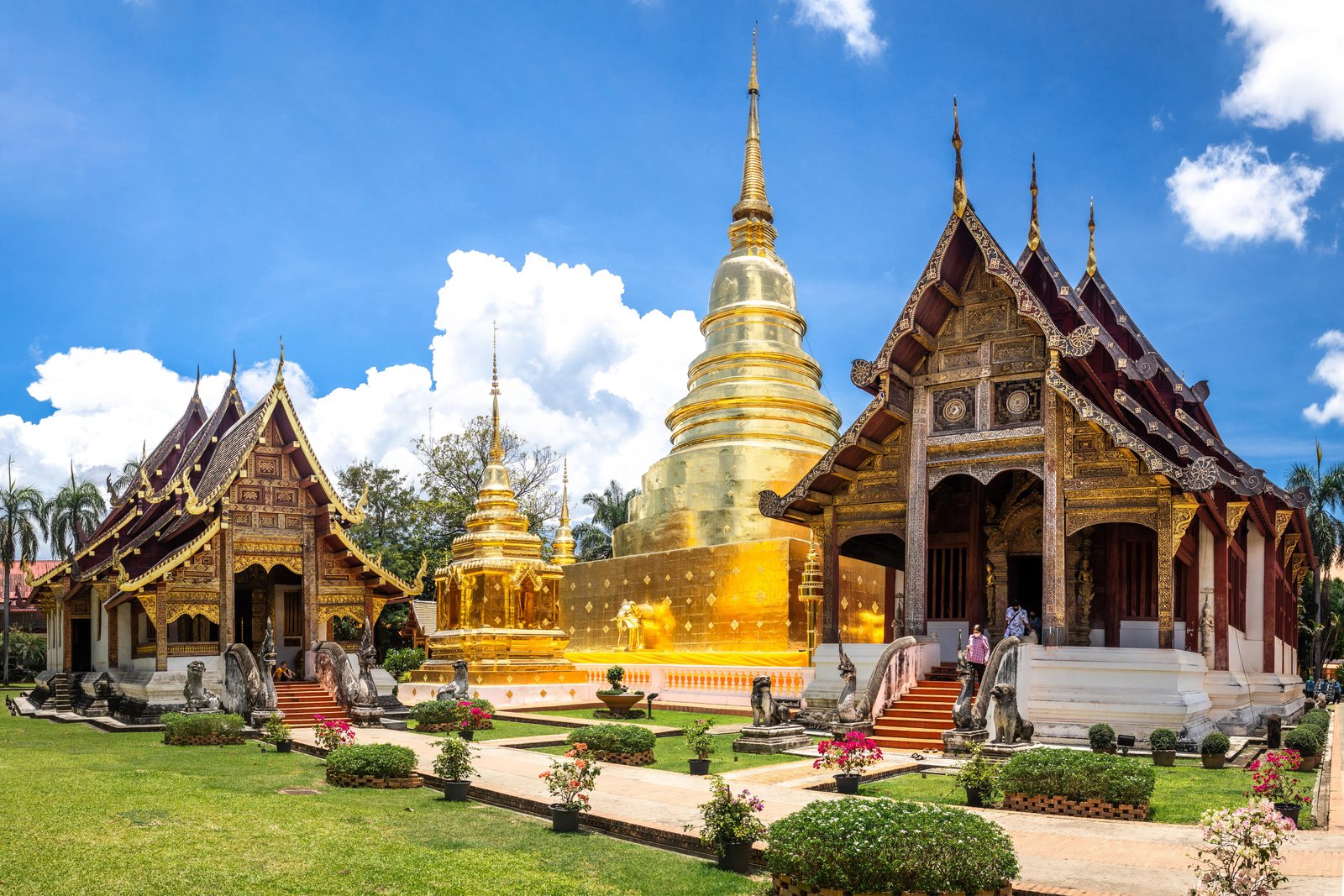
Thai architecture
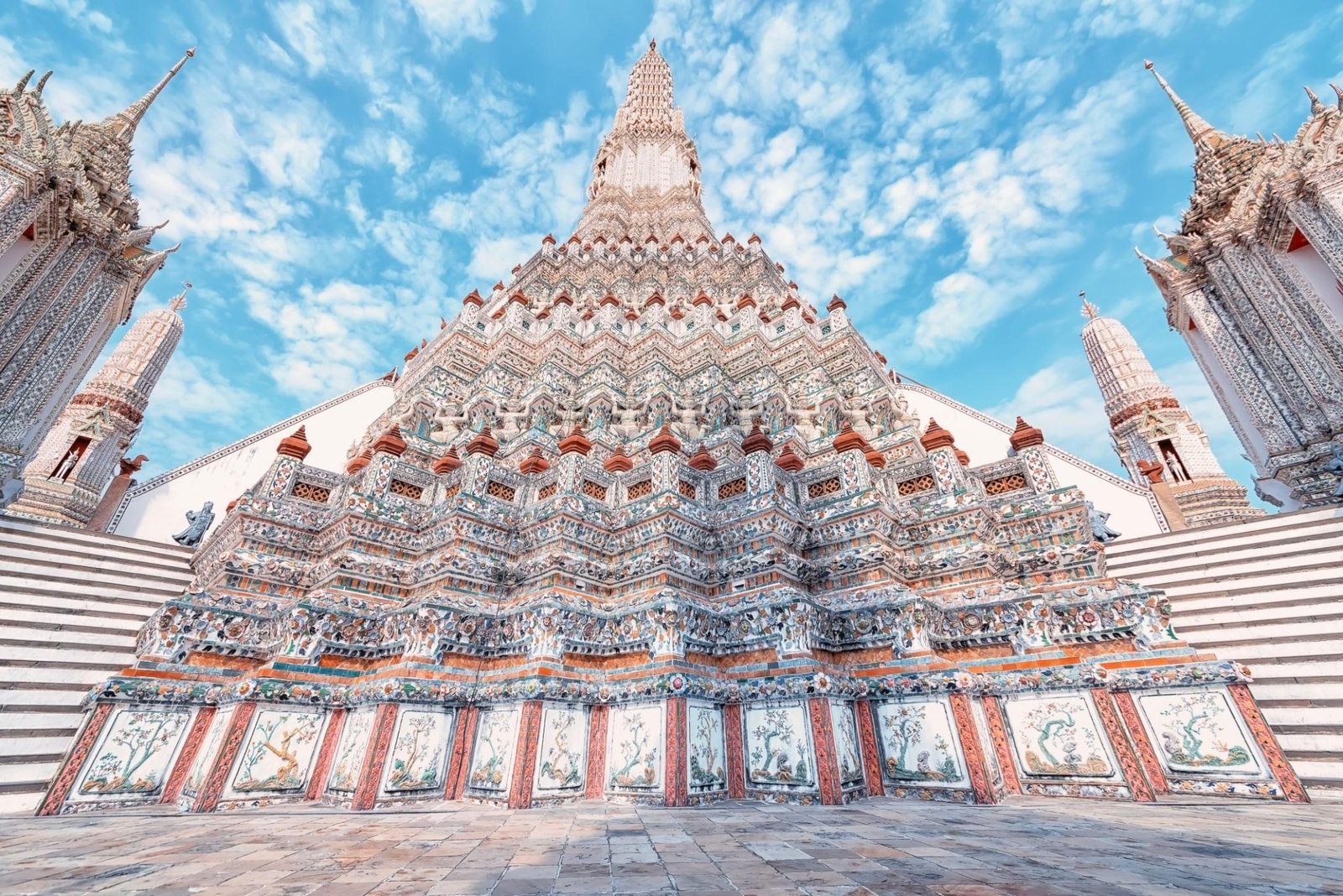
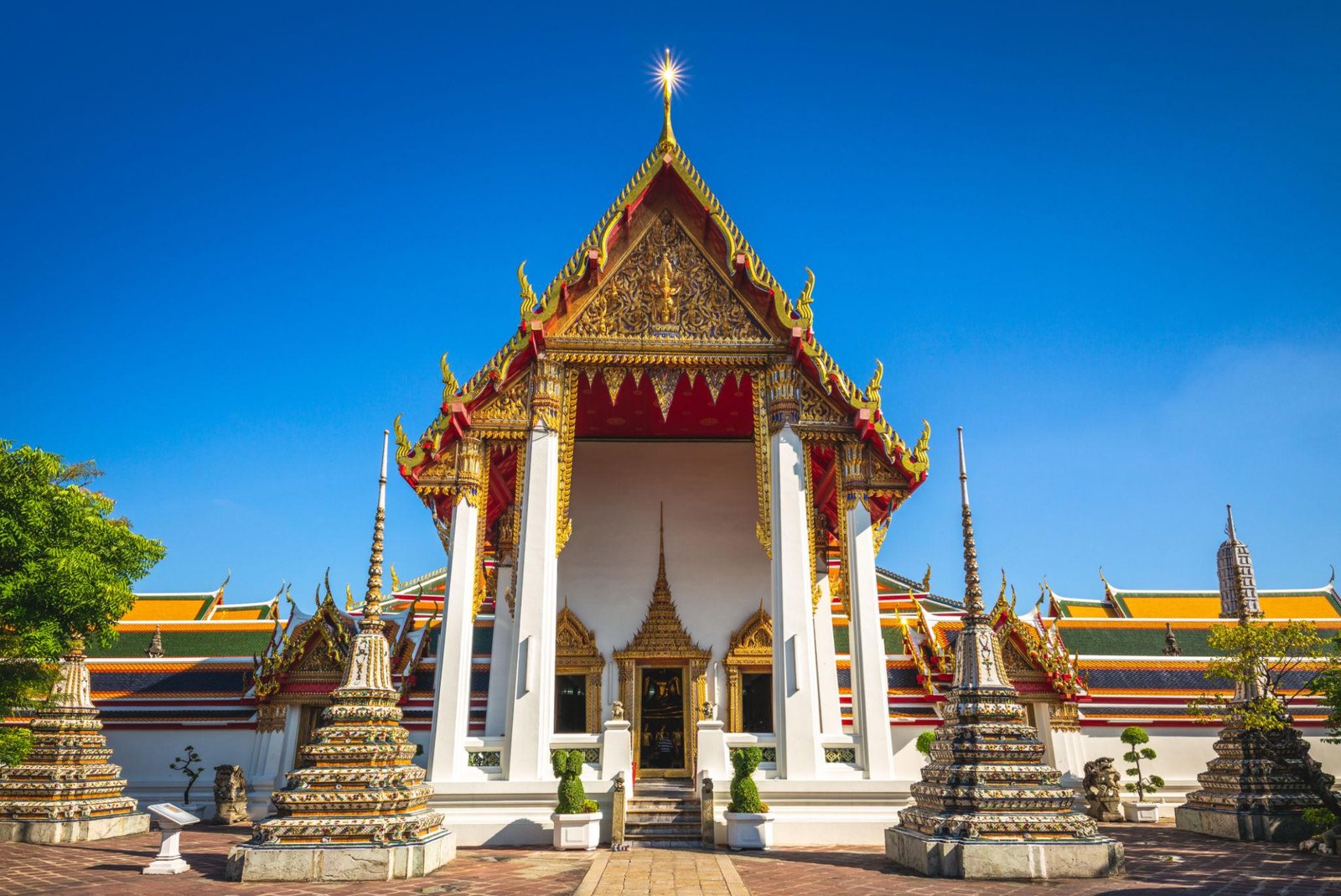
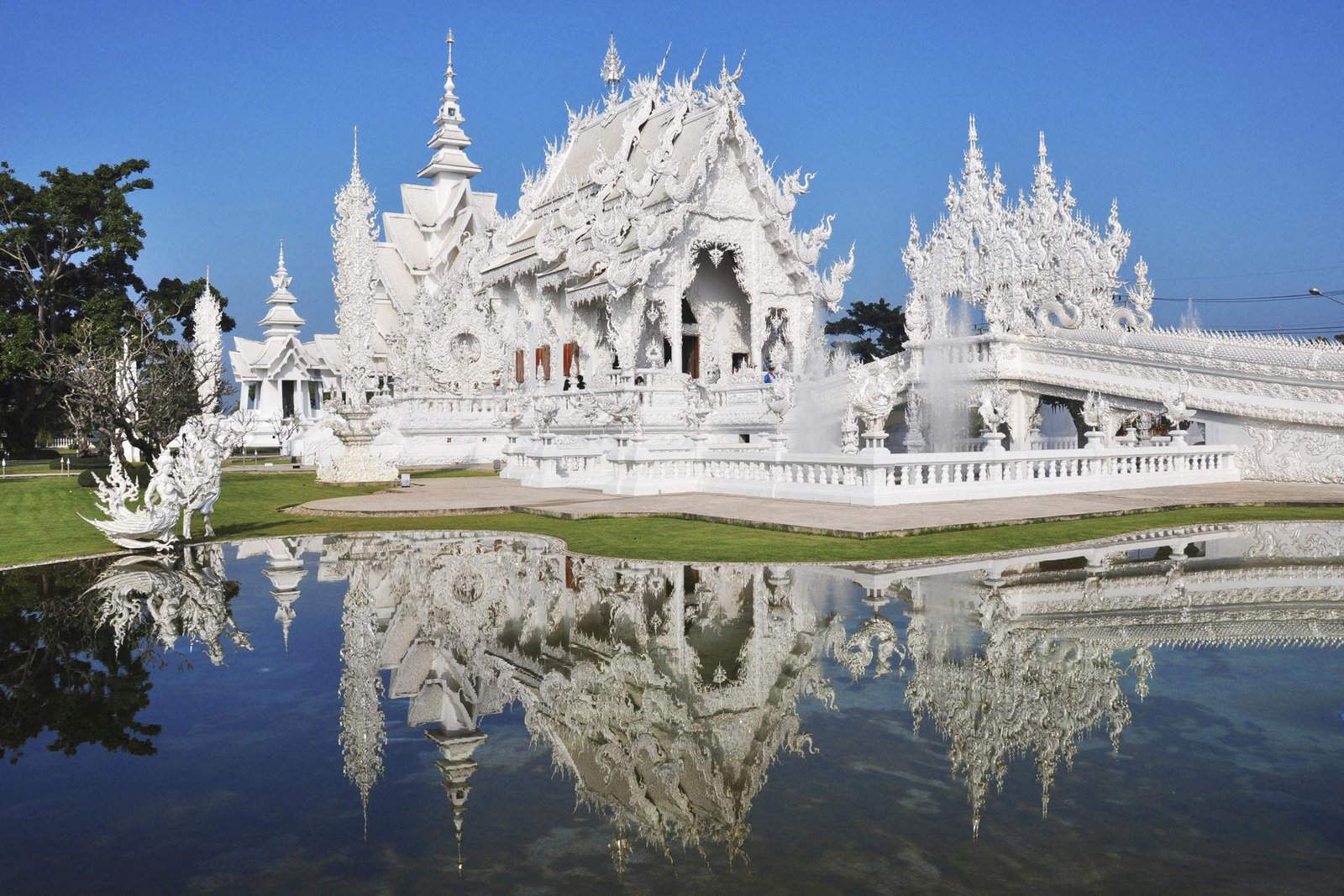
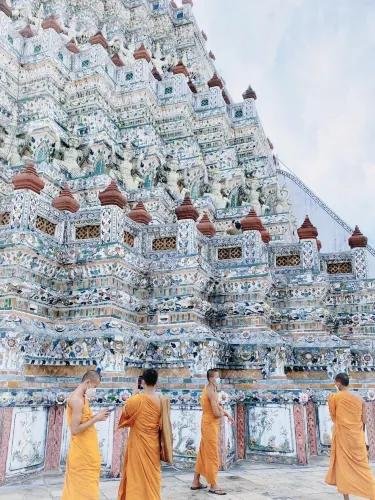
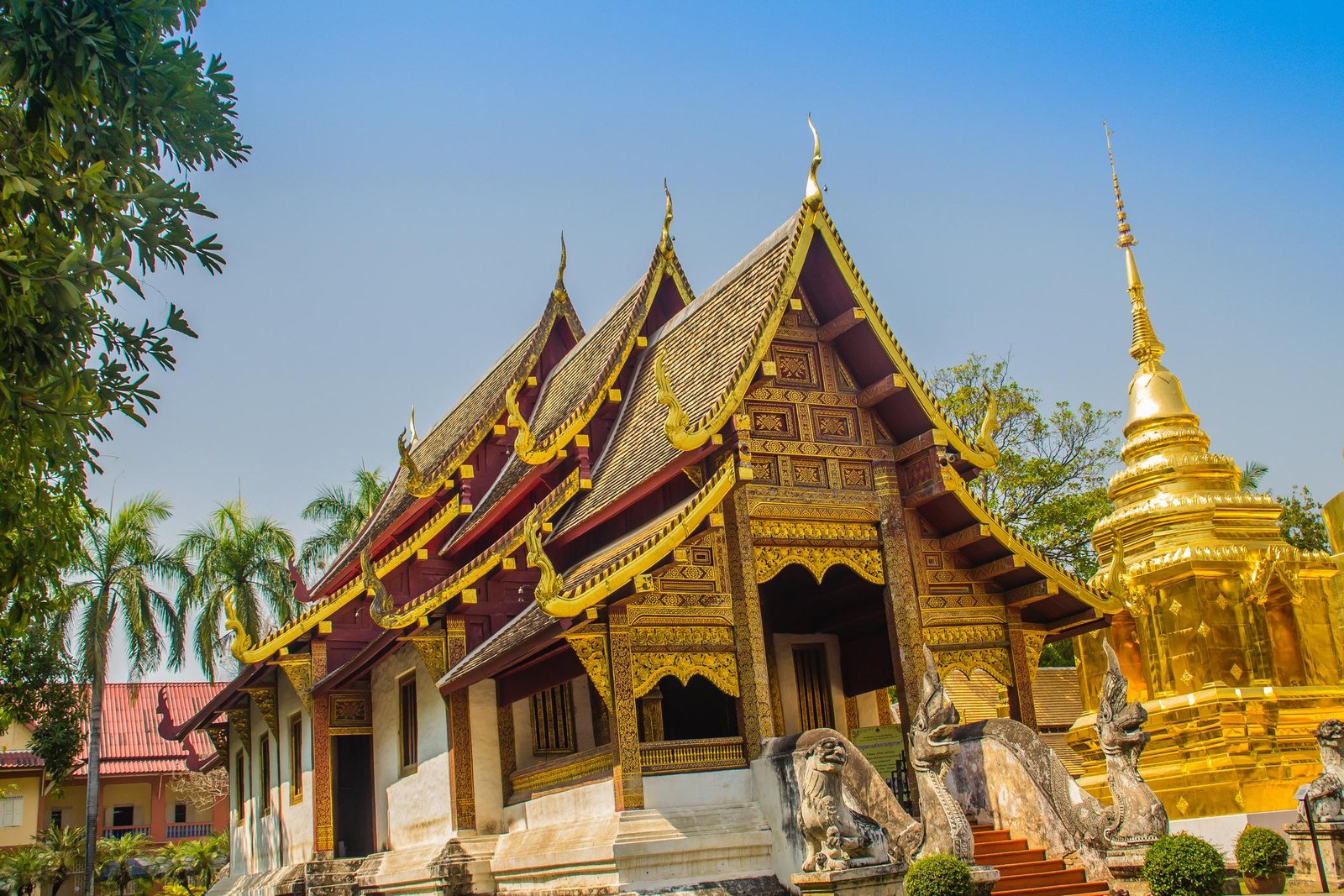
When I think of images that represent the culture of Thailand, temples are probably the first ones that come to mind.
And it makes sense.
The Thai wats present a very characteristic architecture, with:
- Stepped roofs.
- Golden decoration.
- Ceramics and mosaics.
- Religious sculptures.
- Nagas.
- Stupas.
- Murals.
- Ornamental details.
Wat Arun, in Bangkok, is one of the most famous examples.
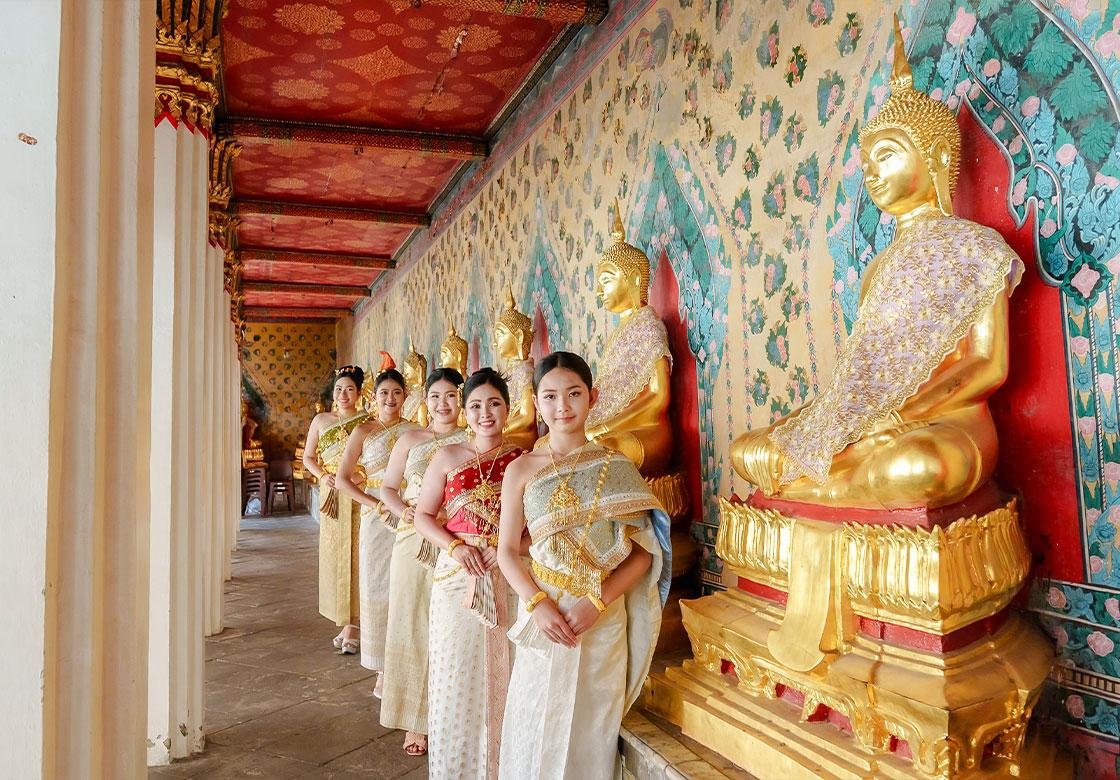
But traditional architecture is not limited to temples.
There are also traditional houses, wooden buildings, elevated homes and different regional styles.
The houses of the spirits
One of the things that arouses the most curiosity in Thai culture are the small spirit houses , known as san phra phum or related to different types of spiritual sanctuaries.
It is common to find small structures in front of homes, hotels, shops and other buildings.
They are part of popular beliefs and the coexistence between Buddhist practices and animist traditions.
Worldpackers also highlights the presence of these small houses within the everyday Thai landscape.
And this is important: Thai spirituality cannot be explained solely from institutional Buddhism . Popular beliefs also have considerable weight.
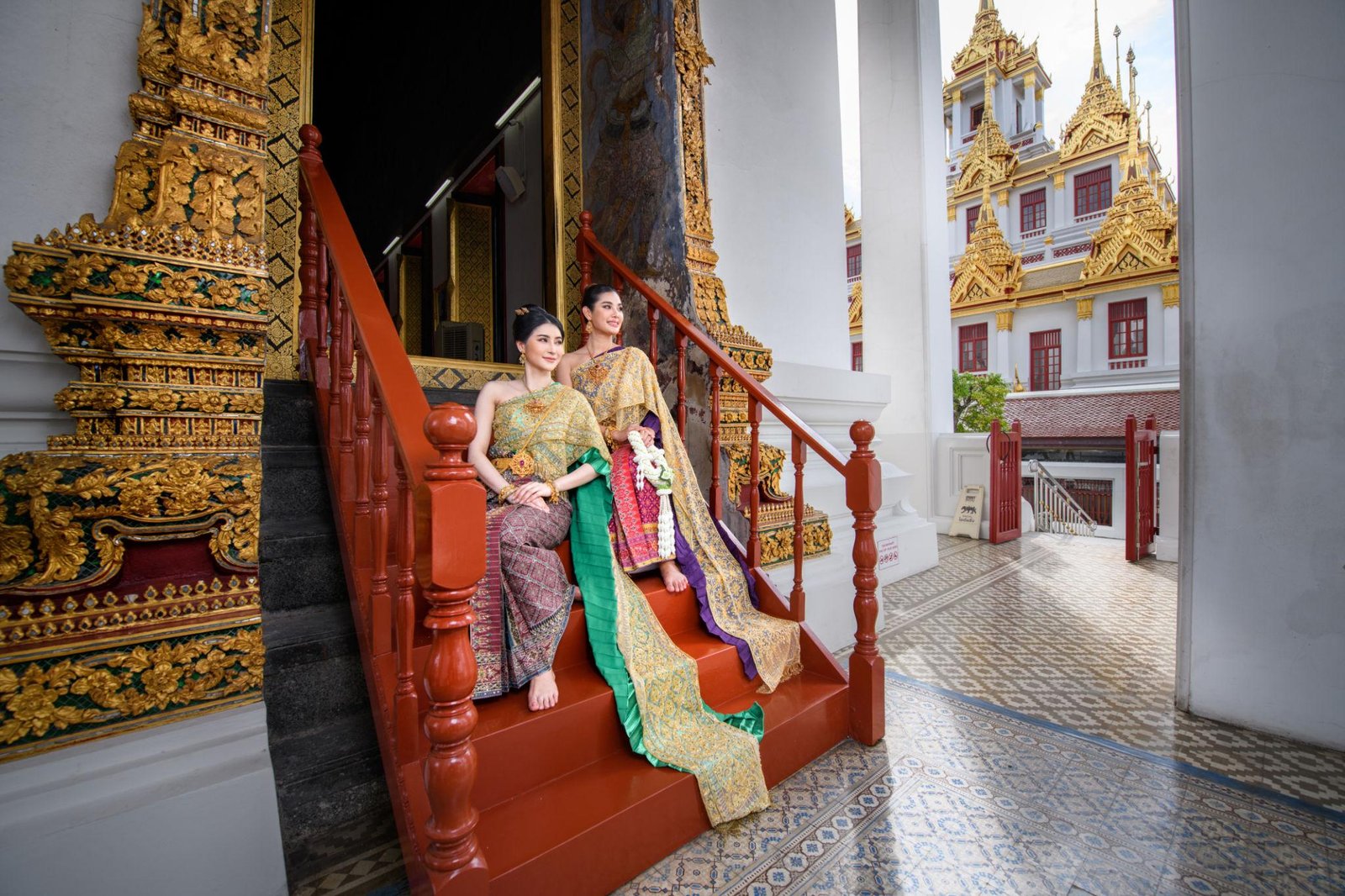
Traditional Thai clothing
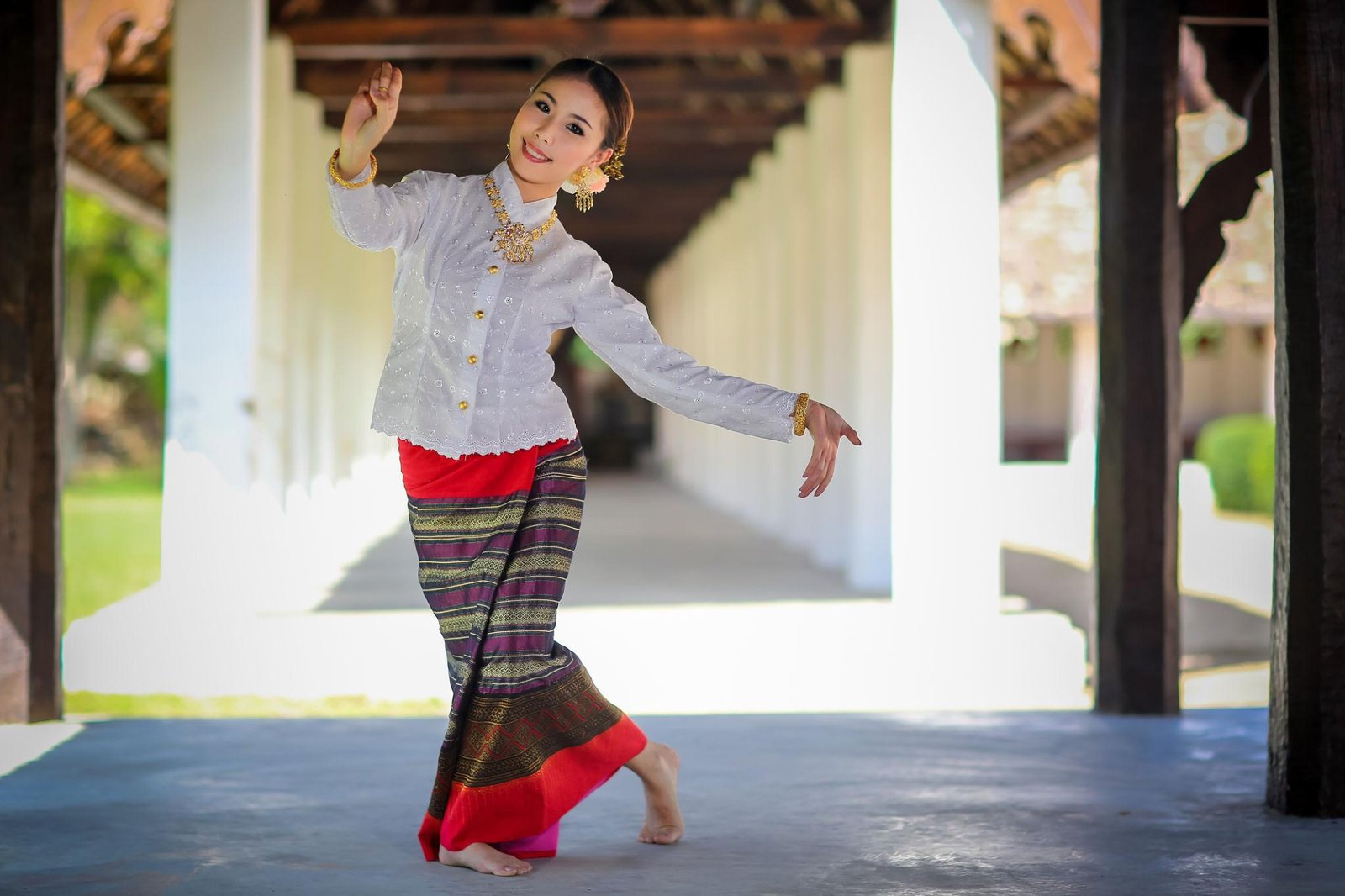
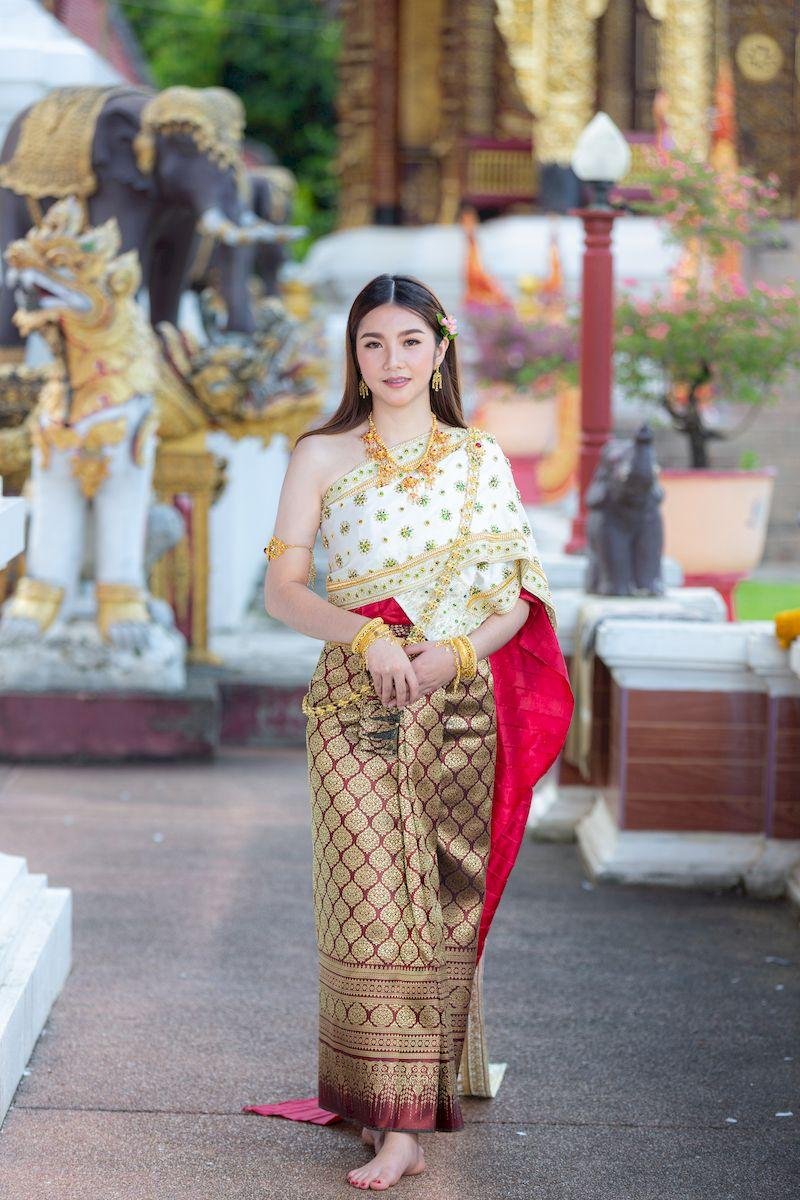
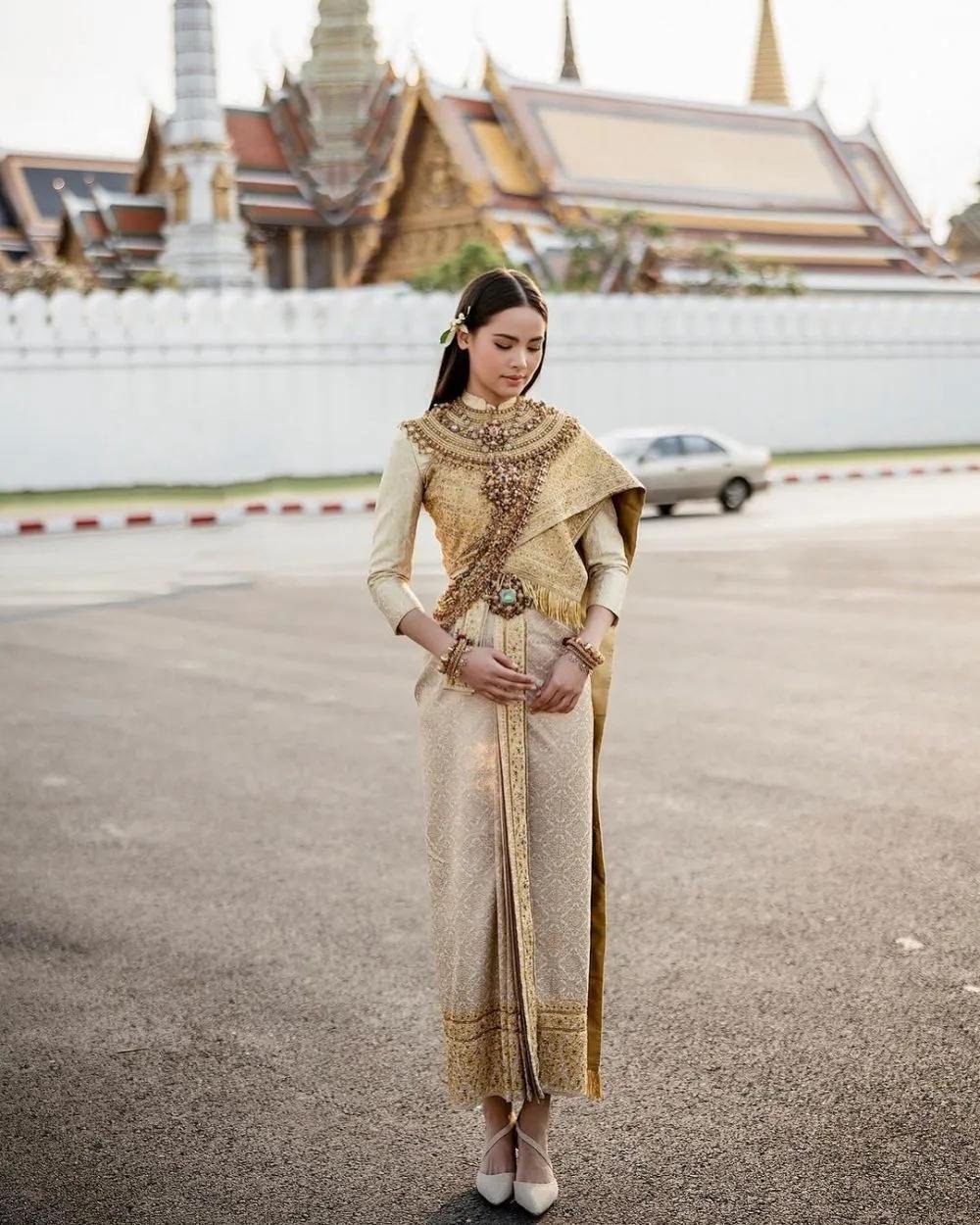
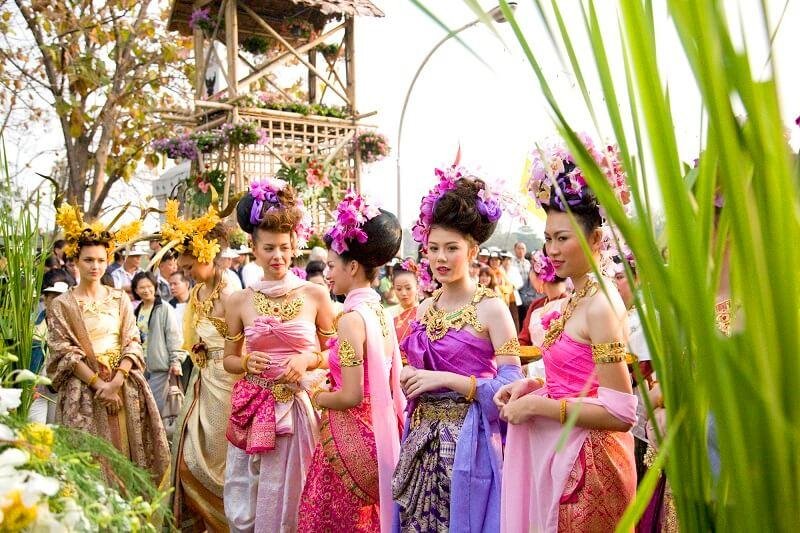
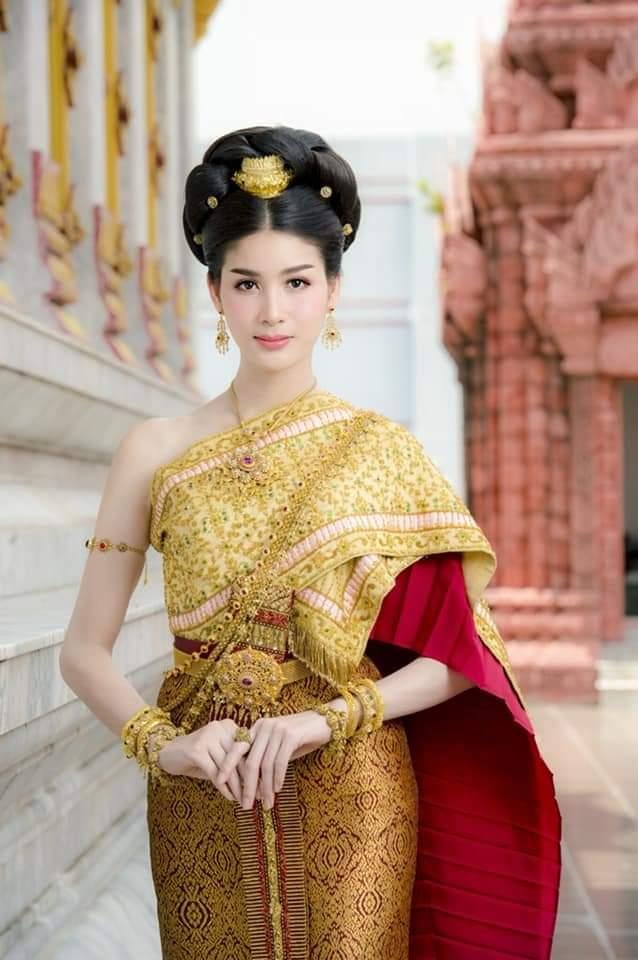
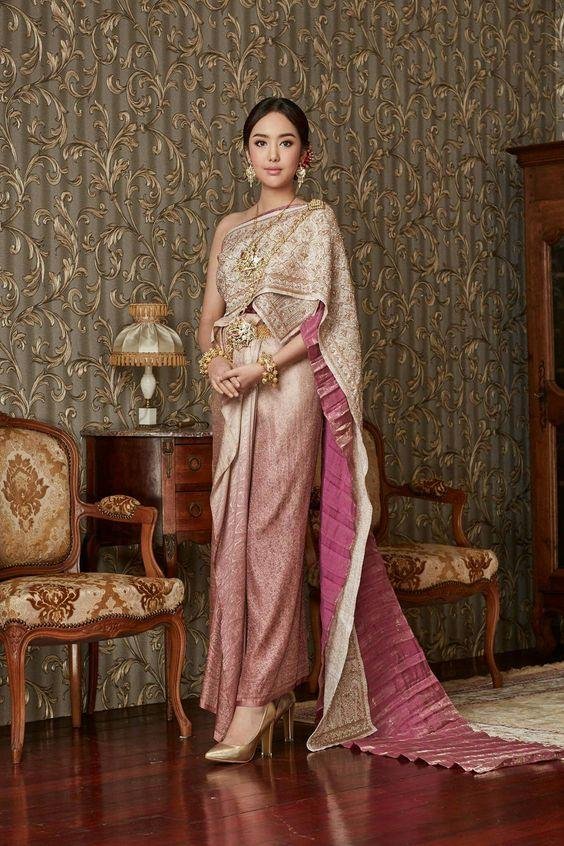
Traditional Thai clothing is generally called chut thai .
There are different styles depending on the occasion, region and context.
Currently used especially in:
- Weddings.
- Ceremonies.
- Holidays.
- Official acts.
- Cultural celebrations.
Thai silk and traditional fabrics are also an important part of this heritage.
UNESCO also maintains a candidacy related to the Chud Thai , focused on the knowledge, craftsmanship and practices linked to the Thai national costume.


Muay Thai as a cultural expression
We can’t talk about Thai culture without mentioning Muay Thai .
It is much more than a combat sport.
It is related to traditions, rituals, music and ceremonies that accompany certain combats.
One of the most recognizable elements is the wai kru , a ceremony through which the fighter pays homage to his masters and expresses respect before the fight.
UNESCO includes Muay Thai among the intangible cultural heritage elements of Thailand pending inscription, according to its current inventory.
The culture of Thailand between tradition and modernity
One of the things I like most about analyzing Thailand is that there is no simple separation between “traditional” and “modern.”
You can have a centuries-old temple just minutes from a gigantic shopping center.
You can find a Buddhist ceremony and, at the same time, young people consuming T-pop and digital culture.
You can eat in a traditional market and then end up in a neighborhood full of modern cafes.
Bangkok represents this mix especially well.
Contemporary Thai culture incorporates film, television, social media, pop music, fashion, video games and international trends, but that doesn’t mean traditions have disappeared.
They have rather adapted.
T-pop and youth culture
Thai popular culture has gained quite a bit of international visibility in recent years.
T-pop combines local elements with international influences, especially K-pop, J-pop and other Asian genres.
Thai series, especially youth dramas and BL productions, have also gained international audiences.
This is important because it shows that current Thai culture does not live solely in temples and traditional festivals .
He is also on TikTok, YouTube, music, fashion, television and social media.
Customs of Thailand that you should know
If one day you want to visit the country, there are some cultural norms that I would keep in mind.
In temples
The most prudent thing is:
- Cover shoulders.
- Cover the knees.
- Remove shoes when appropriate.
- Speak with respect.
- Do not touch religious images.
- Do not pose disrespectfully next to Buddha figures.
- Follow the signs at the location.
Respectful clothing in temples is a recommendation also highlighted by Worldpackers.
With feet
Avoid:
- Point with them.
- Target people.
- Point to Buddha images.
- Use them to get someone’s attention.
With head
Avoid touching strangers’ heads, especially in a casual or abrupt way.
With the monks
Buddhist monks receive a high level of social respect and it is advisable to observe the specific rules of the place when interacting with them.
In houses
If you are invited to a house, see if the hosts take off their shoes. Normally it will be a good sign to do the same.
What does famous Thai hospitality really mean?
You’ve probably heard of the famous Thai smile.
But I think it’s better not to fall into clichés.
Kindness does not mean that all Thai people are the same or that any situation will automatically be perfect.
The interesting thing is in values such as respect, courtesy, consideration for elders and the importance of maintaining harmonious social relationships.
That’s why some situations may work differently than what we are used to in the West.
Why is Thailand’s culture so special?
After reviewing all this information, I think the best way to understand Thai culture is to see it as a mix.
Buddhism + local traditions + family + regional diversity + Asian influences + modernity.
There is not a single piece that explains the country.
Buddhism helps to understand temples and many festivals. The family helps to understand certain celebrations. Gastronomy reflects centuries of cultural exchange. The arts show historical traditions. And Bangkok shows how all of this can coexist with a modern and globalized society.
That combination is precisely what makes the culture of Thailand so interesting.
Frequently Asked Questions (FAQs)
What is the culture of Thailand?
Thailand’s culture is a combination of local traditions, Theravada Buddhism, influences from India, China and other peoples of Southeast Asia, as well as strong cultural differences between regions.
What is the main religion of Thailand?
The predominant religion is Theravada Buddhism. There are also important Muslim communities and Christian, Hindu and Sikh minorities.
What traditions does Thailand have?
Among the best-known traditions are the wai greeting, Buddhist ceremonies, Songkran, Loy Krathong, different traditional dances, respect for elders and certain rules related to the head and feet.
What is Songkran?
Songkran is the traditional Thai New Year. It is celebrated in April and combines family gatherings, religious practices, respect for elders and rituals related to water. It was registered by UNESCO as intangible cultural heritage in 2023.
What food is typical of Thailand?
Popular dishes include Pad Thai, Tom Yum, Tom Kha, Thai curries, Som Tam and Mango Sticky Rice.
What language is spoken in Thailand?
The national language is Thai, although there are different regional varieties and numerous local community languages.
What is wai in Thailand?
The wai is the traditional Thai greeting performed by joining the hands and bowing the head slightly. It is an expression of respect and courtesy.
Why do Thais take off their shoes?
Taking off your shoes is a practice related to cleanliness and respect, especially before entering temples, homes and certain spaces.
What not to do in Thailand?
It is advisable to avoid pointing with your feet, pointing your feet at people or images of Buddha, touching the heads of strangers and entering temples with inappropriate clothing.
What are the most important traditional festivals in Thailand?
Songkran and Loy Krathong are two of the best-known celebrations, although there are many other regional festivals. UNESCO currently recognizes several elements of Thai intangible cultural heritage, including Songkran, Khon, Nora, Nuad Thai and Tomyum Kung.
Does Thailand have different cultures depending on the region?
Yes. The north, Isan, Bangkok and the south present quite marked linguistic, gastronomic, historical and cultural differences. That is why it is more accurate to talk about a diverse Thai culture than about a single uniform tradition.
What really defines Thailand
If I had to summarize all of the above in a few ideas, I would stay with these:
- Buddhism is deeply integrated into society.
- The family is of enormous importance.
- Respect is essential in social relationships.
- Gastronomy is an essential part of the national identity.
- The holidays keep many traditions alive.
- regions have their own cultural identities.
- Crafts, music and dance preserve historical knowledge.
- Modern culture coexists with traditions.
- The Thai language and writing are fundamental elements of identity.
- Spirituality combines Buddhism with older folk beliefs.
And perhaps that is the part that interests me most when I study the culture of a country: discovering that behind the images that we all know there is a much more complex society.
In Thailand you can start admiring a golden temple, continue trying a dish of street food, listen to traditional music, encounter a religious celebration and end up seeing young people consuming pop culture in a Bangkok shopping mall.
That’s all Thailand too.