
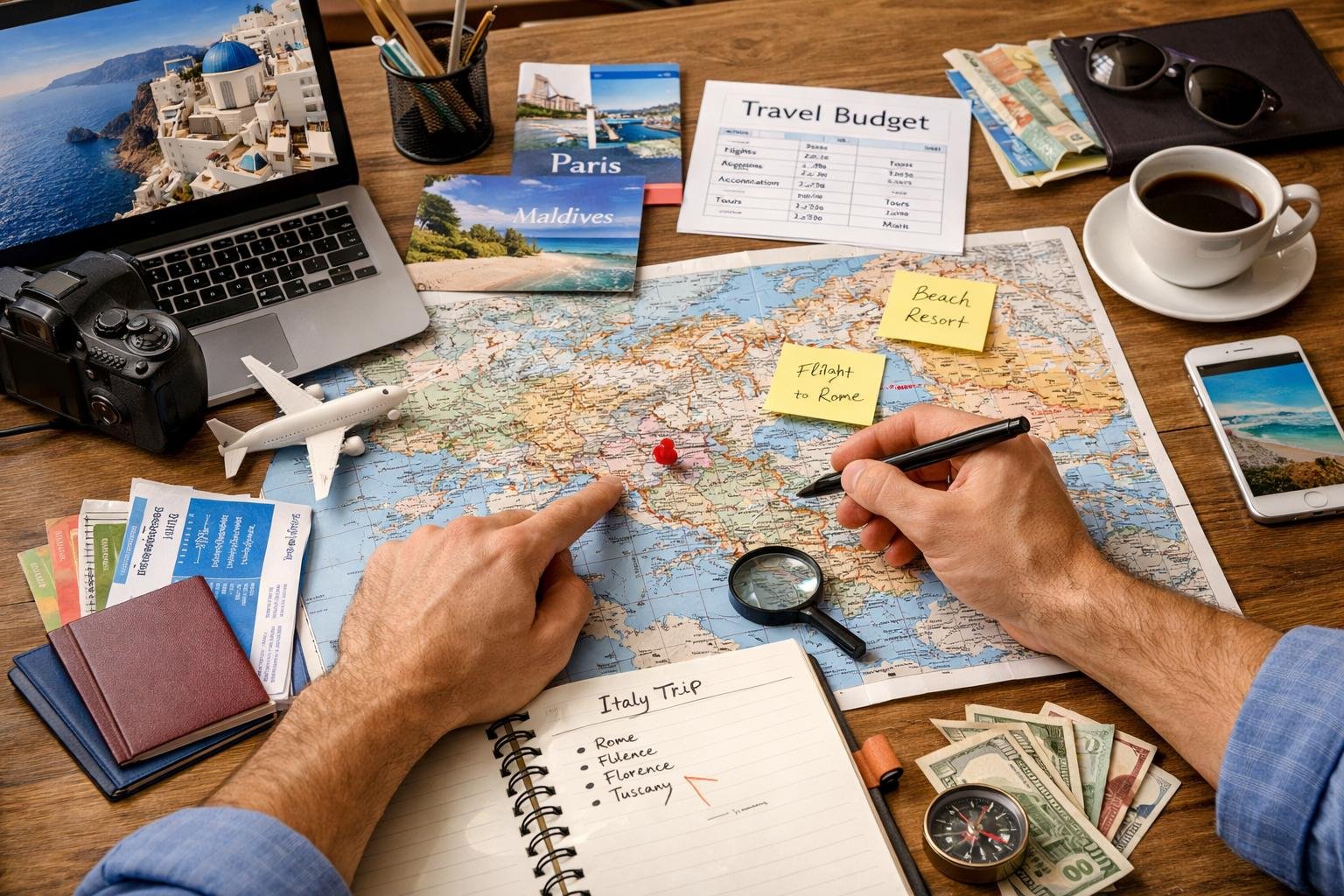
There is something I especially like about traveling: many times the trip begins well before arriving at the airport. It starts in front of a computer, comparing destinations, checking flights, looking for a well-located hotel and trying to keep the budget from getting out of hand.
Today it is perfectly possible to book your next travel destination from home , and I’m not just talking about buying a flight. From the same sofa you can research destinations, compare accommodations, organize an itinerary, book activities and leave practically everything ready before packing your suitcase.
The problem is that having so many options can also complicate things. There are search engines, online agencies, hotel platforms, tourist packages, applications, loyalty programs and tools that even use artificial intelligence to help you organize the trip.
Therefore, my recommendation is not to start directly searching for “the best price”. First you have to know what trip you want to take, how much you can spend and which parts are worth booking together .


Can I really organize and book an entire trip from home?
Yes. And, in fact, for many people it is one of the most comfortable ways to prepare for a vacation.
You can take care of practically everything from home:
- Choose the destination.
- Compare flights.
- Search hotels and apartments.
- Review tour packages.
- Create an itinerary.
- Book excursions and activities.
- Rent a car if you need it.
- Take out travel insurance.
- Check entry requirements.
- Check opinions from other travelers.
- Save reservations and documents.
- Compare different quotes before paying.
One of the trends that catches my attention the most is that some platforms are no longer limited to showing options. For example, Houfy offers an AI-based travel planner that can generate daily itineraries with restaurants, attractions, accommodations, maps, and travel times. Additionally, the itinerary can be modified and shared.
On the other hand, platforms like Expedia have opted for tools that allow you to save flights, hotels and activities to facilitate planning, while Waynabox takes the idea in a completely different direction: booking an experience in which even the destination can remain a surprise until shortly before the trip.
That proves something important: there is no longer just one way to book a trip online .
The first step: decide what type of trip you want to take
Before opening ten browser tabs, I would start with something much simpler: defining the type of trip.
Organizing is not the same:
- An affordable multi-day trip.
- A weekend getaway.
- A family trip.
- A trip as a couple.
- A tour of several countries.
- A beach trip.
- A nature adventure.
- A cultural trip.
- A gastronomic route.
- A surprise trip.
This seems obvious, but it completely changes the way you search.
For example, if I want a three-day getaway, it probably makes more sense to look for direct flights and a centrally located hotel. If I am going to spend three weeks traveling through several countries, then the price of the initial flight stops being the only important factor and connections, internal transportation and the location of each accommodation begin to matter.
Fixed destination or flexible dates?
This is one of the first decisions that can help you save.
If you have a mandatory date because it coincides with a work vacation, a wedding or some event, you will have to look for the best destination for those dates.
But if you have freedom, you can do it the other way around:
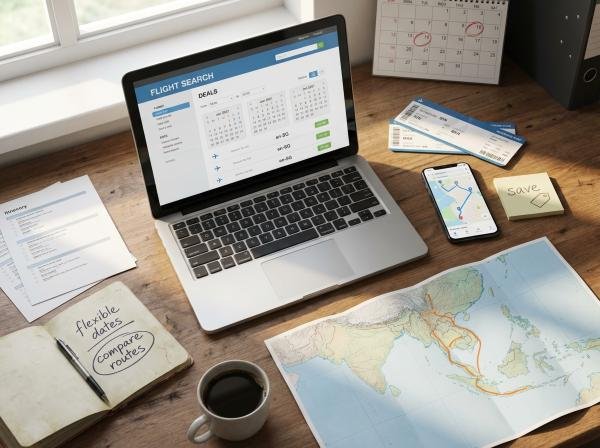
first look for when it is cheapest to travel and then decide where to go.
Personally, I find this second strategy much more interesting when the budget is limited.


How to choose your next destination without spending more
Once the type of trip has been defined, it is time to compare destinations.
Here I don’t recommend falling in love with the first place that appears on Instagram. A spectacular photograph can make you want to travel immediately, but then you discover that the flight is very expensive, that the hotel is far from the center or that you need several transports to get to the places you really want to visit.
I would compare at least these five elements:
1. Transport price
Don’t just look at the one-way price.
Calculate the full cost:
round trip + luggage + transfers + local transportation.
A seemingly cheap flight may no longer be cheap when you add luggage, seating, transfer from a secondary airport, and transportation to your accommodation.
2. Accommodation price
Accommodation usually becomes one of the biggest expenses of the trip.
Don’t just compare the price per night. Check:
- Location.
- Taxes.
- Additional fees.
- Breakfast.
- Cancellation.
- Check-in time.
- Wi-Fi.
- Transportation nearby.
- Recent reviews.
This is where it is worth checking several platforms before booking.
3. Season
Traveling during high season can completely change your budget.
A destination that seems expensive in July may be much more accessible at another time of year.
The experience also changes: fewer tourists, more availability and, in certain places, much more pleasant temperatures.
4. Available time
There is no point in choosing a faraway destination if you only have two days.
Travel time is also part of the trip.
5. Activities
A cheap hotel does not necessarily mean that the trip is cheap if all the activities you want to do have high prices.
That’s why I prefer to calculate an approximate budget of for the entire trip , not just the flight.
Compare flights online before booking
This is where I normally start using search engines and comparators.
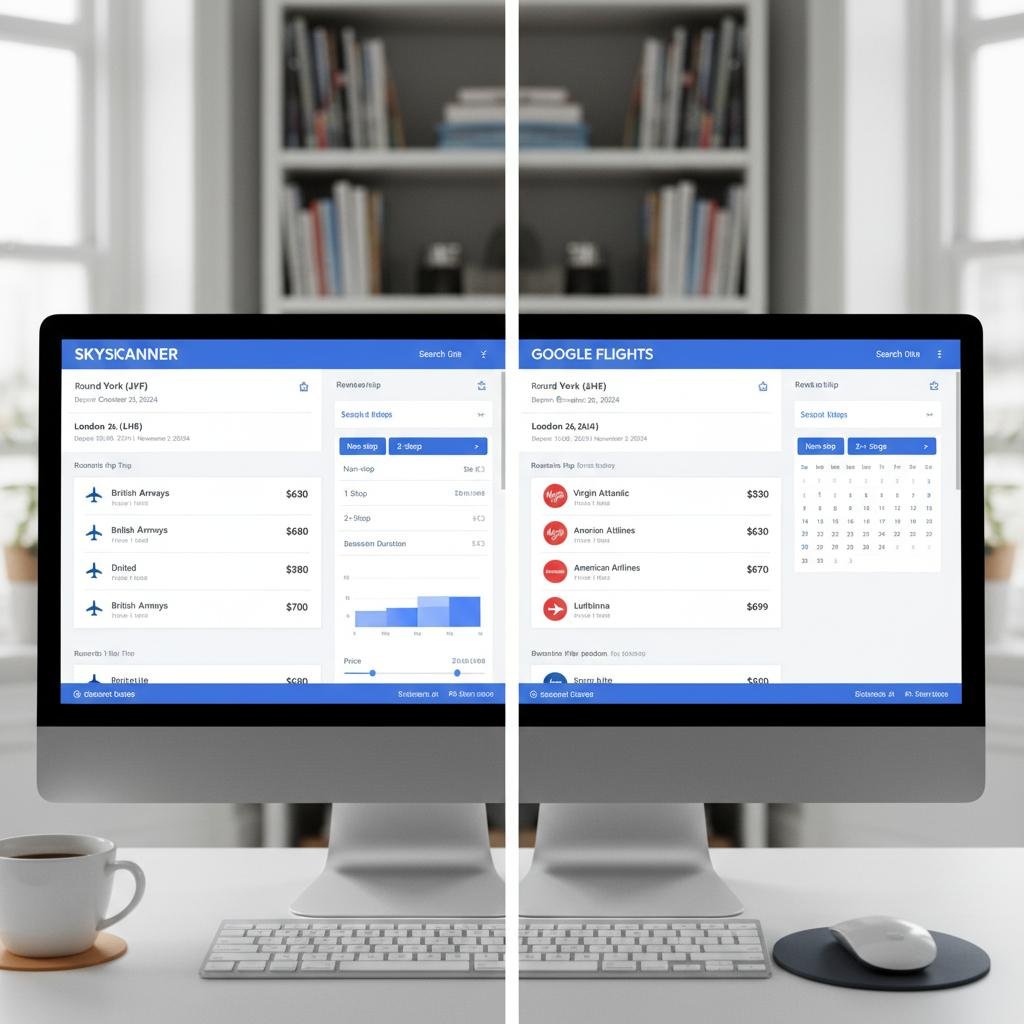
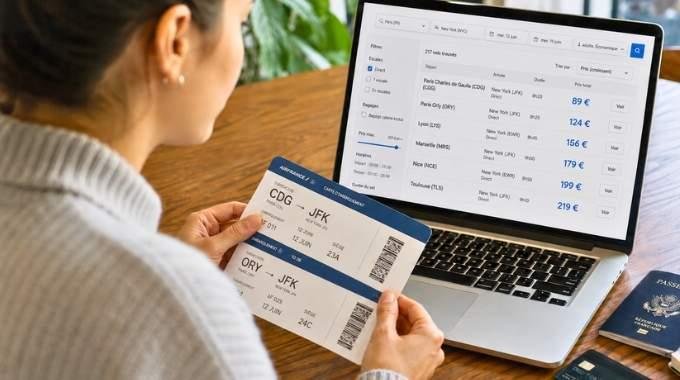
The idea is not to automatically book the cheapest flight, but to find a reasonable combination of price, time, duration and conditions.
For example, an option may cost €40 less but have a 12-hour layover. If I lose practically a full day, perhaps those €40 savings are not worth it.
It is also worth checking:
- Departure airport.
- Arrival airport.
- Number of scales.
- Total duration.
- Luggage included.
- Change policy.
- Cancellation policy.
- Schedules.
- Final cost.
And there is another strategy that works especially well when dates are flexible: compare nearby days .
A change of one or two days can change the price quite a bit.




Book accommodation: don’t get the first hotel
After transportation comes one of the most time-consuming parts: finding where to sleep.
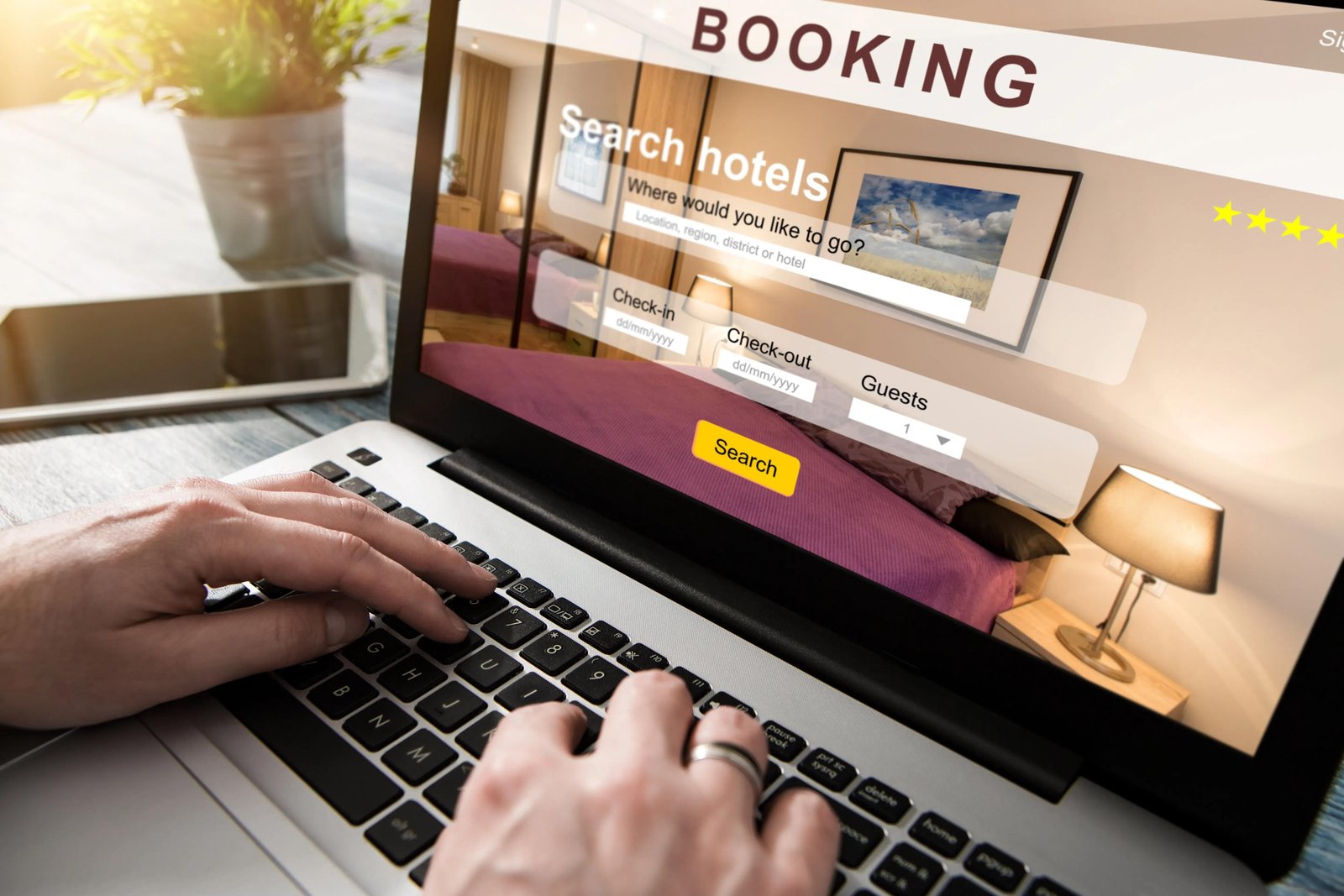
Here I recommend not automatically sorting by lowest price.
I first filter by location and then compare prices.
Why?
Because a hotel €20 cheaper per night may be so far from everything that you end up spending those same €20 on transportation.
Also, when I review accommodations, I pay special attention to recent reviews. An overall rating of 8.5 may be interesting, but I care much more about knowing what guests are currently saying .
I also check if the price shown includes all charges and if there is free cancellation.





Is it better to book a flight and hotel together?
It depends.
Online travel agencies and large platforms usually offer packages that combine flight, hotel and, in some cases, other services. Expedia, for example, promotes the possibility of combining different elements of the trip to achieve certain savings.
But I wouldn’t assume that a bundle is automatically cheaper.
What I would do is compare:
Package Price
vs.
separate flight + separate hotel.
And always taking into account the conditions of each reservation.
Sometimes the package clearly wins. Other times booking each item separately offers more flexibility.
Organize your itinerary before purchasing activities
This is a part that many people do backwards.
They find an interesting excursion, book it, and then try to build the trip around it.
I prefer to make a basic outline first.
For example:
Day 1: arrival and tour of the center.
Day 2: main monuments and museums.
Day 3: excursion outside the city.
Day 4: less touristy neighborhoods and gastronomy.
You don’t need to have every minute scheduled.
In fact, I prefer to leave spaces free.
An itinerary that is too rigid can turn a vacation into a race against the clock.
Tools like Houfy’s planner try to solve precisely this problem by creating routes per day, including places, times and displacements. In addition, it allows you to modify the recommendations later.





How to book activities without filling out the expense trip
Once you have accommodation and transportation, you can start looking at activities.
Here I recommend dividing them into three groups:
Essential activities
They are the ones for which you really chose that destination.
For example, visiting a specific monument, visiting a national park or taking a specific excursion.
Interesting activities
I would like to do them, but they would not change my trip if they are not available in the end.
Optional activities
They are those that I can do depending on time, budget and desire.
This classification helps a lot to control the budget.
Because when you are sitting in front of the computer it is very easy to think:
“Since I’m here, I can do this too.”
And five reservations later you have a trip that is much more expensive than you had planned.
Another option: let someone else choose the destination
Not everyone wants to spend hours comparing hotels, flights and activities.
If you are one of those people, there is another possibility: surprise trips.
Waynabox, for example, allows you to select dates, travelers and origin, discard certain destinations and finally discover what the destination will be shortly before the trip. For your Europe options, the package may include flights and accommodation.
I find it an especially interesting option for those who say:
“I want to travel, but I don’t want to spend three weeks organizing it.”
The trick is precisely in eliminating part of the decision.
Of course, this model is not for everyone. If you need to control exactly the hotel, the flight time and each activity, it is probably best to organize it on your own.
Is it better to use a travel agency or book on your own?
There is no universal answer.
I would break it down like this.
Book on your own
Makes sense when:
- You like to compare prices.
- You have experience traveling.
- You want to control every detail.
- You have flexible dates.
- You want to customize the itinerary.
Use an agency or platform
May be interesting when:
- You don’t have time to investigate.
- You want to buy a package.
- You need assistance.
- You travel in a group.
- You want to combine several services.
- You prefer to have part of the organization centralized.
There are also intermediate solutions: you can do your own research and use an agency only for certain services.
And I wouldn’t rule out agencies simply because “everything can be done online.” On certain complex trips, having someone who knows the conditions of suppliers and connections can save you a lot of headaches.
How to buy flight tickets online without making mistakes
There are small details that can make a big difference.
When I find an interesting flight, before paying I check again:
- Full name of the passengers.
- Date.
- Airport.
- Schedule.
- Luggage.
- Scales.
- Conditions of change.
- Refund Policy.
- Final price.
And I especially check the luggage.
A €70 flight that ends up costing €130 after adding a suitcase and other extras is no longer really a €70 flight.
When should I book my next trip?
There is no magic number of days that works for all flights, hotels and destinations.
The price depends on the route, season, demand, availability and conditions of the supplier.
That’s why I’m wary of overly rigid recommendations like “always book exactly X days in advance.”
What you can do is start monitoring prices in advance.
If you are clear that you want to travel on certain dates, start researching before you need to buy.
This way you can recognize when a really interesting price appears.
Information published by Expedia has also highlighted the importance of booking in advance and comparing options, although optimal times depend on the type of trip and market.
How to Create a Realistic Budget for Your Vacation
This is probably my favorite part of planning because it avoids a lot of surprises.
I would divide the budget into these categories:
| Expense | Budget |
|---|---|
| Flight or transportation | XX € |
| Hotel | XX € |
| Local transportation | XX € |
| Food | XX € |
| Activities | XX € |
| Insurance | XX € |
| Extras | XX € |
| Contingency fund | XX € |
You don’t need to know the exact amounts from the beginning.
The important thing is to create an estimate.
Also, I would always add a small amount for incidentals.
Because someone always appears.
It could be an unexpected taxi, an extra night, an entry that you hadn’t considered, or simply that a restaurant ends up costing more than expected.




What to check before confirming any reservation
Before clicking “pay”, I would do this little checklist:
Destination
- Is this really the place I want to visit?
- Are the dates correct?
- Do I need any entry requirements?
Flight
- Is the airport correct?
- Is luggage included?
- How long does the entire journey take?
- Are there scales?
Hosting
- Is it well located?
- What is the final price?
- Can I cancel?
- What do recent reviews say?
Activities
- Do I need to reserve them in advance?
- Can I cancel?
- Do I really want to make them?
Documentation
- Is my passport valid?
- Do I need a visa?
- Do I need insurance?
- Are there health or entry requirements?
This last point is especially important because entry conditions can change. It is not advisable to rely solely on an old article or what someone commented on social networks.
Organizing everything from home also means having documents under control
After booking, I don’t consider the job done.
I save in one place:
- Flight confirmation.
- Accommodation reservation.
- Sure.
- Entries.
- Activity reservations.
- Contact details.
- Transportation information.
- Required documentation.
I also recommend keeping copies accessible without an Internet connection.
This may seem like a stretch until you arrive at an airport with poor connections.
Opinion changes quickly there.
A simple way to organize your entire next trip
If you want to do it without complication, this would be my order:
Step 1: Define the budget
Decide how much you can really spend.
Step 2: Choose dates
If they are flexible, even better.
Step 3: Compare destinations
Don’t go for the first one.
Step 4: Check flights
See final price, schedules, stopovers and luggage.
Step 5: Find hosting
Prioritize location, condition and reviews over the lowest price.
Step 6: Calculate transportation and food
Many expenses appear here that are initially forgotten.
Step 7: Create a basic itinerary
You don’t need to plan every minute.
Step 8: Reserve important activities
Especially those that tend to sell out.
Step 9: Review documentation
Passport, visas, insurance and entry requirements.
Step 10: Save all commits
This way you will have everything ready before leaving.




What tools can I use to plan a trip online?
You can now combine multiple tools instead of relying on just one.
To find inspiration you can use travel blogs, maps and travel communities.
For flights, comparators and official airline pages.
For hotels, accommodation platforms, maps and official websites of the establishments.
For activities, experience platforms and official attraction pages.
And to organize the itinerary you can use everything from a simple spreadsheet to specialized tools with artificial intelligence.
The key is to not confuse comfort with savings.
Having a platform that allows you to book everything in one place is convenient. That doesn’t automatically mean it’s the cheapest option.
That’s why I like to compare before paying.

Tour Packages: where to find the best to book

Most Recommended Travel Agencies by Continent: which ones to choose according to your destination

How to Book Hotel Accommodation Online Like an Expert

How to Buy Flight Tickets Online and Beat the Algorithm
Booking your next travel destination from home can be fun too
Planning doesn’t have to feel like doing paperwork.
For me, one of the best parts is precisely that moment when the trip begins to take shape.
First you have a vague idea:
“I want to know that country.”
Then the flights appear.
Then you find a hotel.
Then you discover a restaurant you want to try.
You find an excursion.
You look at the map.
And suddenly you have a complete route in front of you.
That is precisely the advantage of having so many tools available today.
You can spend time researching and building a trip that really suits you, rather than just buying the first package that comes along.
And if you don’t want to do all that work, there are also alternatives such as surprise trips, where much of the planning is in the hands of the platform. Waynabox, for example, bases its proposal precisely on selecting dates and preferences and then revealing the destination shortly before traveling.
Frequently Asked Questions (FAQs)
Can I book an entire trip online?
Yes. You can book flights, hotels, activities, car rentals, insurance and other services online. The important thing is to check the conditions of each reservation before paying.
Is it cheaper to book a trip online?
Not necessarily. The Internet makes it easy to compare many options, but the final price depends on the destination, dates, season, availability and conditions of each provider.
Is it advisable to book flight and hotel together?
In some cases yes, especially when a platform offers discounted packages. But it is worth comparing the price of the package with the cost of booking each service separately.
How can I find a cheap destination?
A good strategy is to have some flexibility in dates and compare several destinations. It is also advisable to calculate the total cost of the trip, not just the price of the flight.
Is it safe to book hotels online?
In general, yes, as long as you use recognized platforms or the accommodation’s official website and check the payment, cancellation and contact conditions.
How long in advance should I book a trip?
There is no universal number of days. It depends on the destination, season, route and availability. It is advisable to start researching in advance to know the prices and detect opportunities.
Can I plan a trip using artificial intelligence?
Yes. There are planning tools today that can help you generate itineraries, find activity ideas, and organize tours. Houfy, for example, offers an AI-based planner that generates daily itineraries and allows you to modify them.
What do I do if I don’t know where to travel?
You can start by defining budget, duration, climate and type of experience you are looking for. If you don’t want to choose the destination either, there are surprise travel services that allow you to leave part of the decision to chance.
What should I check before paying for a reservation?
At a minimum, review dates, names, final price, luggage, schedules, cancellation policies, taxes, accommodation location and destination entry requirements.
The best reservation is the one that fits your trip
I don’t think there is a single perfect platform for all travelers.
Some people want to find the lowest price. Others prefer to have everything organized. There are those who enjoy researching for weeks and those who just want to choose some dates, pay and start packing their suitcase.
That’s why, when I go to to book your next travel destination from home , the idea that I consider most important is not to start with the platform, but with the journey.
First I think about what I want to do, how much I can spend and how much time I have. Then I compare flights, accommodations, packages and activities.
This makes it much easier to distinguish between a really interesting offer and one that simply seems cheap.
And above all, I prevent planning from becoming another unnecessary expense.
Because in the end, traveling from home starts long before you get on the plane: starts when you turn an idea into a plan you can actually afford and enjoy.