
When I start researching the gastronomy of the United Arab Emirates , there is something that especially catches my attention: the country’s traditional food does not have much to do with the image of luxury, skyscrapers and international restaurants that we normally associate with Dubai.
Behind this modernity there is a much older cuisine, born from a quite logical combination for the territory: Gulf fishermen, Bedouin communities, oasis farmers, dates, rice, fish, meats and spices . Over time, furthermore, trade routes and the arrival of population from different parts of Asia and the Middle East made Emirati cuisine become even more diverse.
The deeper I go into this topic, the clearer I have to simply talk about “Arabic food” is an understatement. The cuisine of the United Arab Emirates shares elements with other cuisines of the Gulf, but it also has its own dishes, ingredients and customs that are worth knowing.

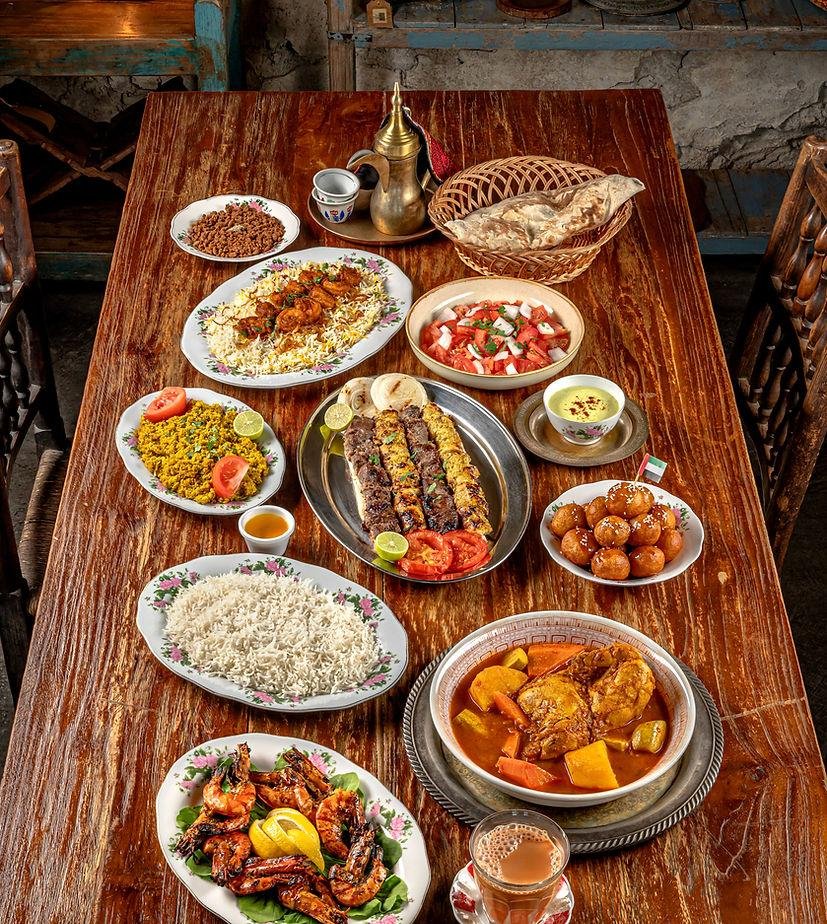

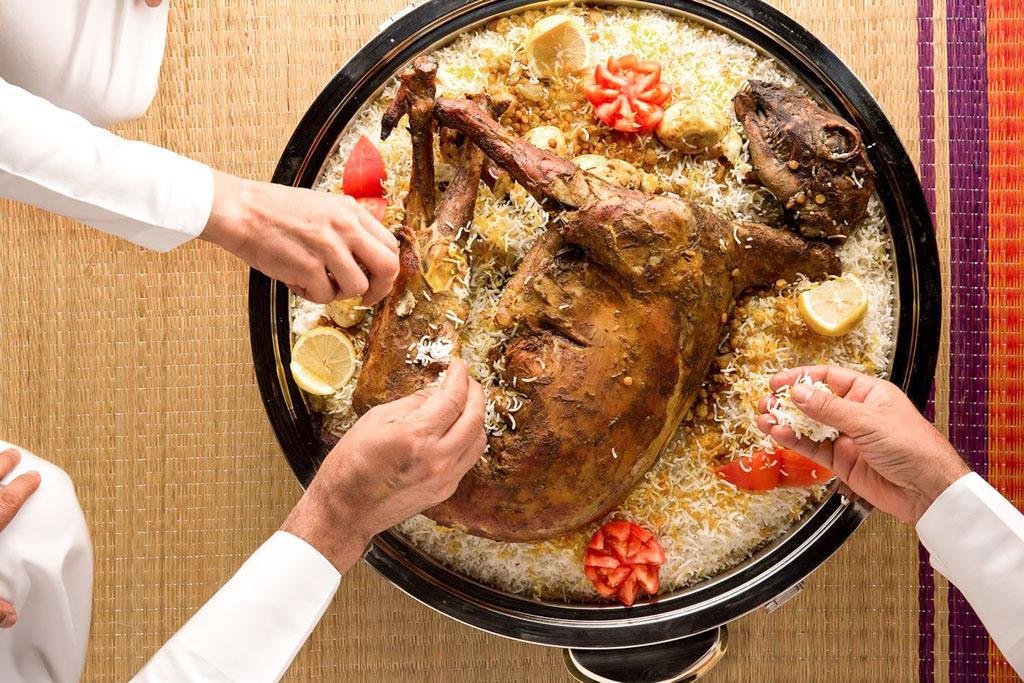


What is the gastronomy of the United Arab Emirates like?
Emirati gastronomy is deeply related to the environment and the history of the country.
For centuries, communities in the region had to take advantage of the products that were actually available. Fish and shellfish played an important role in coastal communities, while dates were essential in oases and agricultural communities. The Bedouin tradition provided meats, camel milk and preparations resistant to desert conditions.
Rice later acquired enormous importance thanks to trade and exchanges with other regions.
That is why, when I analyze a traditional Emirati dish, I usually look at four elements:
- Rice , present in many main dishes.
- Meat , especially lamb, chicken and other meats.
- Fish and seafood , linked to the tradition of the Gulf.
- Dates and spices , essential in dishes, drinks and sweets.
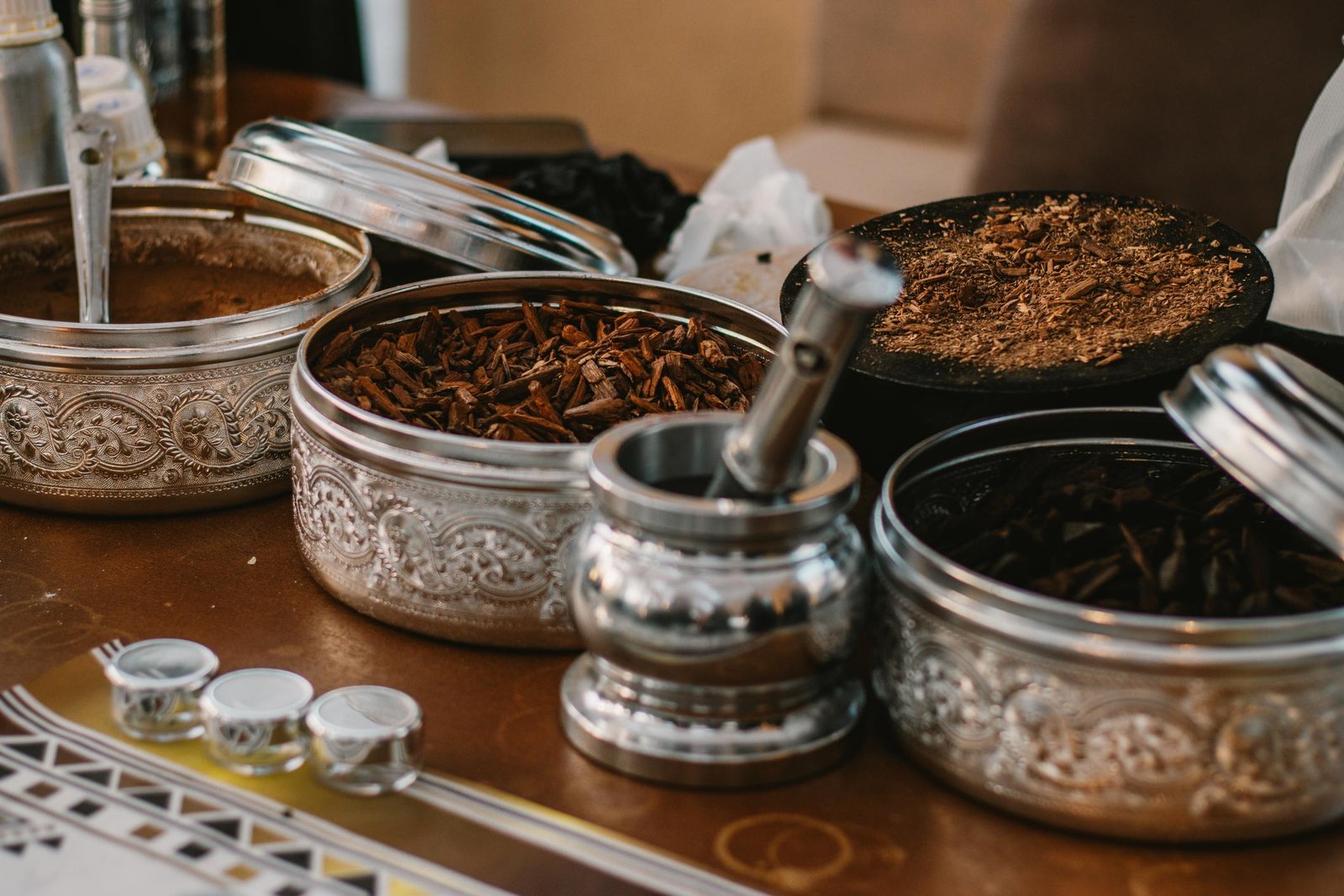
Added to this are ingredients such as cardamom, saffron, turmeric, cinnamon, dried lemon and aromatic herbs.
Characteristics of Emirati food
If I had to describe the traditional cuisine of the United Arab Emirates in a few words, I would talk about aromatic, spicy, strong and closely related to hospitality .
This is not necessarily extremely spicy cuisine. Spices are mainly used to provide aroma, depth and personality.
Among the most features are:
- Cardamom.
- Saffron.
- Turmeric.
- Cinnamon.
- Cumin.
- Pepper.
- Thyme.
- Dried lemon or loomi .
I find loomi , which is dried lemon, particularly interesting because it provides a deep, acidic flavor that helps distinguish certain Gulf dishes. In traditional Emirati cuisine it appears associated with different preparations of rice, meats and stews.
Another important characteristic is that many preparations are cooked slowly and can be made in the same pot, concentrating the flavors.
The influence of the desert, the sea and the oases
To understand the gastronomy of the United Arab Emirates you have to forget about Dubai for a moment and look back.
Traditional cuisine emerged from three great ways of life:
The Bedouin tradition
Bedouin groups depended on foods that could be easily preserved and transported. Dates, milk and certain meats were essential.
Camel milk, for example, is part of the region’s food tradition and can still be found as a gastronomic product.
The fishing tradition
Coastal communities had access to Gulf products. Fish and shellfish were an important part of the local diet for centuries.
Oasis farming
Dates are the best example.
The cultivation of the date palm in the area dates back to at least the third millennium BC, so we are talking about a food deeply rooted in the history of the region.
And this explains something that I find fascinating: the date is not simply a dessert. It can appear as an everyday food, a hospitality product, an ingredient in sweet preparations and an accompaniment to coffee.


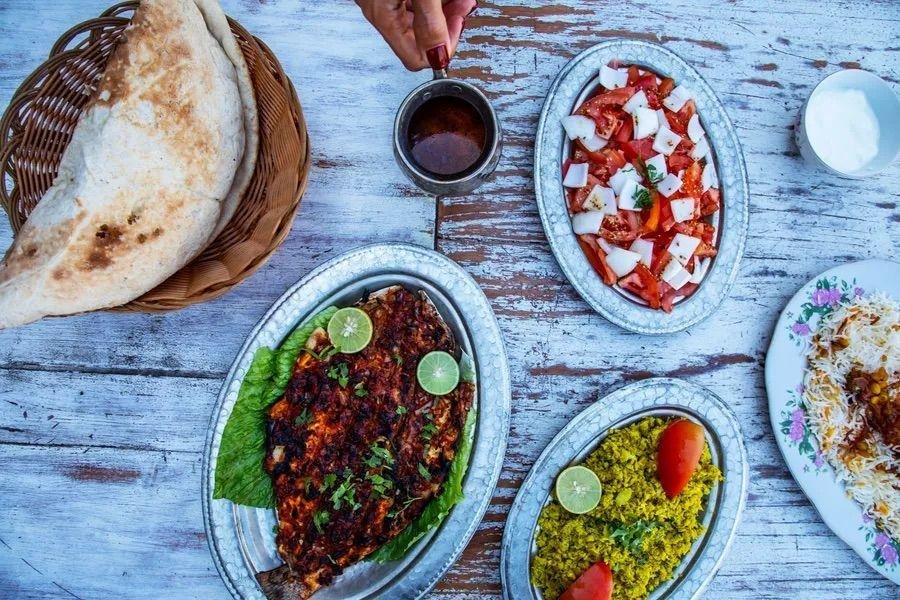


Typical dishes of the United Arab Emirates
This is where UAE gastronomy gets really interesting. There are dishes that are well known internationally and others that are much less known outside the country.
Machboos: one of the great Emirati dishes
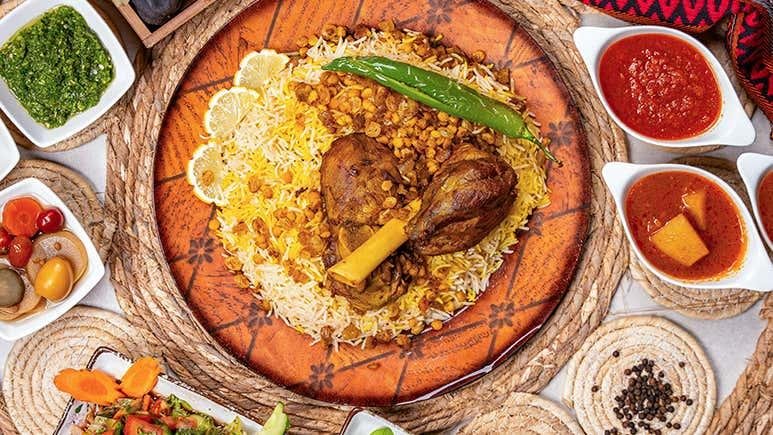
The machboos , also written majboos or makbús , is one of the dishes that I consider essential to understand the cuisine of the Emirates.
Its base is usually rice cooked with meat, fish or chicken and a mixture of spices. Depending on the recipe, cardamom, cinnamon, saffron, turmeric, dried lemon and other seasonings may appear.
The result is a very aromatic rice dish that is usually served in generous quantities and can traditionally be placed on a large platter to share.
What I like most about this type of preparation is that it shows that rice in Gulf cuisine is not simply a side dish. Here he is practically one of the protagonists.

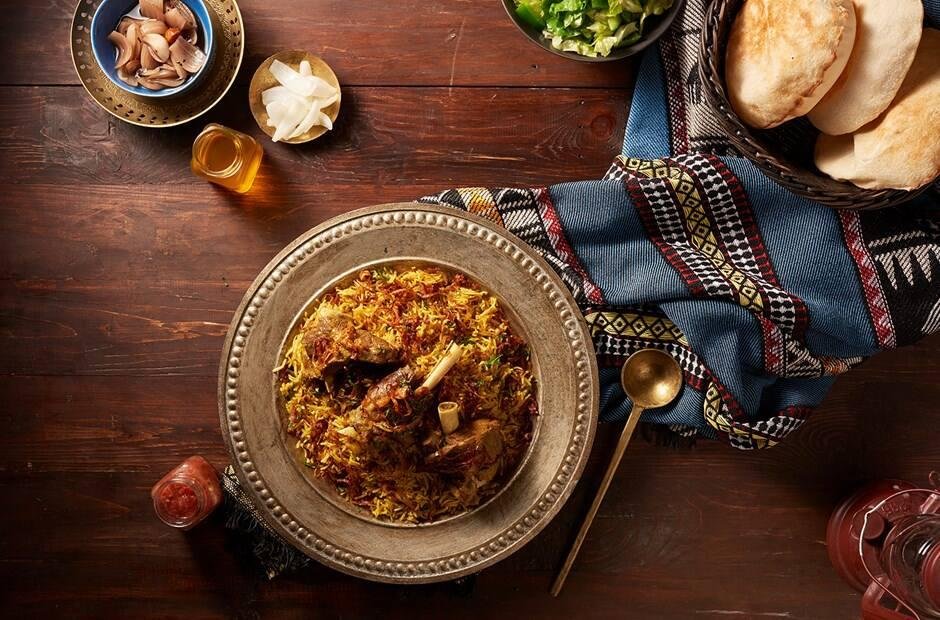



Harees: Slow Cooked Wheat and Meat
harees is another very important traditional dish.
It is prepared mainly with shredded wheat and meat, cooked slowly until a very smooth and creamy texture is achieved. It may seem simple, but precisely its slow preparation is part of what gives it personality.
It is especially known for its presence at celebrations and during Ramadan .
To me it seems like one of those dishes that is worth mentioning because it represents a different facet of Emirati cuisine: here we do not find a visually spectacular dish, but rather a preparation based on patience, texture and tradition.
Ghuzi
ghuzi is a preparation of lamb or goat meat that is served accompanied by rice and different ingredients.
The meat can be cooked for a long time to a very tender texture, while the rice absorbs the flavors of the spices and broth.
It is a dish associated with large meals and celebrations, and can be presented on large trays to share.
Maqluba
The maqluba is a dish of rice, meat and vegetables whose name refers to the way of turning the container over to serve it.
Here it is worth making a small clarification: although it is part of the gastronomic offer of the Emirates and is well known in the Middle East, it is not exclusively Emirati. It is a good example of how the region’s kitchens share recipes and traditions.
Modern Emirati cuisine itself is multicultural and influenced by the cuisines of different countries in the Middle East and Asia.
Balaleet: sweet and savory in the same dish
The balaleet is probably one of the most curious dishes for someone who has never tried Emirati food.
It is prepared with thin noodles, sugar and aromatic spices such as cardamom, and is traditionally accompanied with an egg omelet.
The result mixes a sweet component with a salty one.
And this type of contrast seems to me to be one of the most interesting things about Gulf cuisine. We do not always seek to completely separate sweet from salty; in some dishes they are deliberately combined.
Balaleet can be part of the traditional Emirati breakfast.


Luqaimat: the Emirati sweet that you have to try
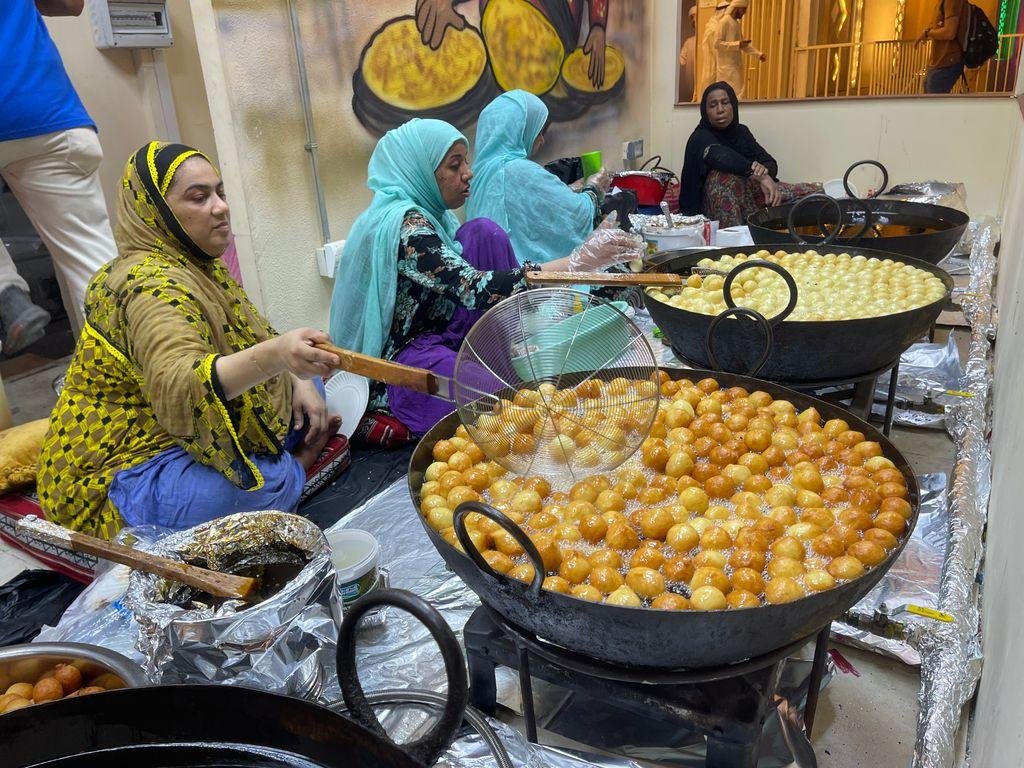
If we talk about typical desserts from the United Arab Emirates , the luqaimat appear practically always.
They are small balls of fried dough, golden on the outside and soft on the inside, which are usually accompanied with honey, date syrup or some type of sweet topping and sesame seeds.
Cardamom and saffron can be part of its preparation or flavoring.
They are simple, but that is precisely where the charm lies.
If I had to choose a traditional sweet to start discovering Emirati pastries, I would probably start with this one.
Khameer and chebab: traditional breads and doughs
Traditional breads also have their place.
khameer is a traditional flatbread that can be prepared with different ingredients and accompaniments.
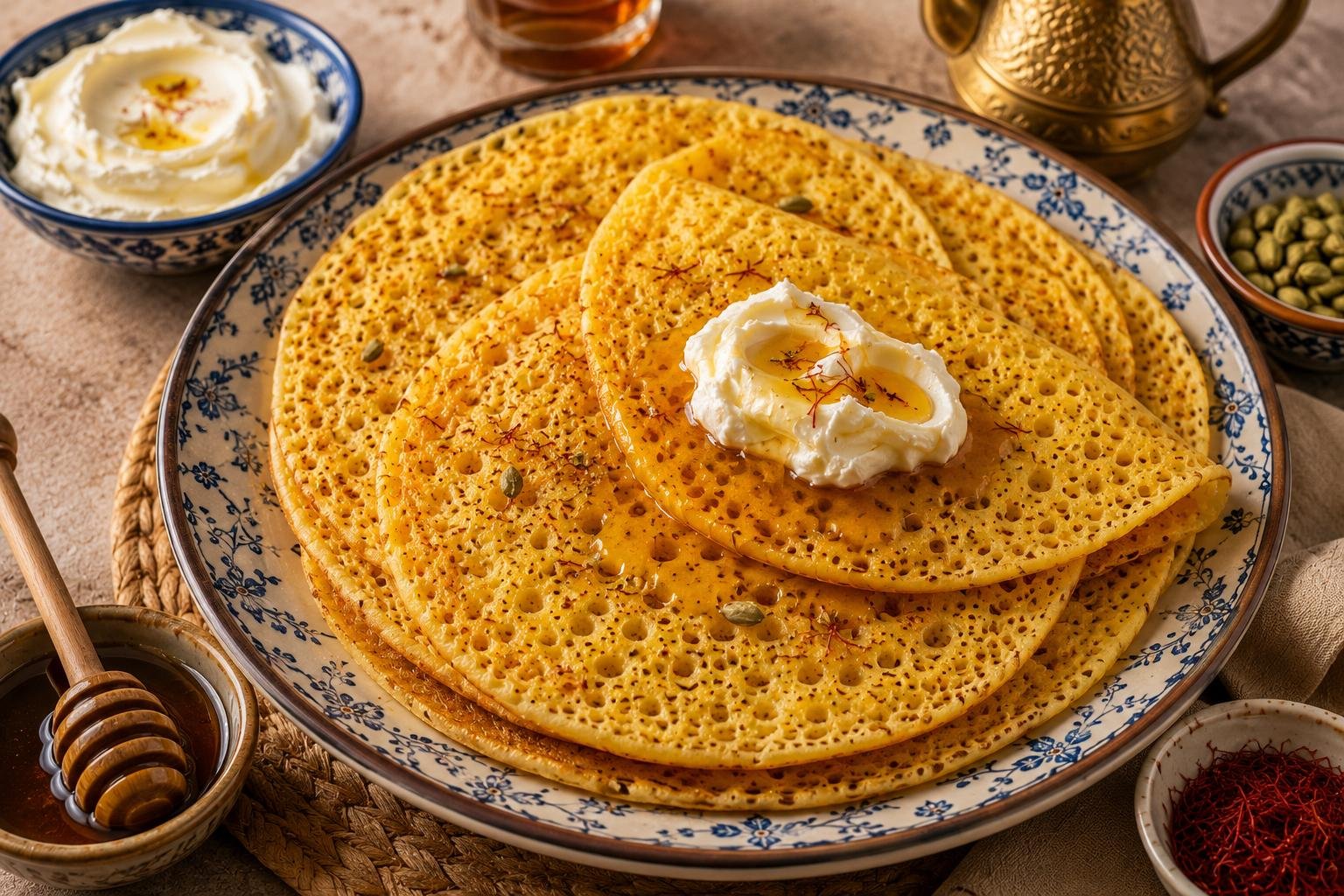
The chebab , on the other hand, is a type of pancake or thin flatbread usually flavored with cardamom and saffron.
They can be accompanied with cheese, honey, dates or other ingredients.
These are preparations that allow us to understand that traditional Emirati cuisine is not limited to large rice and meat dishes.



Dates: much more than a dessert
It is impossible to talk about the gastronomy of the United Arab Emirates without dedicating an entire section to dates.
The date palm has been part of the region’s agricultural history for thousands of years. Dates provided energy and could be preserved for long periods, something especially important in a desert environment.
Today they continue to have an enormous cultural presence.
Can be consumed:
- Alone.
- With Arabic coffee.
- Fillers.
- As an ingredient in sweets.
- With honey or syrups.
- In traditional preparations.
- As part of hospitality.
And here appears a custom that I consider fundamental: offering dates and Arabic coffee to the guests .
It is not simply a gastronomic question. It is an expression of hospitality.
Arabic coffee and the culture of hospitality
Arabic coffee , known as qahwa or kahwa , holds a special place in Emirati culture.
It is usually flavored with cardamom and may incorporate other ingredients such as saffron.
Beyond the drink itself, there is a whole ritual associated with its preparation and serving. Coffee can be offered along with dates as a welcome gesture.
This detail seems important to me because it shows that gastronomy does not end on the plate.
In the Emirates, certain foods also function as social symbols of welcome, generosity and respect towards the visitor .


Tea and other traditional drinks
Coffee is not the only important beverage.
Tea also has a presence in the gastronomic culture of the Emirates. There are preparations flavored with ingredients such as mint, ginger, saffron or cardamom.
We also find:
- Tea with mint.
- Tea with ginger.
- Arabic coffee.
- Laban.
- Camel milk.
- Juices and fruit drinks.
In some traditional preparations, spices are used not only for flavor, but also for their relationship with digestion and well-being after meals.
What spices are used in Emirati cuisine?
One of the questions that makes the most sense to ask when discovering this cuisine is what gives it its characteristic aroma.
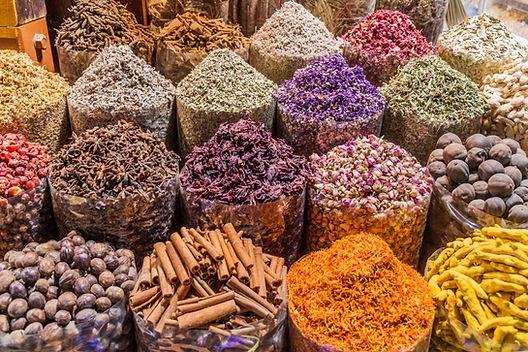
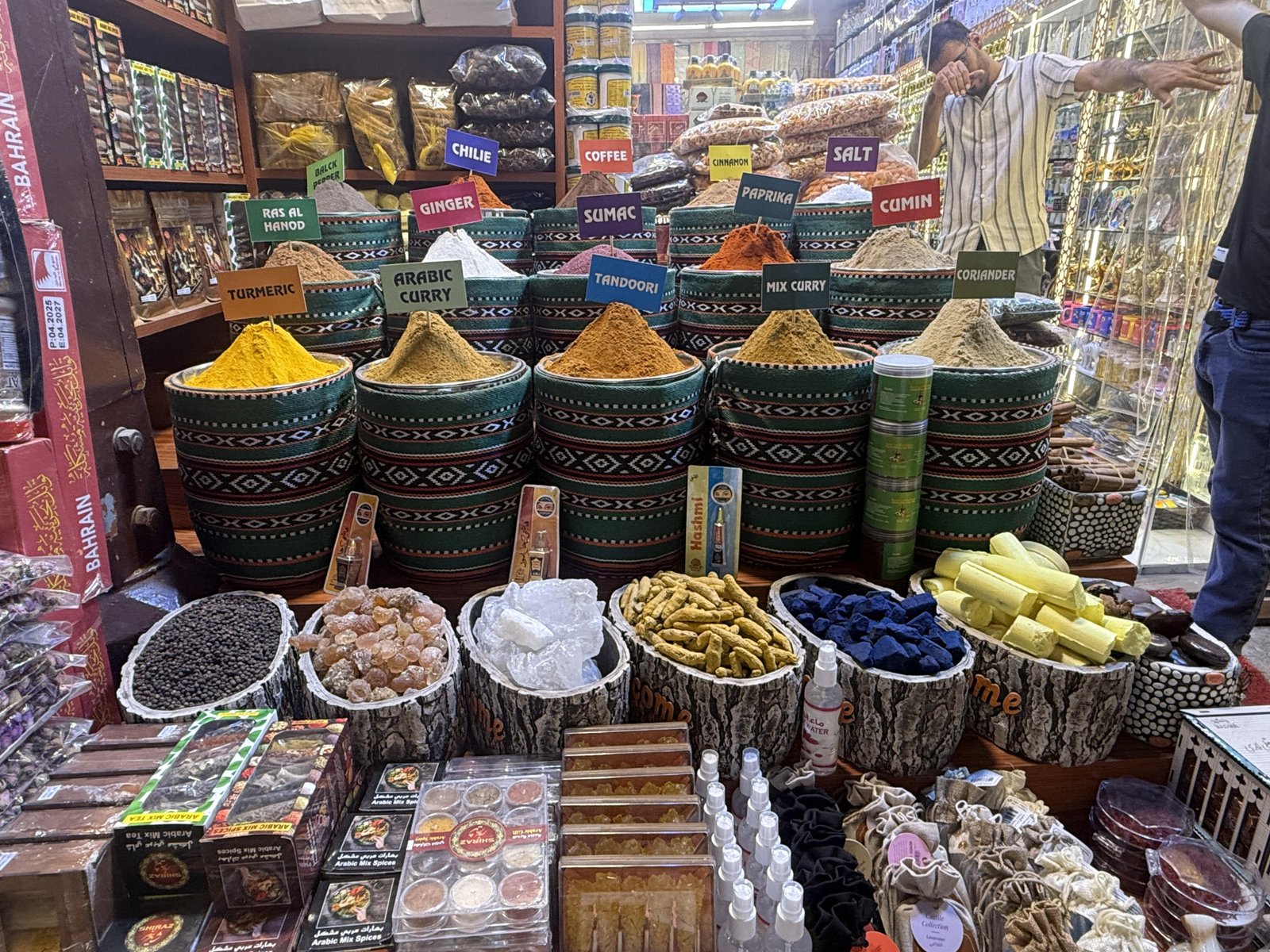
Among the most important spices we find:
Cardamom
Provides an intense and slightly sweet aroma. It is very present in sweet and savory drinks and preparations.
Saffron
It is used to add color and aroma, especially in certain rice dishes.
Turmeric
Provides yellow color and an earthy flavor.
Cinnamon
It can appear in both savory and sweet dishes.
Dried lemon
The loomi is particularly important in Gulf cuisine and provides a deep, acidic flavor.
Cumin and pepper
They also appear in different preparations, especially in meats, stews and spice mixtures.



The influence of other cultures on the gastronomy of the Emirates
Here is something that should not be overlooked.
Traditional Emirati cuisine belongs to the gastronomic environment of the Gulf, but the cuisine that you can currently find in the Emirates is much broader.
Dubai and Abu Dhabi are extremely international cities. It is possible to find restaurants from practically any part of the world and a huge presence of Indian, Pakistani, Iranian, Lebanese, Syrian, Filipino, Japanese, Chinese, Italian and many other cuisines.
That is why we must differentiate two concepts:
Traditional Emirati cuisine: dishes and customs linked to local history and culture.
Gastronomy currently available in the Emirates: a huge international mix, especially in the big cities.
This distinction is important because someone can spend several days in Dubai eating hummus, shawarma, sushi, burgers or Indian food and have virtually no experience of traditional Emirati cuisine.
Is shawarma typical food in the United Arab Emirates?
A clarification is in order here.
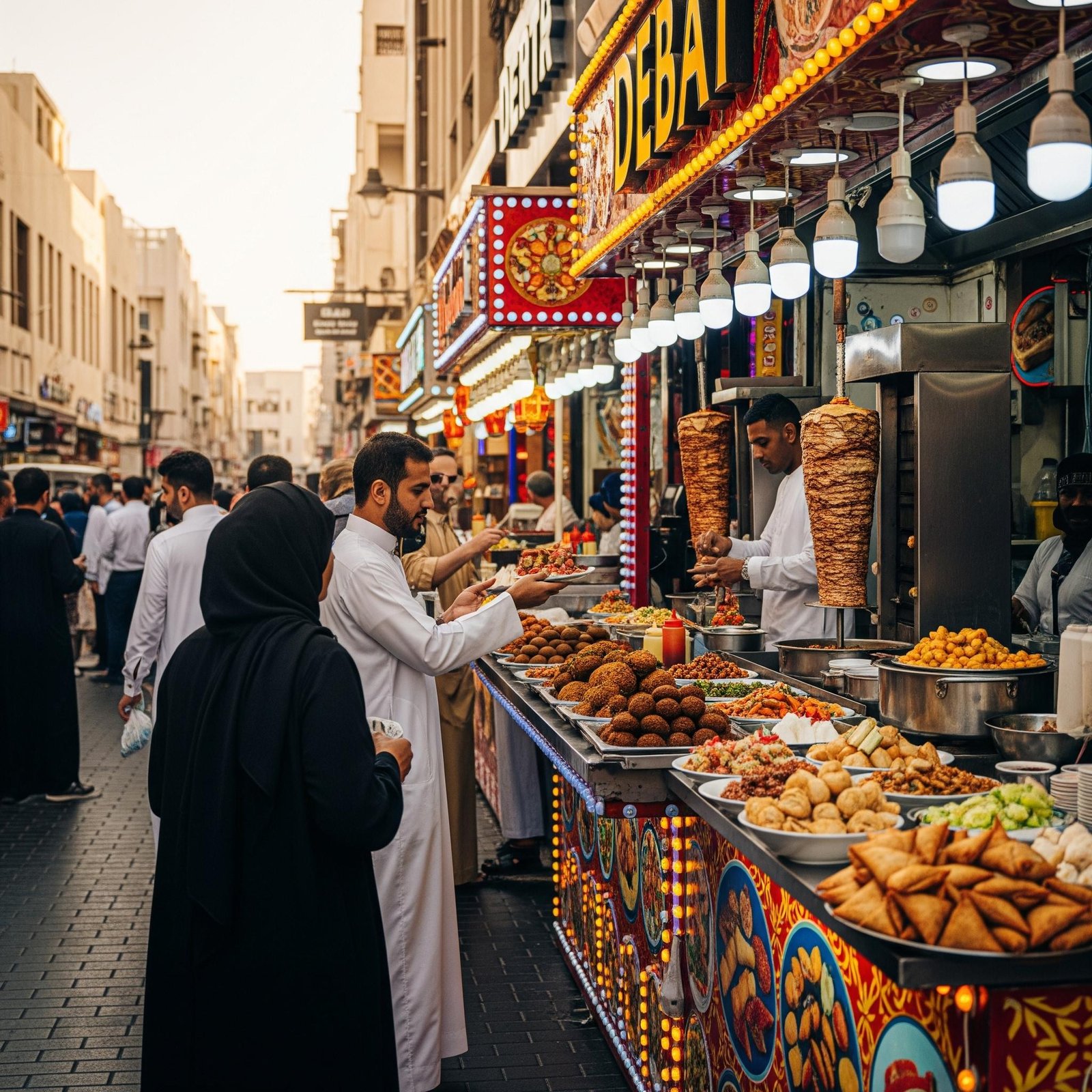
shawarma is extremely popular in the United Arab Emirates, but it is not originally a dish exclusive to Emirati cuisine.
The same goes for other foods such as hummus, tabbouleh or certain types of kebab.
These are dishes that are widespread throughout the Middle East and are part of the daily gastronomic offer of the Emirates, but we should not present them as if they were exclusively Emirati creations.
Wikipedia also points out that some preparations of Levantine origin were more recently incorporated into the diet of the inhabitants of the Emirates.
This difference seems small, but from my point of view it greatly improves any guide to the country’s food.
Street Food in United Arab Emirates
When I think of Emirati street food, the image is not exactly the same as what we may have of Vietnam, Thailand or Indonesia.
Here we find a mix between traditional food, regional Arabic cuisine and international preparations.
In cities like Dubai it is easy to find:
- Shawarma.
- Falafel.
- Samosas.
- Skewers.
- Stuffed breads.
- Luqaimat.
- Sandwiches.
- Rice dishes.
- Arabic sweets.
- Coffee and tea.
The country’s enormous cultural diversity makes its gastronomic scene much more international than exclusively local cuisine.




What do you eat during Ramadan in the Emirates?
Ramadan has enormous importance in the food culture of the Emirates.
During this period, traditional dishes and sweets appear that are part of family meals and celebrations.
The harees , for example, is especially associated with celebrations and Ramadan. Luqaimat are also a very popular sweet at gatherings and special occasions.
Furthermore, the concept of sharing becomes even more important.
Meals can bring family and friends together around large quantities of food, something that connects directly to the region’s tradition of hospitality.
What to eat in the United Arab Emirates for the first time?
If I had to prepare a short list for someone who wants to discover Emirati cuisine without getting too complicated, I would start with these dishes:
- Machboos — for classic spiced rice.
- Harees — to discover a traditional preparation with a creamy texture.
- Ghuzi — if you want to try meat with rice and spices.
- Balaleet — if you like sweet and savory combinations.
- Luqaimat — to try a traditional sweet.
- Chebab — to get closer to traditional breakfasts.
- Dates with qahwa — essential for its cultural importance.
- Fish prepared in the local style — to connect with the country’s maritime tradition.
And if you also want to know the gastronomy that you will currently find in big cities, I would add shawarma, hummus, falafel and different dishes of Indian, Iranian and Levantine influence.
Is UAE food spicy?
Not necessarily.
Emirati cuisine uses many spices, but spicy does not automatically mean spicy .
Cardamom, cinnamon, saffron, turmeric or dried lemon provide aroma and depth without necessarily producing a strong stinging sensation.
Of course, some preparations may incorporate chili or hot sauces, but it is not correct to think that all Emirati food is spicy.
Is Emirati cuisine halal?
Traditional Emirati food is deeply related to Islamic food norms.
Pork is not part of traditional Arabic Muslim cuisine and certain foods and drinks are subject to halal standards.
At the same time, the enormous internationalization of the country means that in specific establishments there may be products from other gastronomic traditions, clearly differentiated according to local standards.
Dubai chocolate and the new Emirati gastronomy
There is a modern addition that seems curious to me: the well-known Dubai chocolate , a contemporary creation associated with chocolate, pistachio, tahini and kadaif .
Its international popularity exploded especially from 2024.
It is not an old traditional dish, and that is precisely why it is interesting.
Emirati gastronomy is not something frozen in the past. It is constantly evolving and creating new products that combine ingredients from different traditions.


Gastronomy of the United Arab Emirates: tradition and modernity on the same plate
After reviewing the dishes, ingredients and customs, I think there is one idea that pretty well sums up the gastronomy of the United Arab Emirates .
It is a cuisine that was born from a demanding territory, where it was necessary to take advantage of the available resources, but which later became one of the great gastronomic meeting points in the world.
dates, fish, rice, lamb, spices, Arabic coffee and traditional breads bring us closer to historical Emirati cuisine. The international restaurants of Dubai and Abu Dhabi represent a completely different side of the country.
And personally, that mix is what interests me the most.
Because if you stick only to the luxury of Dubai, you miss out on an important part of history. But if you only look at traditional recipes, you also miss the transformation that has turned the Emirates into one of the most international gastronomic hotspots in the Middle East.
Frequently Asked Questions (FAQs)
What is the typical dish of the United Arab Emirates?
machboos is one of the most representative dishes of Emirati cuisine. It is prepared with rice, meat or fish and a mixture of spices such as cardamom, cinnamon, saffron and turmeric.
What food is traditional in the United Arab Emirates?
Traditional preparations include machboos, harees, ghuzi, maqluba, balaleet, khameer, chebab and luqaimat , in addition to different fish, meat, rice and date dishes.
What is the typical dessert of the United Arab Emirates?
The luqaimat are one of the best-known sweets. They are small balls of fried dough that are usually served with honey, date syrup or sesame seeds.
What do you eat for breakfast in the United Arab Emirates?
Traditional breakfasts include balaleet, chebab and breads such as khameer , accompanied by cheese, eggs, date honey or other ingredients.
What drink is typical of the United Arab Emirates?
Arabic coffee or qahwa , usually flavored with cardamom, is one of the most important drinks in Emirati culture and is closely related to hospitality.
Are dates important in Emirati culture?
Yes. The cultivation of the date palm has thousands of years of history in the region and dates continue to play an important role in both food and hospitality customs.
Is UAE food spicy?
Not necessarily. It uses many aromatic spices, but dishes with cardamom, saffron, cinnamon or turmeric do not have to be spicy.
What is the difference between Emirati food and Arabic food?
Emirati cuisine is part of the Arab cuisines of the Gulf, but it has its own traditions, ingredients and dishes. In addition, it shares numerous preparations with neighboring countries such as Saudi Arabia and Oman.
Is shawarma a typical Emirati dish?
Shawarma is very popular in the Emirates, but it is not exclusively Emirati. It is a preparation widely spread in the Middle East and has been incorporated into the country’s gastronomic offer.
What dishes to try in Dubai to get to know the local cuisine?
To approach Emirati cuisine specifically, I would look for machboos, harees, ghuzi, balaleet, chebab, khameer and luqaimat , as well as try dates accompanied by Arabic coffee. In Dubai you will also find a huge variety of international cuisine.
The best way to understand this cuisine, in the end, is not to stick with a list of dishes. It’s looking at how the desert, the sea, the oases, the trade routes and the hospitality ended up sitting together at the same table. And that is where the gastronomy of the United Arab Emirates begins to tell a much more interesting story than the one that appears on any tourist menu.