
The culture of Greece is one of the most influential in the entire history of humanity. When we think of Greece, many people imagine ancient temples, paradisiacal islands and beaches with crystal clear waters, but the reality is that Greek culture is much deeper: it is philosophy, art, democracy, mythology, gastronomy, music and a way of understanding life that has left its mark throughout the world.
When I started researching Greek culture, one of the things that surprised me the most was discovering that many ideas we use today were born there thousands of years ago. Concepts such as democracy, theater, scientific thought or certain forms of social organization have their roots in ancient Greece.
The interesting thing is that Greece does not live solely on its past. Today it remains a country where ancient traditions coexist with a modern society, creating a unique cultural identity.
What is the culture of Greece like?
Greek culture is the result of thousands of years of historical evolution. It is formed by the heritage of ancient Greece, the Byzantine Empire, Ottoman influence and the traditions of each region.
Some elements that define the cultural identity of Greece are:
- The importance of family.
- Respect for history.
- Hospitality.
- Mediterranean gastronomy.
- The Orthodox religion.
- Music and dance.
- The connection with the sea.
- Philosophy and knowledge.
Although Greece is a relatively small country, its cultural influence has been enormous.
Ancient Greece: the basis of Western culture

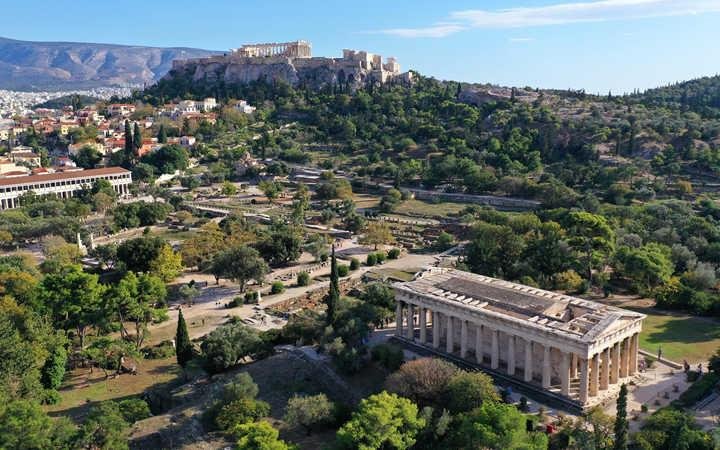

To understand the culture of Greece , you have to start with Ancient Greece.
Between the 8th and 4th centuries BC. C., the Greek city-states developed an extraordinary civilization.
The most important polis were:
- Athens.
- Sparta.
- Corinth.
- Thebes.
Each one had its own laws and customs, but they all shared elements such as:
- The Greek language.
- The Olympic gods.
- The Olympic Games.
- Artistic traditions.
Ancient Greece left fundamental contributions in politics, science, literature and philosophy.
Democracy: one of the great Greek contributions
One of Greece’s greatest legacies to the modern world is democracy.
Athenian democracy appeared in the 5th century BC. C. and allowed citizens to participate directly in political decisions.
Although it was different from current democracies because it excluded women, slaves and foreigners, it created a revolutionary idea:
Power could be in the hands of the citizens.
This concept transformed world political history.
Greek philosophy and the pursuit of knowledge

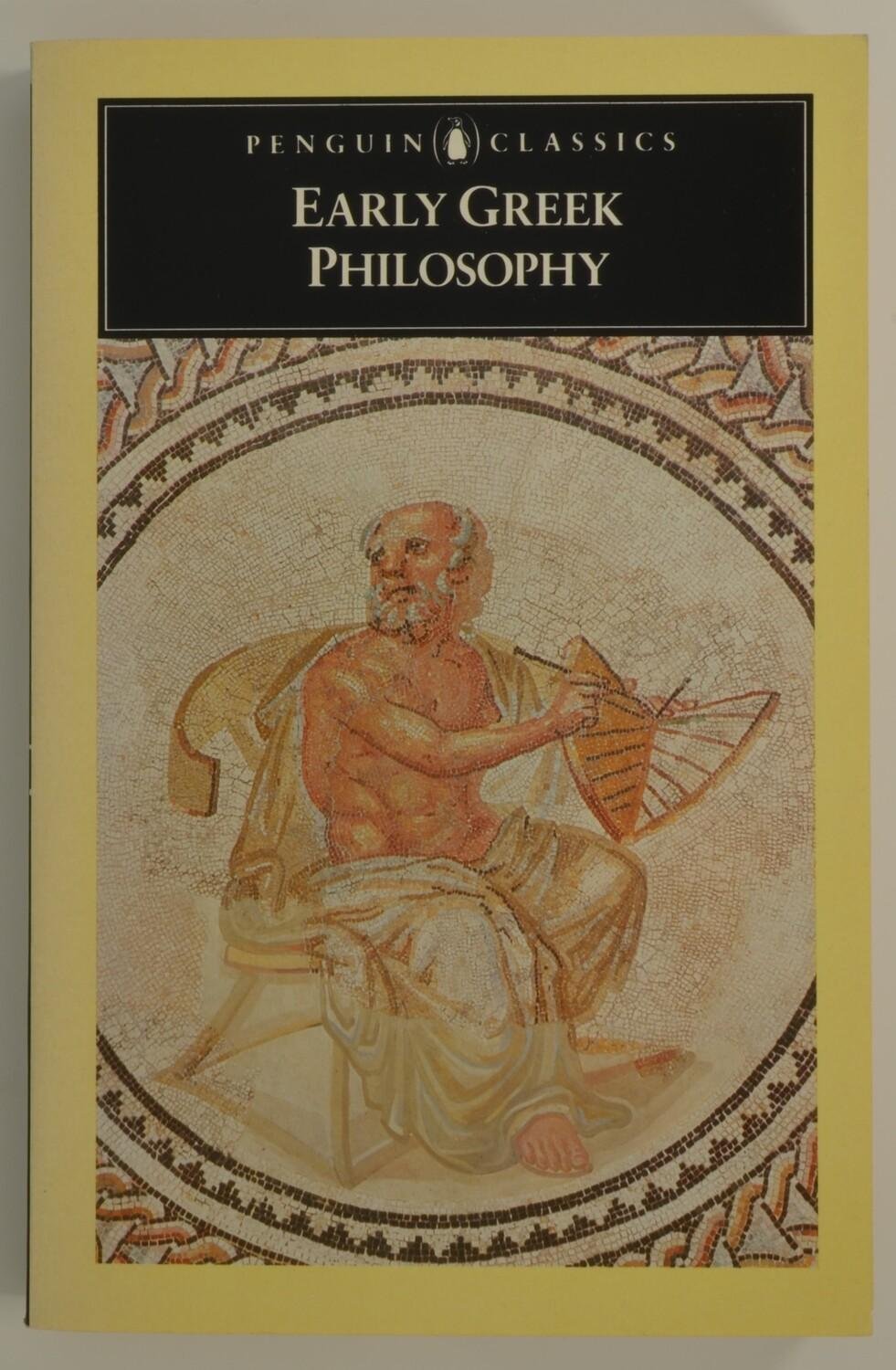

If there is something that Greek culture represents, it is its love for knowledge.
Greek philosophers attempted to answer questions about:
- The existence.
- Morality.
- Politics.
- Nature.
- The universe.
Among the most important thinkers are:
Socrates
Considered one of the fathers of Western philosophy.
Plato
Founder of the Academy of Athens and author of important philosophical dialogues.
Aristotle
One of the most influential intellectuals in history, with contributions in science, logic and politics.
His ideas continue to be studied thousands of years later.
Greek mythology and its gods


Mythology forms an essential part of the culture of Greece.
The ancient Greeks explained the world through stories featuring gods, heroes, and fantastic creatures.
The main gods of Olympus were:
- Zeus: god of the sky.
- Hera: goddess of marriage.
- Poseidon: god of the sea.
- Athena: goddess of wisdom.
- Apollo: god of art and music.
- Aphrodite: goddess of love.
- Ares: god of war.
These stories have influenced:
- Literature.
- Cinema.
- Art.
- Video games.
- Education.
Even today we continue to use expressions and references from Greek mythology.
The Greek language and its cultural importance


The Greek language is one of the oldest languages that continues to be used today.
It has had an enormous influence on other languages, especially in fields such as:
- Medicine.
- Science.
- Philosophy.
- Mathematics.
Many current words have Greek origin:
- Philosophy.
- Democracy.
- Biology.
- Geography.
- Technology.
Language is one of the main ways Greece keeps its history alive.
Greek gastronomy: a culture around the table



Food occupies a central place in Greek culture.
In Greece, eating is not just feeding; It is a way to share time with family and friends.
Greek gastronomy stands out for ingredients such as:
- Olive oil.
- Feta cheese.
- Fish.
- Seafood.
- Yogurt.
- Vegetables.
- Aromatic herbs.
Typical Greek dishes
Moussaka
One of the best-known dishes. Combine eggplant, meat and bechamel sauce.
Souvlaki
Meat skewers accompanied by pita bread and sauces.
Greek salad
Prepared with tomato, cucumber, olives and feta cheese.
Tzatziki
Yogurt sauce with cucumber and garlic.
Baklava
Sweet made with nuts and honey.
Greek gastronomy reflects the country’s historical connection with the Mediterranean.
The importance of olive oil in Greece
Olive oil is much more than an ingredient.
It has been part of Greek cultural identity for thousands of years.
In ancient Greece, the olive tree was considered a sacred tree related to the goddess Athena.
Currently, Greece continues to be one of the world’s largest producers of olive oil.
Traditional Greek music and dance


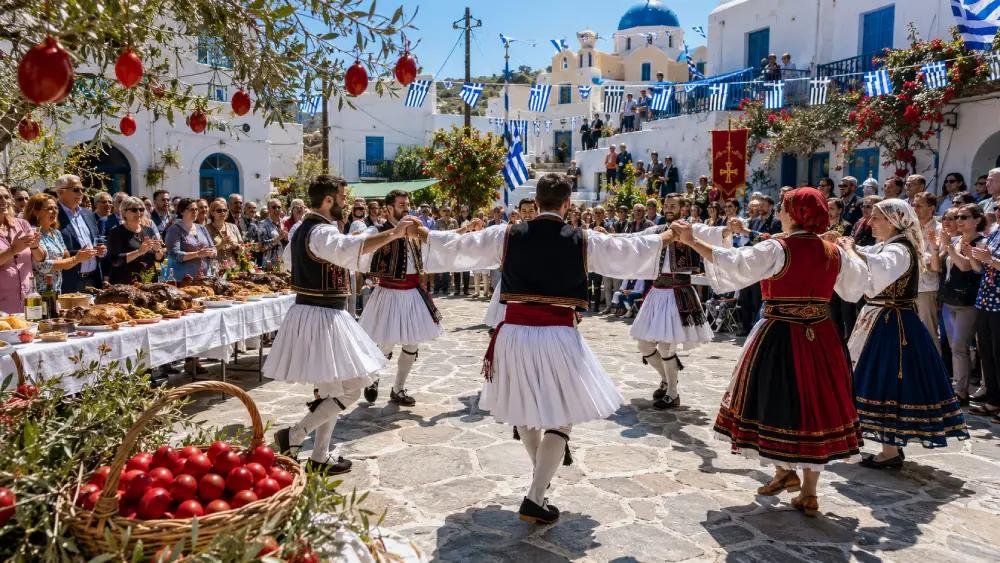
Music plays a very important role in Greek celebrations.
Some traditional instruments are:
- Bouzouki.
- Cretan lyre.
- Lute.
Traditional dances are usually performed in groups and represent:
- Local history.
- Regional identity.
- Family celebrations.
Some famous dances are:
- Sirtaki.
- Kalamatians.
- Pentozali.
Family and Greek hospitality
One of the most well-known aspects of Greek culture is the importance of family.
Family gatherings often take center stage.
Greeks highly value:
- Spending time together.
- Share meals.
- Caring for the elderly.
- Maintain family ties.
It also highlights the famous Greek hospitality, known as filoxenia .
This word represents the idea of welcoming and treating visitors well.
Religion in Greek culture


The Orthodox religion has a great cultural influence in Greece.
Churches and monasteries are part of the country’s landscape.
Some important religious traditions are:
- Orthodox Easter.
- Festivals of local saints.
- Religious processions.
Meteora Monastery is one of the most impressive examples of this tradition.
Greek architecture: from the Parthenon to modern cities


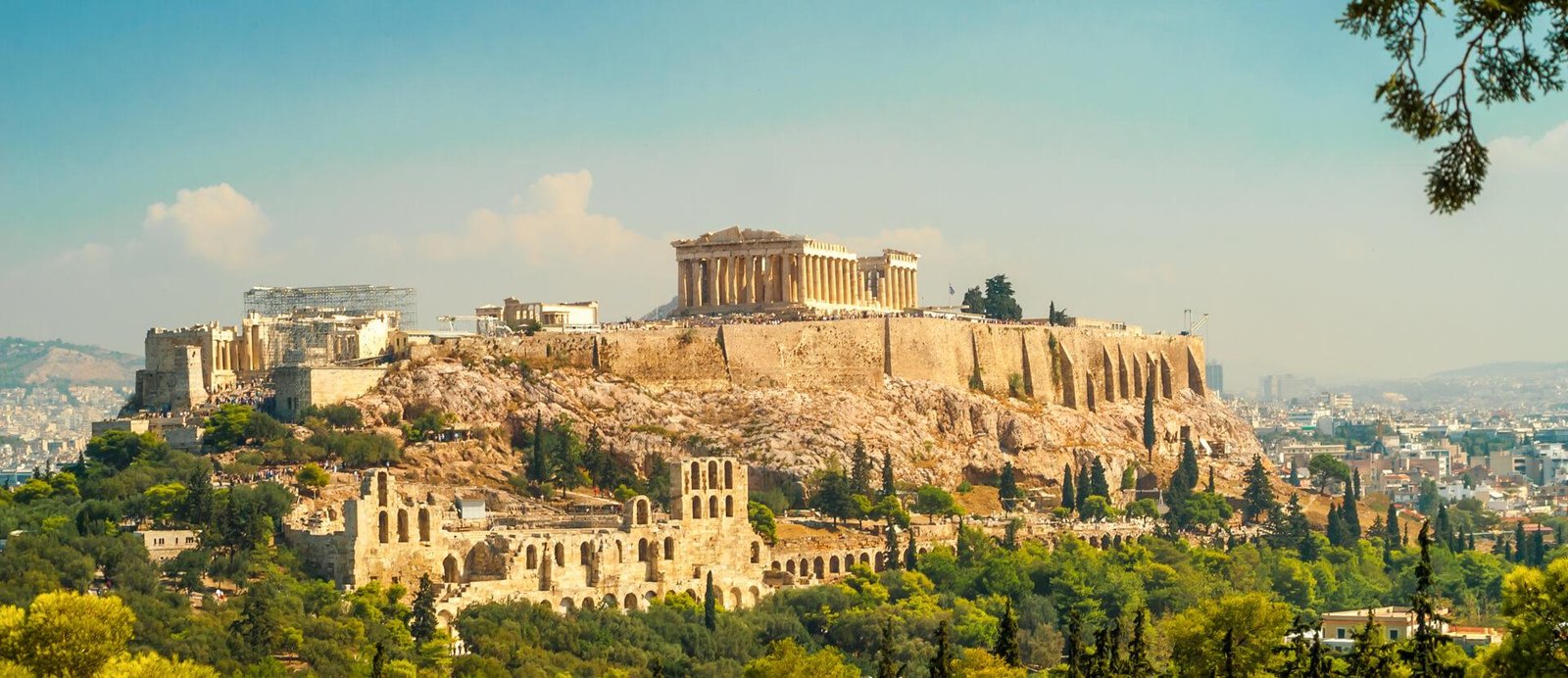
Architecture is one of the greatest symbols of Greece.
Ancient Greek architecture influenced buildings around the world.
Its best-known elements are:
- Doric columns.
- Ionic columns.
- Corinthian columns.
Famous examples:
- Parthenon in Athens.
- Theater of Epidaurus.
- Temple of Apollo at Delphi.
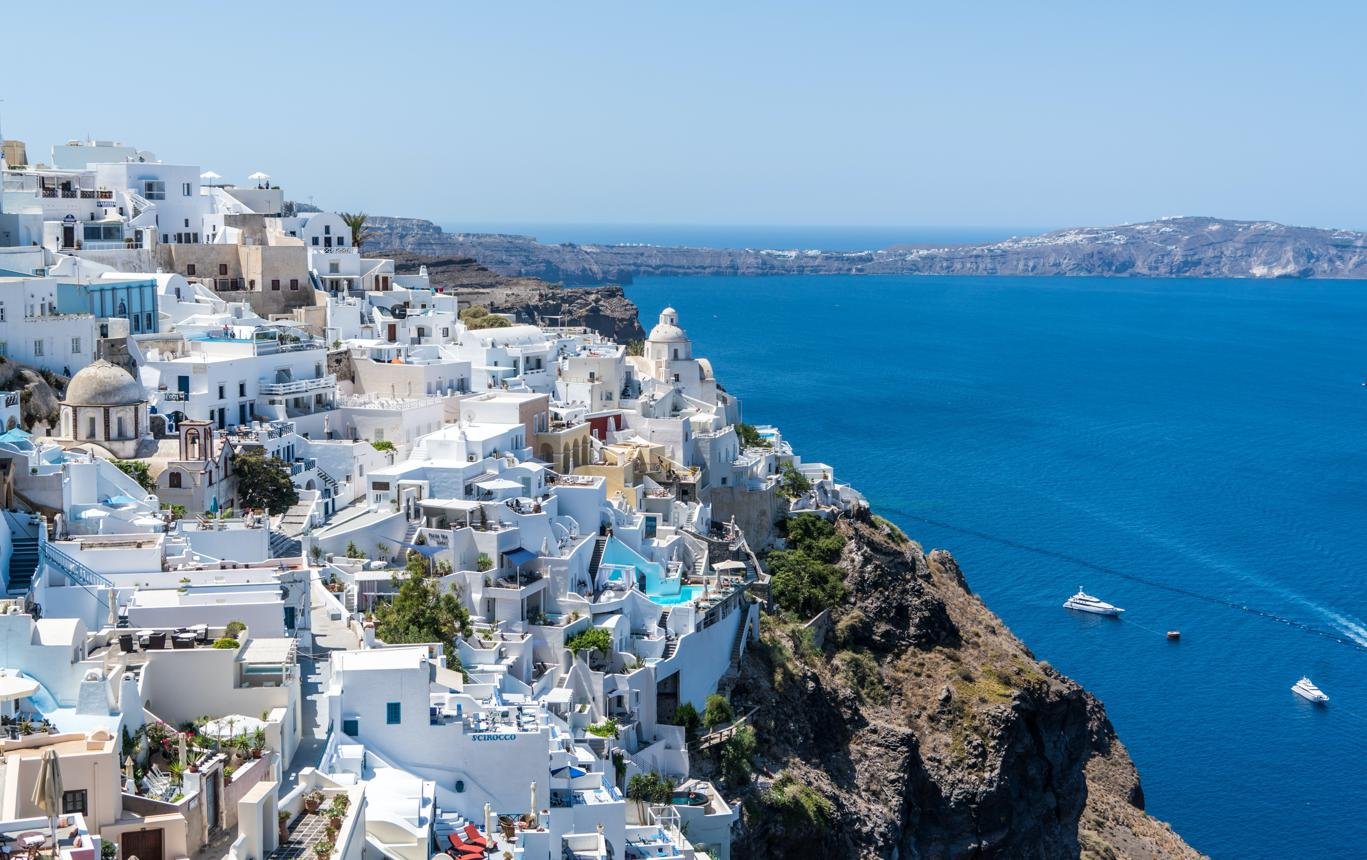
But current Greek architecture also stands out for its white villages on the islands and its historic cities.
The Greek islands and their cultural identity
Greece has thousands of islands, many with their own traditions.
Some of the most famous are:
Santorini
Known for its white houses and volcanic landscapes.
Crete
The largest island, with a very strong cultural identity.
Rhodes
Famous for its medieval history.
Corfu
With Venetian influence.
Each island offers a different version of Greek culture.
Sport and the Olympic Games


The Olympic Games were born in ancient Greece around the year 776 BC. C.
They were originally celebrated in Olympia in honor of Zeus.
Today they remain one of the most important sporting events in the world.
For Greece, the Olympic Games represent:
- Tradition.
- Competition.
- Union between peoples.
Tourism as part of modern Greek culture
Tourism is of enormous importance in Greece.
Millions of visitors come every year to see:
- Ancient ruins.
- Islands.
- Beaches.
- Gastronomy.
- Traditions.
However, true Greek culture is also found in small towns, local markets and everyday conversations.
Curiosities about the culture of Greece
- The word democracy has Greek origins.
- Western theater was born in ancient Greece.
- The Greek alphabet influenced many writing systems.
- Greek philosophy continues to be studied worldwide.
- Greece has thousands of islands and islets.
- The olive tree is one of the most important symbols of the country.
- The word “philosophy” means love of wisdom.
Most important figures of Greek culture
- Homer.
- Socrates.
- Plato.
- Aristotle.
- Alexander the Great.
- Hippocrates.
- Pythagoras.
- Nikos Kazantzakis.
Places to discover Greek culture
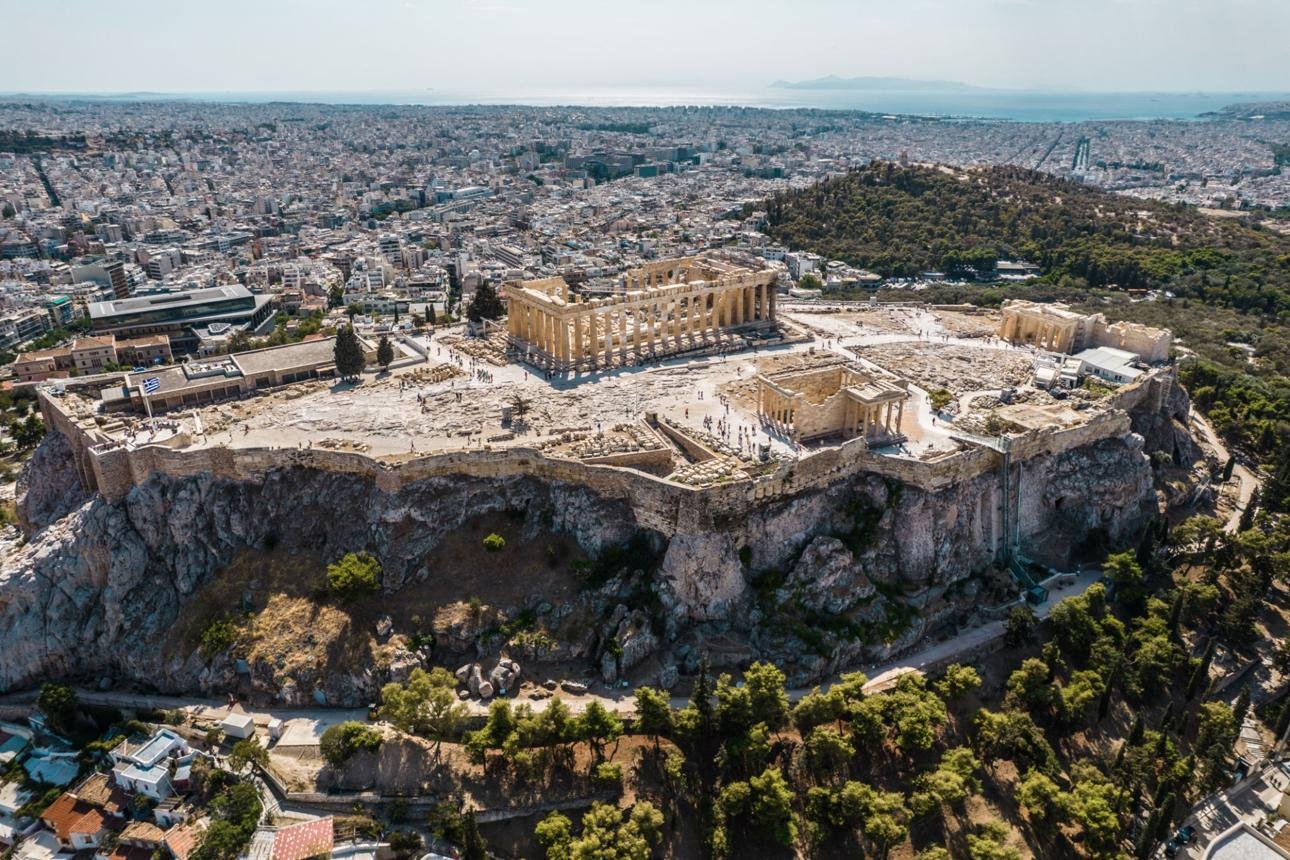

If you want to know the culture of Greece first-hand, these places are essential:
- Acropolis of Athens.
- Delphi.
- Olympia.
- Meteora.
- Palace of Knossos.
- Mycenae.
- Santorini.
- Crete.
Each one shows a different part of Greek history and identity.
Frequently Asked Questions (FAQs)
What is the basis of Greek culture?
Greek culture is based on philosophy, history, mythology, democracy, gastronomy and family traditions.
What did Greece contribute to the world?
Greece contributed democracy, Western philosophy, the Olympic Games, theater, scientific advances and great artistic works.
What is the typical food of Greece?
Some traditional dishes are moussaka, souvlaki, Greek salad, tzatziki and baklava.
What traditions does Greece have?
Its traditions include popular dances, religious celebrations, family celebrations and local festivals.
Why is Greek mythology important?
Because their stories have influenced art, literature, popular culture and the way many societies interpret the world for centuries.
A culture that is still alive after thousands of years
After knowing the culture of Greece , it is impossible not to realize that we are facing a civilization that is still present in our daily lives. Many ideas that we consider normal today were born in those ancient Greek cities.
But Greece is not just the past. It is a living culture that is enjoyed at a shared table, in a traditional song, on an Aegean island or in a conversation with its inhabitants.
That combination of ancient history and a quieter way of living is precisely what makes Greece one of the most culturally fascinating countries in the world.