
For a long time I thought that finding cheap flights consisted of being lucky: entering a search engine at the right time, finding an absurd rate and buying before it disappeared.
Over time I realized that it doesn’t work exactly like that.
When I lived in Argentina and had to organize trips on a limited budget, I learned that saving on a flight depends much more on how you search for than on finding a supposed secret trick.
Today I follow a kind of method: I compare dates, airports, routes, stopovers, airlines and final price. And yes, I also use some “hacks” that can uncover fees that would normally go unnoticed.
But there is something important that I want to make clear from the beginning: not all the tricks that circulate on the internet work . Some come from old strategies, others work only in certain circumstances and some are straight up myths.
Therefore, in this guide I am going to separate the tricks that can really help you from those that simply waste time.






Can flight search engines really be hacked?
Yes, but not in the sense of “hacking” a computer system.
When I talk about hacking flight search engines , I’m talking about learning to use them in a way that most travelers don’t take advantage of.
For example:
- Search with flexible dates.
- Use nearby airports.
- Compare different departure cities.
- Search multi-destination flights.
- Separate certain paths.
- Monitor prices for several days.
- Compare different search engines.
- Check the price directly with the airline.
- Search for destinations instead of obsessing over a specific one.
- Detect error rates.
- Compare the actual cost including luggage.
Google Flights currently allows you to explore destinations, use a date grid, view price charts, receive alerts, and compare different flight options.
There’s the real “hack”: make the search engine work for you instead of limiting yourself to writing origin, destination and a fixed date.
The first secret: before looking for a cheap flight you have to know what is cheap
This advice seems much more important to me than it seems.
If you’re looking for a flight to a destination you’ve never visited, how do you know if €400 is a good fare?
You may think so because you normally see prices of €600, but maybe that route regularly drops to €300.
Jack’s Flight Club specialists recommend evaluating an offer taking into account factors such as the usual price of the route, the season, what other airlines charge and what the fare actually includes.
I would apply a simple rule:
Don’t just compare the price of the flight. Compare the price with history and available alternatives.
For example:
| Offer | Price | Is it really cheap? |
|---|---|---|
| Flight to | €350 | Depends on the usual price |
| Flight B | €280 | Better if the route usually costs €400 |
| Flight C | €230 | It can be excellent, but check scales and luggage |
| Flight D | €180 | Not necessarily better if it adds a lot of extras |
A cheap fare is one that makes sense for that route, those dates and those conditions .
Hack #1: Stop searching for an exact date
This is probably the trick that can save you the most money.
If you say:
“I need to fly on November 15th and return on the 22nd.”
you are greatly limiting the possibilities.
But if you say:
“I want to travel approximately during that week.”
the scene changes.
Try moving:
- The day of departure.
- The day of return.
- The duration of the trip.
- The complete week.
- The month.
- Even the airport.
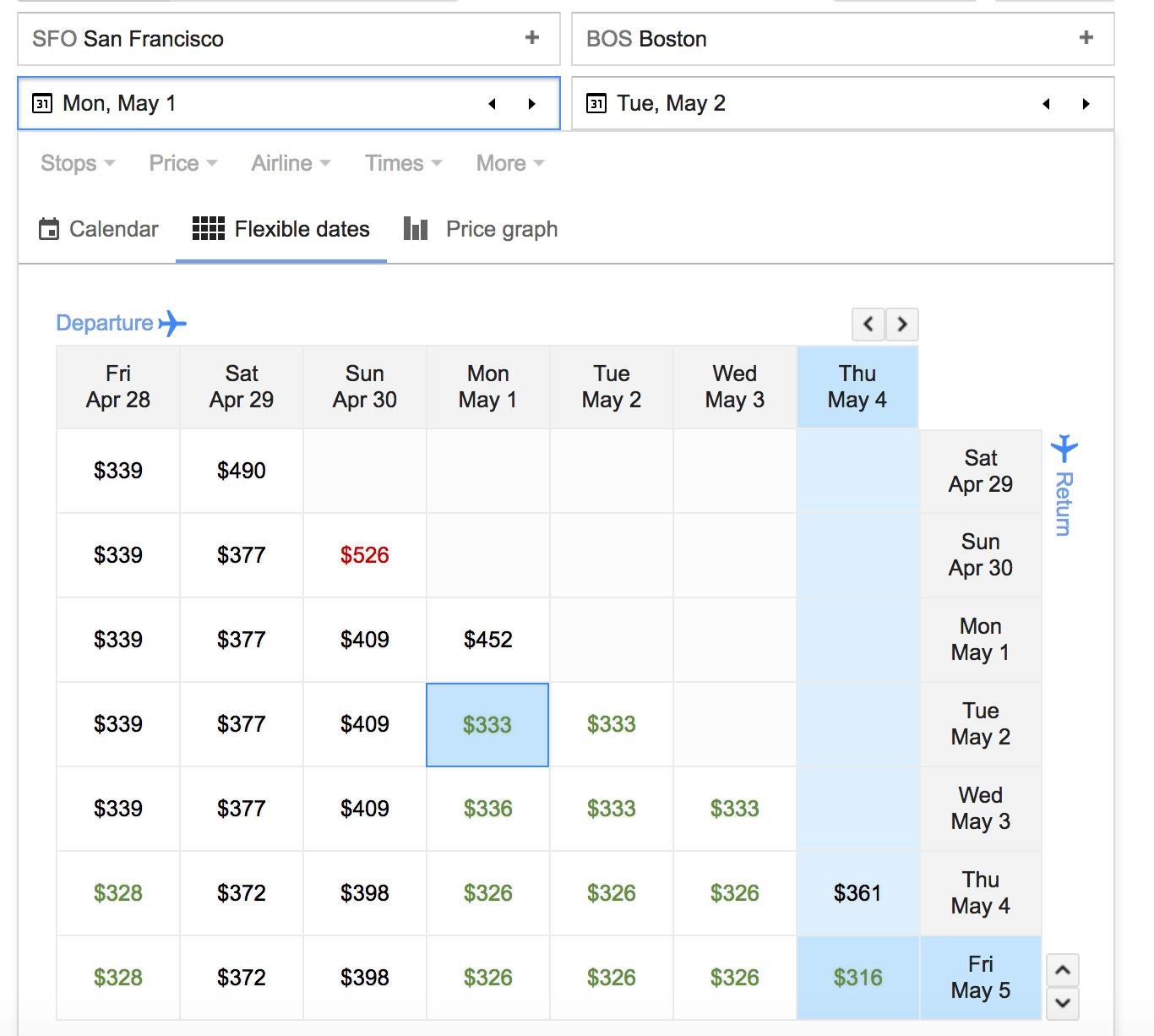
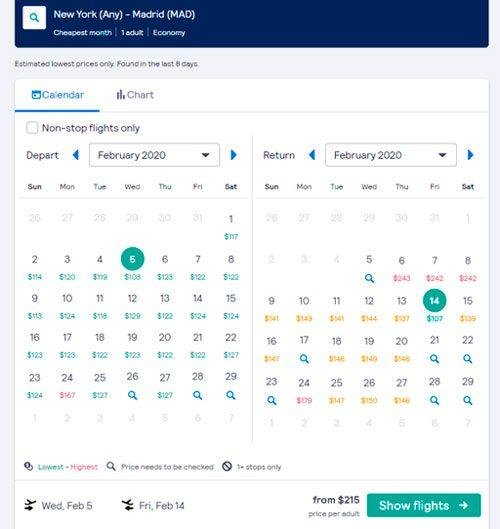
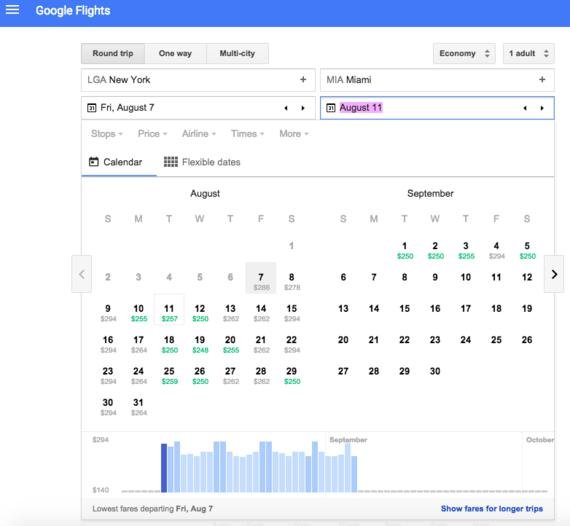
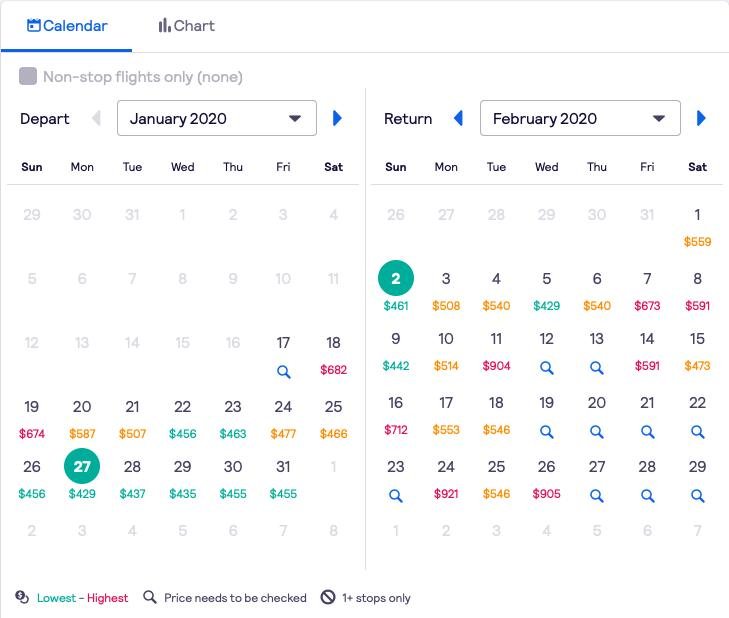
Google Flights currently has a date grid and price graph designed precisely to detect which days are the cheapest.


The few days trick
You don’t need to change your vacation for an entire month.
Sometimes just try:
Friday → Friday
vs:
Tuesday → Tuesday
or:
Wednesday → Monday
A difference of one or two days can change the available rate quite a bit.
So when I’m looking for cheap flights, I first try to figure out which dates are cheap and then tailor the trip.
Hack #2: Search “anywhere” when you have no fixed destination
This is one of my favorite tricks for traveling cheap.
If you don’t have a destination yet, don’t start by saying:
“I want to travel to Paris.”
Start by saying:
“I want to spend as little as possible.”
Google Flights allows you to select Explore and search for cheap destinations from your home airport. It also allows you to use flexible dates to discover different options.
This completely changes the logic.
Instead of choosing the destination first and then trying to find a cheap flight, you do the opposite:
First you find the cheap flight and then you choose the destination.
It is one of the best strategies for cheap getaways.
Hack #3: Compare nearby airports
This trick seems obvious, but many people don’t use it.
If you are near several cities with major airports, don’t just look for one.
For example, depending on where you live, you could compare:
- Main airport.
- Secondary airport.
- Neighboring city.
- International airport located a few hours by road.
Google Flights allows you to select multiple airports in searches.
But be careful.
Don’t make the mistake of saving €50 on the plane and then spending €80 arriving at the airport.
I always calculate:
price of the flight + transportation to the airport + transportation from the arrival airport.
That’s the real cost.
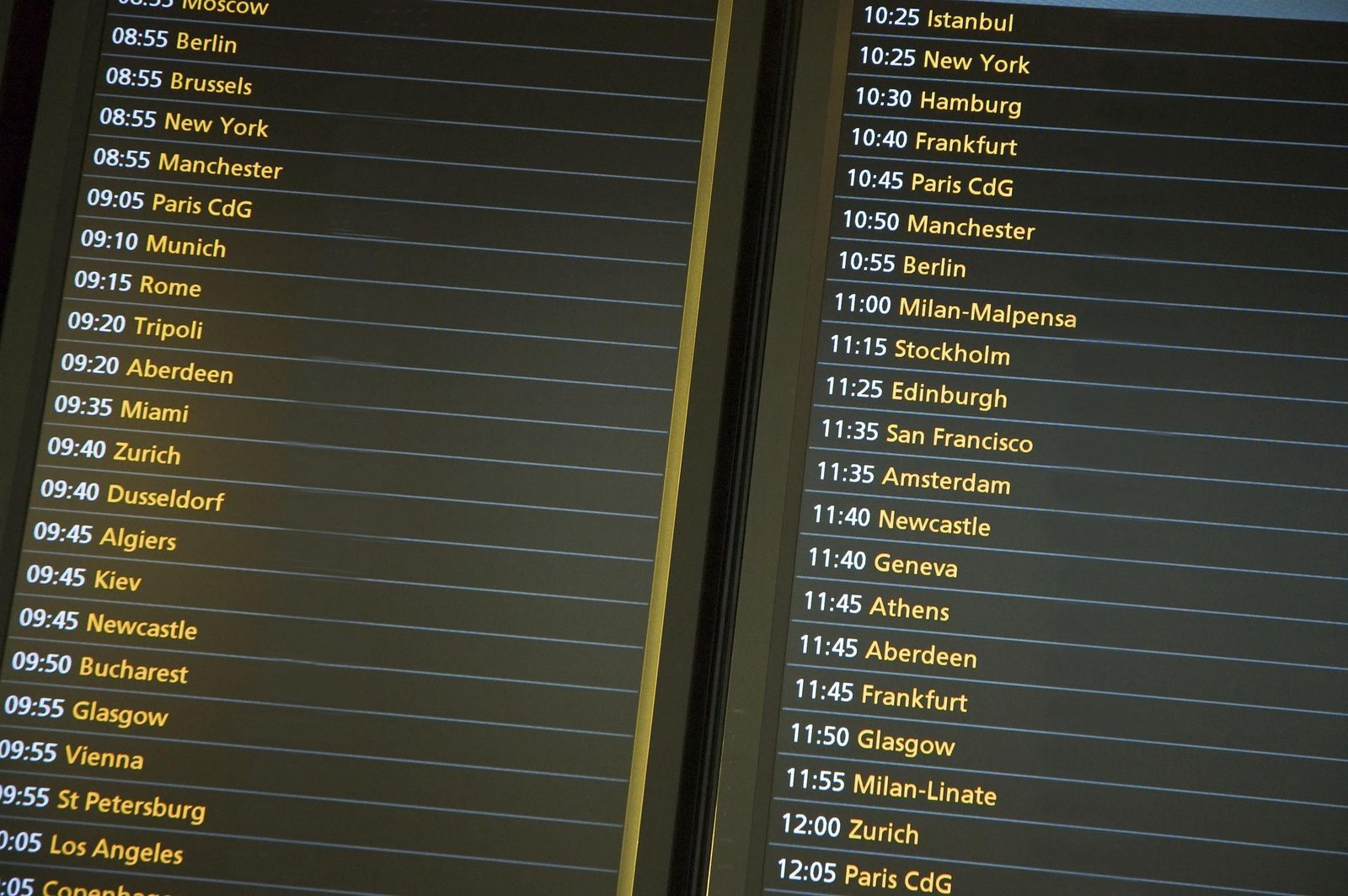
Hack #4: Try different departure cities
If you’re willing to move around, this trick can open up a lot of possibilities.
Imagine you want to fly to Europe.
You don’t necessarily have to leave from the nearest airport.
You can compare different cities:
- Miami.
- New York.
- Atlanta.
- Washington.
- Toronto.
- Madrid.
- Barcelona.
Of course, this depends on where you are and travel costs.
The idea is to look for the total price of the trip , not just the plane ticket.





Hack #5: Search for multi-destination flights
This is where the really interesting searches begin.
Suppose you want to visit Italy and France.
The traditional search would be:
Madrid → Paris → Madrid
But you can try:
Madrid → Paris
and then:
Rome → Madrid
In the meantime, you can travel between Paris and Rome by land or with another flight.
You can also directly search for a multi-destination itinerary.
Google Flights currently offers the option of multi-destination flights, in addition to round trip and one-way flights.
It’s not always cheaper, but it’s really worth checking out.
Hack #6: Split the trip into multiple flights
This is one of the most advanced tricks and also one that requires the most care.
Instead of searching:
City A → City C
you can check:
City A → City B
and then:
City B → City C
For example:
Madrid → London + London → New York
could be cheaper than searching directly Madrid → New York.
But there is a major problem here.
If you purchase two separate tickets and the first flight is delayed, the second airline does not have to be responsible for your missed connection .
That’s why I would only use this method when the savings are significant and leave plenty of room between flights.
What are hacker fares?
Some search engines can also combine separate tickets from different airlines to get a lower fare.
Jack’s Flight Club explains that tools like Momondo can show these types of combinations, although it also warns that they may involve different refund policies.
It’s an interesting strategy, but I wouldn’t use it blindly.
Hack #7: Don’t get obsessed with incognito mode
Here I want to dismantle one of the most repeated myths about how to find cheap flights .
You’ve probably read:
“Always search incognito because airlines raise the price if they know you’re looking.”
Sounds logical.
The problem is that it should not be treated as a universal rule.
Jack’s Flight Club, which analyzes large amounts of fares, believes that the myth that airlines automatically increase the price simply because you have visited a page several times does not have much basis. Variations may be due to normal changes in availability and certain fare classes being sold out.
That doesn’t mean incognito mode is useless.
This may be useful for privacy and to prevent certain browsing preferences from affecting your experience.
But don’t expect that opening a private window will magically turn a €700 flight into a €300 flight.
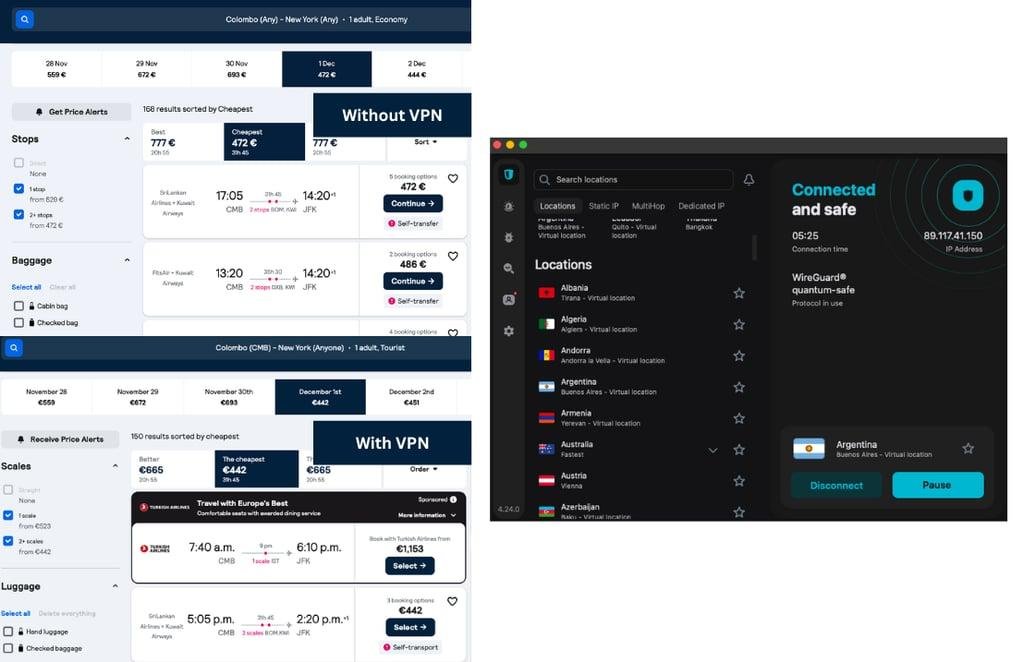
Hack #8: Does using a VPN really get you cheaper flights?
There is quite a bit of controversy here.
Some travelers say that changing your location using a VPN can show different prices.
In fact, one of the analyzed competitors proposes testing connections from different countries, in addition to changing the regional version of the reservation pages.
The idea is simple:
- You search for the flight normally.
- Write down the price.
- Change the VPN location.
- You search again.
- Compare.
- You check the currency and conditions.
- If a real difference appears, please check the price before paying.



But here comes the important thing
I wouldn’t assume that a VPN always makes flights cheaper.
There may be differences due to markets, currency, availability, point of sale or commercial conditions, but that does not mean that changing IP will automatically result in a lower rate.
Additionally, some regional rates may have restrictions, specific payment methods, or different conditions.
So if you try this hack, do it as comparison experiment , not as a guaranteed formula.
And before you pay, please check:
- Currency.
- Taxes.
- Luggage.
- Conditions.
- Payment method.
- Change policy.
- Final price.
Hack #9: Change the currency, but calculate the real cost
Finding a flight for 500 instead of 550 doesn’t necessarily mean you’ve saved.
500 what?
Dollars, euros, pounds, pesos…
Some pages may show prices in different currencies and the exchange rate used by your bank or card may modify the final cost.
That’s why I always do a conversion before making a decision.
And if the page offers a rate in foreign currency, I also check:
- Currency exchange fee.
- Card commission.
- Exchange rate applied.
- Additional fees.
The price that matters is the one that finally appears in your bank account.
Hack #10: Activate
Price AlertsIf you don’t need to buy immediately, this is one of the best tricks.
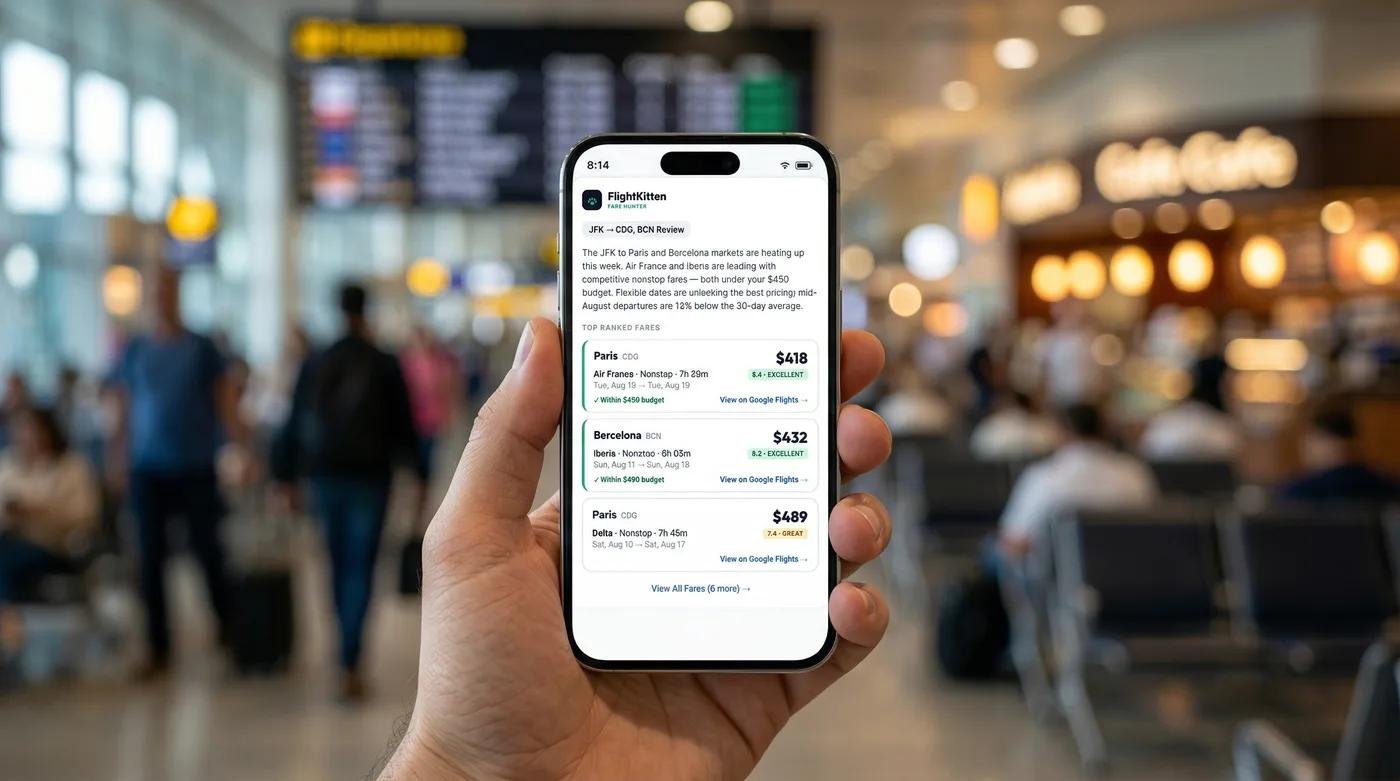
Google Flights allows you to track prices and receive notifications when a fare changes. It also allows tracking with flexible dates in certain scenarios.
I would do it like this:
First search: I discover the current price.
Second phase: I activate an alert.
Third phase: I observe the evolution.
Fourth phase: I buy when I find a rate that I consider good for my budget and conditions.
This is much more rational than checking the same route twenty times a day.
Hack #11: Learn to Recognize an Error Rate
Here we do enter real “bargain” territory.
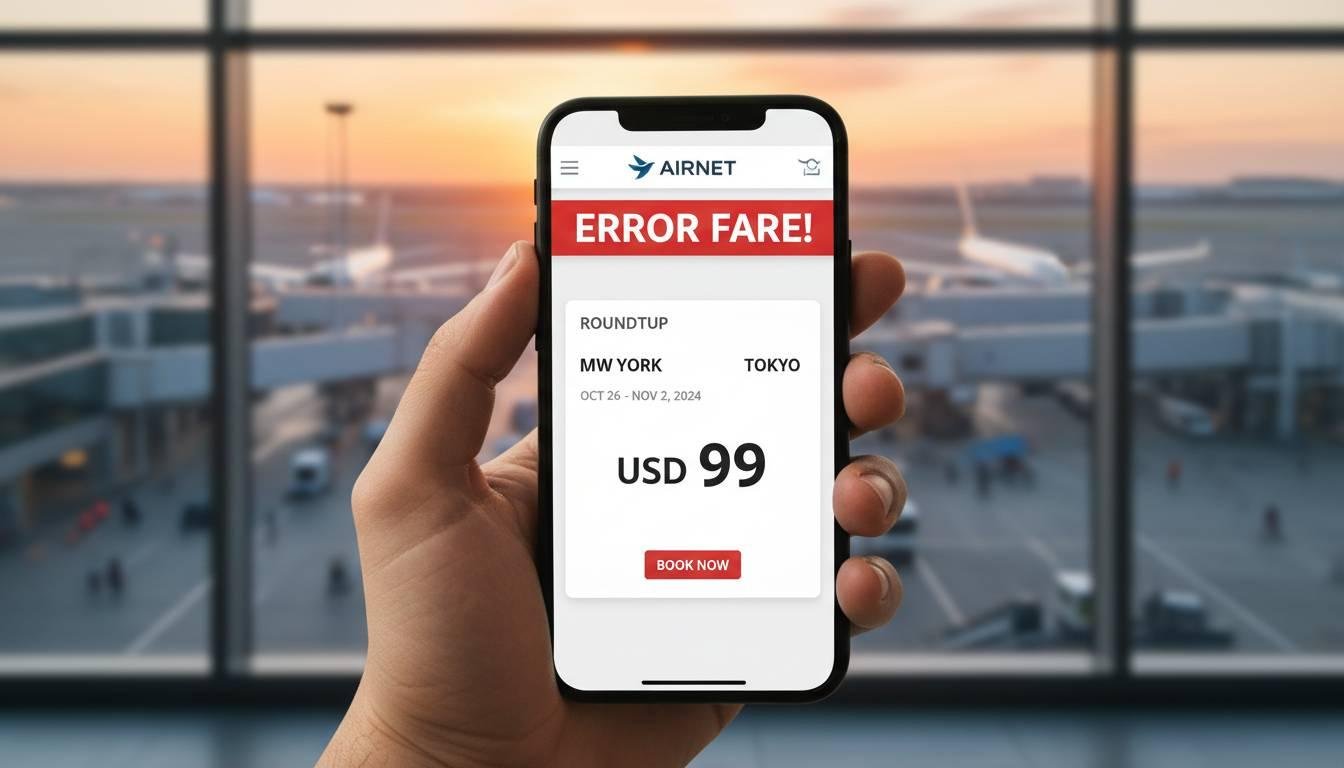
A fare error , or fare error, appears when a fare setup or publication fails.
This may be due to human error, currency conversion issues, or technical glitches.
Jack’s Flight Club explains that these rates can disappear quickly and has documented cases of huge discounts from the regular price.




How to recognize a possible error rate?
A signal can be a price that seems completely off the market.
For example:
- A normally expensive international route appears for a fraction of its usual price.
- A higher class appears surprisingly cheap.
- The price makes no sense compared to other airlines.
- A fee disappears shortly after.
But beware: an error fee is not free money .
The airline or agency may cancel a reservation under certain circumstances.
If you find a fare of this type, immediately check the conditions and avoid organizing non-refundable expenses around it until you are clear that the ticket is confirmed.
Hack #12: Don’t rule out low-cost airlines
Low cost airlines can offer excellent prices.
But you have to compare them correctly.
A €35 flight can quickly become:
- €35 ticket.
- €40 luggage.
- €20 seat.
- €15 priority.
- €30 for other extras.
And suddenly you have a rate of €140.
That’s why when I compare cheap flights, I try to put all options under the same conditions.
Price with the luggage I really need.
That’s a much more useful comparison.
Hack #13: See the flight, not just the fare
Imagine:
Flight A: €120
- Direct.
- 2 hours.
- Luggage included.
Flight B: €80
- Two scales.
- 11 hours.
- Additional baggage.
- Secondary airport.
Which is cheaper?
It depends.
But if I have to add €50 for luggage and €30 for transportation, flight B already costs €160.
That’s why my mental formula is:
Actual price = ticket + luggage + transportation + extras + cost of stopovers.
Hack #14: Try flights early or at less popular times
Times with lower demand can present interesting rates, although this depends greatly on the route.
Do not automatically discard:
- Early mornings.
- Early morning.
- Night flights.
- Less popular days.
Of course, do the math again.
If you have to pay for a taxi in the early hours of the morning because public transportation isn’t running yet, you might have wiped out all the savings.
Hack #15: Use Google Flights as radar, not necessarily as a place to shop
This is a distinction I think is important.
Google Flights is great for investigating .
You can use it for:
- Discover routes.
- Compare dates.
- See prices.
- Explore destinations.
- Monitor rates.
- Compare airlines.
But then I check the flight directly with the airline.
Google explains that its results do not necessarily include all airlines or all available offers.
That’s why I wouldn’t use a single search engine as an absolute source.
My favorite combination of search engines
When I really want to get a good price, I use a flow like this:
Google Flights
To discover:
- Dates.
- Prices.
- Airports.
- Scales.
- Alternative destinations.
- Trends.
Skyscanner
To check:
- Different agencies.
- Full month.
- Flexible destinations.
- Nearby airports.
Kayak or Momondo
To compare other combinations and possible agency rates.
Jack’s Flight Club precisely recommends combining different tools because each search engine can provide different results and filters.
Official website of the airline
Finally I check:
How much does it cost directly with the company?
If it costs practically the same, I often prefer to book directly.





The big mistake: thinking that buying months in advance is always better
Another widespread myth is:
“The sooner you buy, the cheaper it will be.”
Not necessarily.
Buying too late can be expensive, especially when you have rigid dates.
But buying very early does not guarantee the minimum price either.
What really matters is observing the route and knowing its behavior.
Google Flights currently offers pricing and trend information for select routes, plus alerts and date comparison tools.
My strategy would be:
search early + watch + compare + buy when a reasonable rate appears.
And last minute flights?
There is no absolute rule here either.
Last minute flights can be expensive, especially when demand is high and there are few seats left.
But occasionally deals may appear when an airline needs to fill certain seats.
Jack’s Flight Club recognizes that last-minute opportunities exist, although it does not recommend relying on them when you have a specific trip you need to make.
So:
Flexible travel? You can take your chances.
Wedding, event, fixed vacation or important connection? I wouldn’t play the lottery.
The tricks for cheap flights that I wouldn’t waste too much time trying
There are too many “hacks” circulating on social networks.
Some promise things like:
- Always search at a specific time.
- Shop exclusively on Tuesdays.
- Delete cookies.
- Switch browsers every time.
- Always use a VPN.
- Wait exactly X weeks.
- Buy early in the morning.
The problem is that many of these statements are presented as universal laws.
They are not.
Flight prices depend on demand, inventory, route, season, competition, availability and other factors.
That’s why I prefer tricks that increase my real options :
flexibility + comparison + alerts + alternative airports + total price.
I can control that.
How to find cheap flights with my 10-minute method
When I don’t want to get too complicated, I do this.
Minute 1: I establish the budget
For example:
Maximum €400
Minute 2: I open Google Flights
I enter the departure airport.
Minute 3: I leave the date open
If I can, I use flexible dates.
Minute 4: I look at the map
I check which destinations appear cheap.
Minute 5: I compare airports
I don’t take for granted that my usual airport is the cheapest.
Minute 6: I compare scales
Direct versus a scale.
Minute 7: I check luggage
Some surprises tend to appear here.
Minute 8: I check other search engines
Skyscanner, Kayak, Momondo or others.
Minute 9: I check the airline
I check the same flight directly.
Minute 10: I decide
If the price is good and fits my conditions, I buy.
If not, I activate an alert and continue watching.
A simple formula to know if you found a good flight
When I find a rate, I ask myself five questions:
1. Is it below the usual price?
2. Is it competitive compared to other airlines?
3. Does it include what I really need?
4. Are the hours and scales reasonable?
5. Is the final cost still good after all the extras?
If I answer yes to all five, I am probably in front of a good purchase.
I don’t need it to be the cheapest flight on the entire internet.
I need to be a good rate for my trip .
Checklist to find cheap flights
Before paying, I would check this list:
- I compared several dates.
- I tried alternative airports.
- I compared direct and stopover flights.
- I reviewed one-way flights.
- I tried multi-destination flights.
- I checked the price with luggage.
- I compared different search engines.
- I checked the airline’s website.
- I checked the coin.
- I calculated transportation to the airport.
- I checked the change conditions.
- I reviewed the cancellation policies.
- I activated an alert if I don’t need to buy yet.
Frequently Asked Questions (FAQs)
What is the best search engine to find cheap flights?
There is no one who always wins. Google Flights is especially useful for exploring dates, prices, routes, destinations, and alerts; Then it is advisable to compare with other search engines and with the airline directly.
How can I find cheap flights to any destination?
If you’re flexible, use tools like Google Flights Explore to enter your departure airport and discover different destinations by price. It is an especially useful strategy when you have not yet decided where to travel.
Does using a VPN make flights cheaper?
It can be interesting to try different locations and regional versions of a website, but there is no guarantee that a VPN will reduce the price. I would treat it as a comparison test and always check the final price and conditions.
Does incognito mode get flights cheaper?
This should not be considered an infallible trick. Jack’s Flight Club points out that the idea that airlines automatically raise prices because you’ve repeated a search is a myth with little foundation.
Is it cheaper to buy early morning flights?
There is no universal time that guarantees lower rates. Rates change based on demand and availability. It is better to compare different dates and use alerts.
What days are cheapest to fly?
Depends on the path. Instead of assuming that a particular day will always be cheap, use calendars and price charts to compare different combinations. Google Flights currently offers these tools.
How to find cheap last minute flights?
Expand your search to alternative dates and airports and compare different airlines. Sometimes opportunities appear, but it is not advisable to depend on them when the dates are mandatory.
What are error rates?
These are rates that appear due to errors or problems in the pricing or publication systems. They can be extremely cheap, but they can also disappear quickly or be subject to cancellation.
Is it better to book a cheap flight through an online agency?
It may be worth it when the price difference is considerable, but before doing so it is worth reviewing the conditions and who will manage changes or incidents. If the difference with the airline is small, I would carefully compare which option offers better conditions.
How do you know if a flight is really cheap?
Compare the price with other airlines, with upcoming dates and with the usual price of the route. Then add luggage, transportation and any other necessary costs.
Are flights with stops cheaper?
Many times they can be, but not always. The savings must be compared with the additional time, possible expenses and risk of independent connections.




The real secret to traveling more for less
After trying different methods, it’s becoming clearer to me that finding cheap flights isn’t about discovering a secret trick that airlines don’t want you to know .
It consists of having more possibilities than the traveler you are looking for:
a city + a date + an airport + a flight.
I prefer to search:
multiple dates + multiple airports + multiple airlines + different routes + different combinations.
That’s where the opportunities appear.
And if you also use alerts, compare the final price, investigate error rates and know when to ignore the famous internet myths, you start playing with much more information.
The best “hack” of all is probably the most boring: be flexible and compare well to .
Because when you can move your trip two days, change airports or even change destinations, you are no longer trying to achieve a miracle.
You are making the market itself show you where the best price is.