
Backpacking doesn’t mean going hungry, sleeping poorly every day, or counting every coin in fear of running out of money. For me, it means something much more interesting: learning to spend on what really matters and eliminating everything that doesn’t add much to the trip .
When I prepare a trip on a limited budget, I do not start from the question “how much does it cost to travel?”, but from a much more useful question: how can I get an incredible experience while spending as little as possible?
Everything changes there.
A well-chosen flight, a simple hostel, public transportation, local food, a meaningful route and enough flexibility can greatly reduce the cost of a trip. And, at the same time, they can make you know a destination better.
This guide brings together everything I consider important to organize a backpacking trip around the world , from choosing the destination and calculating the budget to preparing the backpack, finding cheap accommodation, saving on transportation, traveling for months and avoiding the mistakes that end up increasing expenses.
Also, I’m not going to sell you the idea that there is a magic formula to travel the planet for almost nothing. Traveling cheap requires planning, but also knowing when to stop planning.


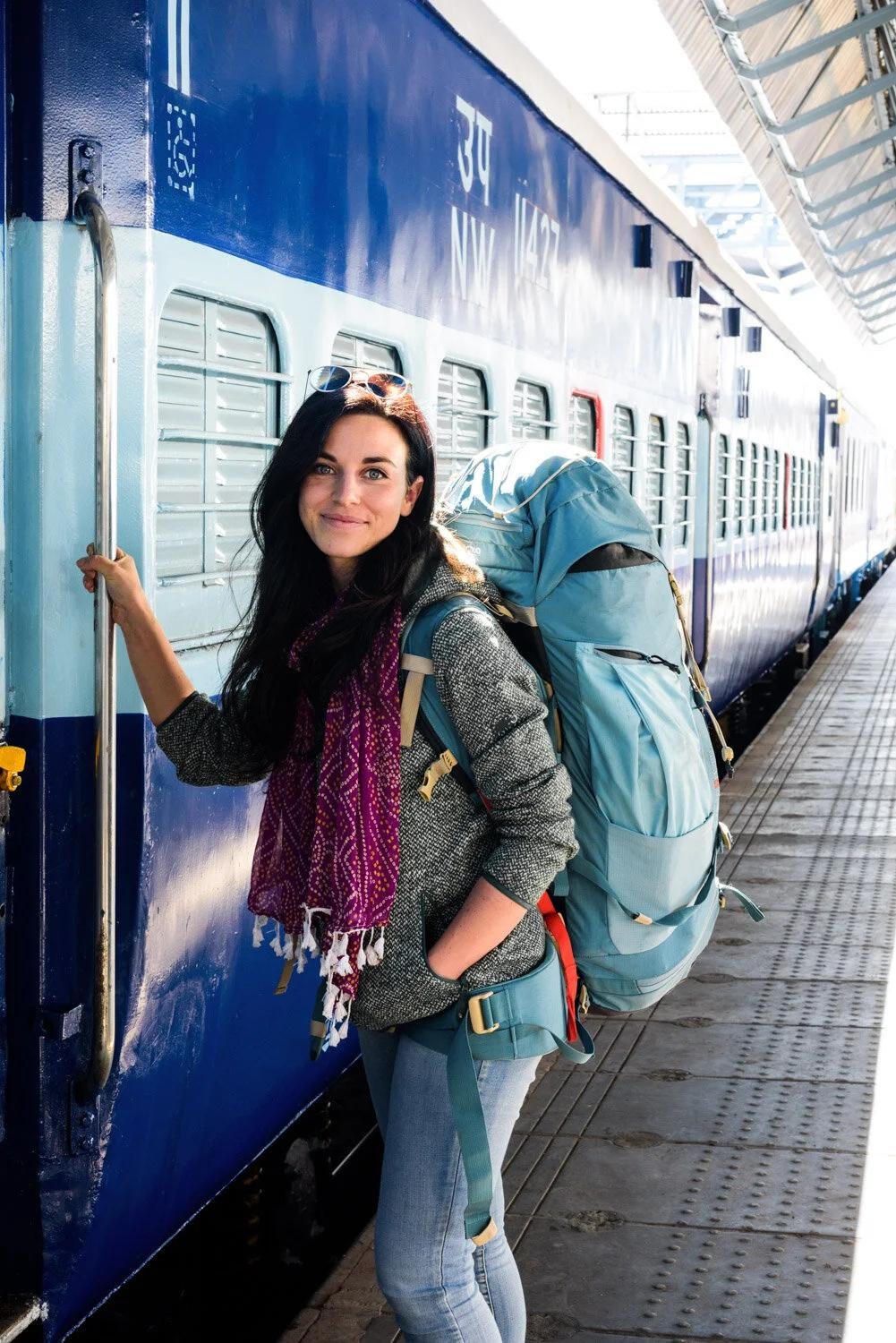

What does backpacking really mean?
For me, backpacking has less to do with the backpack and more to do with the way you travel.
A backpacking trip typically searches for:
- Spend less on accommodation.
- Use public transportation.
- Eat where the locals eat.
- Avoid excessively rigid itineraries.
- Travel for longer.
- Meet people along the way.
- Visit less touristy places.
- Prioritize experiences over luxuries.
- Adapt to changes in plans.
- Carry only what is necessary.
The current Worldpackers guide follows precisely this idea: backpacking is not simply about traveling cheap, but about seeking an experience closer to the destination, using public transport, cheap accommodation, local markets and, in some cases, work exchanges.
And there’s something important: you don’t need to be 20 years old to be a backpacker .
You can do it alone, as a couple, with friends or even as a family. You don’t need to disappear for a year either. A two-week trip can be perfectly organized with a backpacking philosophy.
The difference is how you decide to spend your money.
How much money do I need to backpack?
This is probably the most frequently asked question and also one of the most difficult to answer with a single figure.
There is no universal budget because traveling through Thailand does not cost the same as traveling through Norway, and always sleeping in a shared dormitory does not have the same price as reserving private rooms.
To get an initial idea, I would divide the budget into five large blocks:
| Expense | Indicative percentage |
|---|---|
| Hosting | 25-35% |
| Power | 20-25% |
| Transportation | 15-25% |
| Activities | 10-15% |
| Emergencies and extras | 10-15% |
They are not rigid percentages. They are a tool to know where money is escaping.
For example, if I see that accommodation is eating up half the budget, I try to change strategies before I start cutting back on food or experiences.
Indicative daily backpacking budget
For initial planning, these ranges can serve as a reference for a traveler using budget accommodation, local transportation and simple food, excluding international flight:
- Very economical: €20-30 per day.
- Economical: €30-45 per day.
- Intermediate: €45-70 per day.
- Comfortable: more than €70 per day.
In some countries it is perfectly possible to get closer to the first range. In others, even traveling in an austere way, it will be complicated.
The important thing is not to turn the daily budget into a religion.
If I spend more one day because I go on a hike I really wanted to take, I can make up for it with a quieter day later.
That margin of adaptation is one of the great advantages of traveling with a backpack.
How to calculate the total budget for a backpacking trip
I would use this formula:
Total budget = flights + accommodation + food + internal transportation + activities + documentation + insurance + emergency fund
I would then add an additional margin.
For example, for a 30-day trip:
30 × daily budget + flights + initial expenses + emergency
If you calculate €40 per day:
30 × 40 € = €1,200
To that we would still have to add flights, insurance, possible visas, transportation between countries and a fund for unforeseen events.
And here appears one of the most common mistakes: only calculating how much it costs to sleep and eat.
A trip may seem cheap until you start adding up:
- Airport transfers.
- Luggage.
- Visas.
- Excursions.
- Entries.
- SIM or eSIM.
- Laundry.
- Banking fees.
- Transportation between cities.
- Equipment.
- Sure.
- Emergencies.
The real budget is always in the small accumulated expenses.
The best destinations to start a backpacking trip
There is no single best country for backpacking.
I would choose the destination based on three factors: cost, ease of getting around and the number of experiences it offers for each euro spent .
Thailand: a gateway to Southeast Asia
Thailand is one of the destinations that I can most easily recommend for a first backpacking trip.
It has a huge tourist infrastructure, lots of cheap accommodation, street food, transport between cities and an international community of travelers.
You can combine:
- Bangkok.
- Chiang Mai.
- Pai.
- Krabi.
- Phuket.
- Koh Lanta.
- Koh Tao.
- Koh Phangan.
The key is not to try to see everything.
If you start island hopping every other day, transportation ends up eating up your budget.
Vietnam – probably one of my favorites for budget
Vietnam has a fantastic combination of cheap food, scenery, interesting cities and overland routes.
A classic route could go through:
Hanoi → Ninh Binh → Hue → Hoi An → Da Nang → Ho Chi Minh
And if you have more time you can add northern areas.
A very simple rule would apply here: travels slowly .
Moving continuously costs money. Staying four or five nights in a place can be cheaper and also allows you to really get to know it.
Laos: to travel more slowly
Laos is an especially good fit if you are looking for nature, tranquility and a slower pace.
Luang Prabang, Vang Vieng and Vientiane can be part of a combined route with Thailand, Vietnam or Cambodia.
I wouldn’t choose Laos looking for a huge number of attractions every day.
I would choose it precisely for the opposite.
It’s a place where it makes sense to slow down.
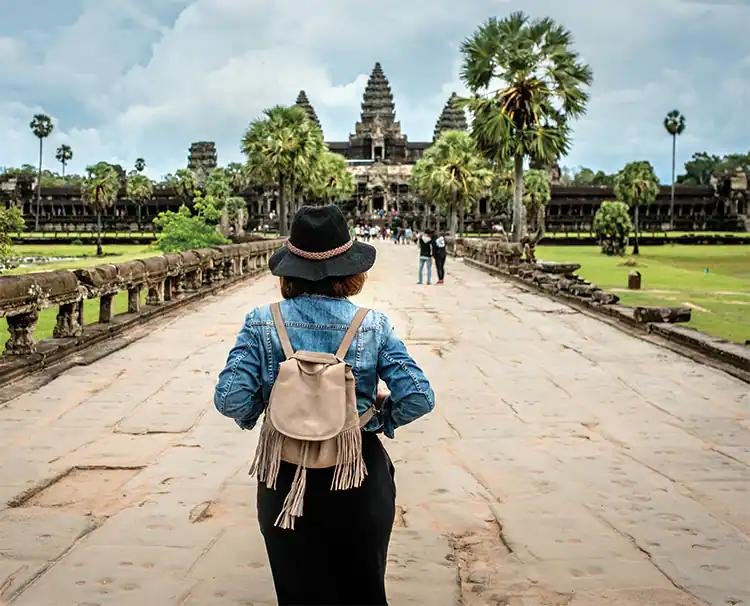
Cambodia: history and adventure on a budget
Cambodia is especially attractive for those who want to combine culture, history and nature.
Siem Reap and the temples of Angkor are essential for many backpacking routes, although it is worth remembering that visiting the large resorts can also increase the budget.
The solution is not to skip important experiences.
It is to compensate them with economic days.


Indonesia: much more than Bali
Indonesia can be fantastic for backpacking, especially if you get out of the more touristy areas.
Bali is known worldwide, but Indonesia has thousands of islands and enormous cultural and natural diversity.
To save, I would avoid building the entire trip around the most popular places.
You can combine areas of Bali with Java, Lombok or other destinations depending on the season and available connections.
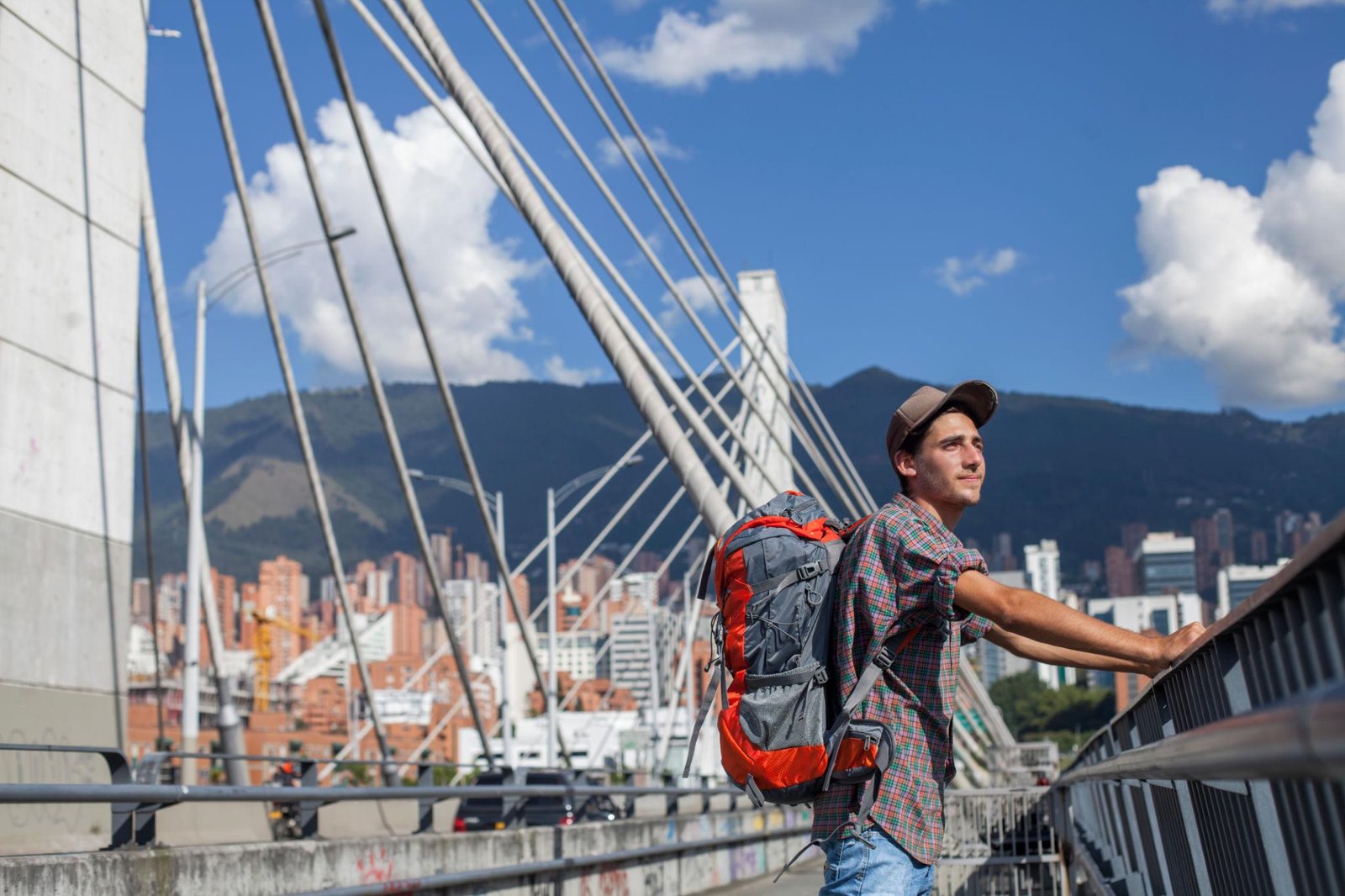
Colombia: a great option in Latin America
Colombia has something that I value a lot when I prepare a route: it allows you to combine cities, nature, mountains, beaches and towns without completely abandoning the backpacking budget.
A path could include:
Bogotá → Medellín → Salento → Cartagena → Santa Marta
But again, I wouldn’t try to do everything in a few days.
Transportation between destinations is one of the most easily underestimated expenses.
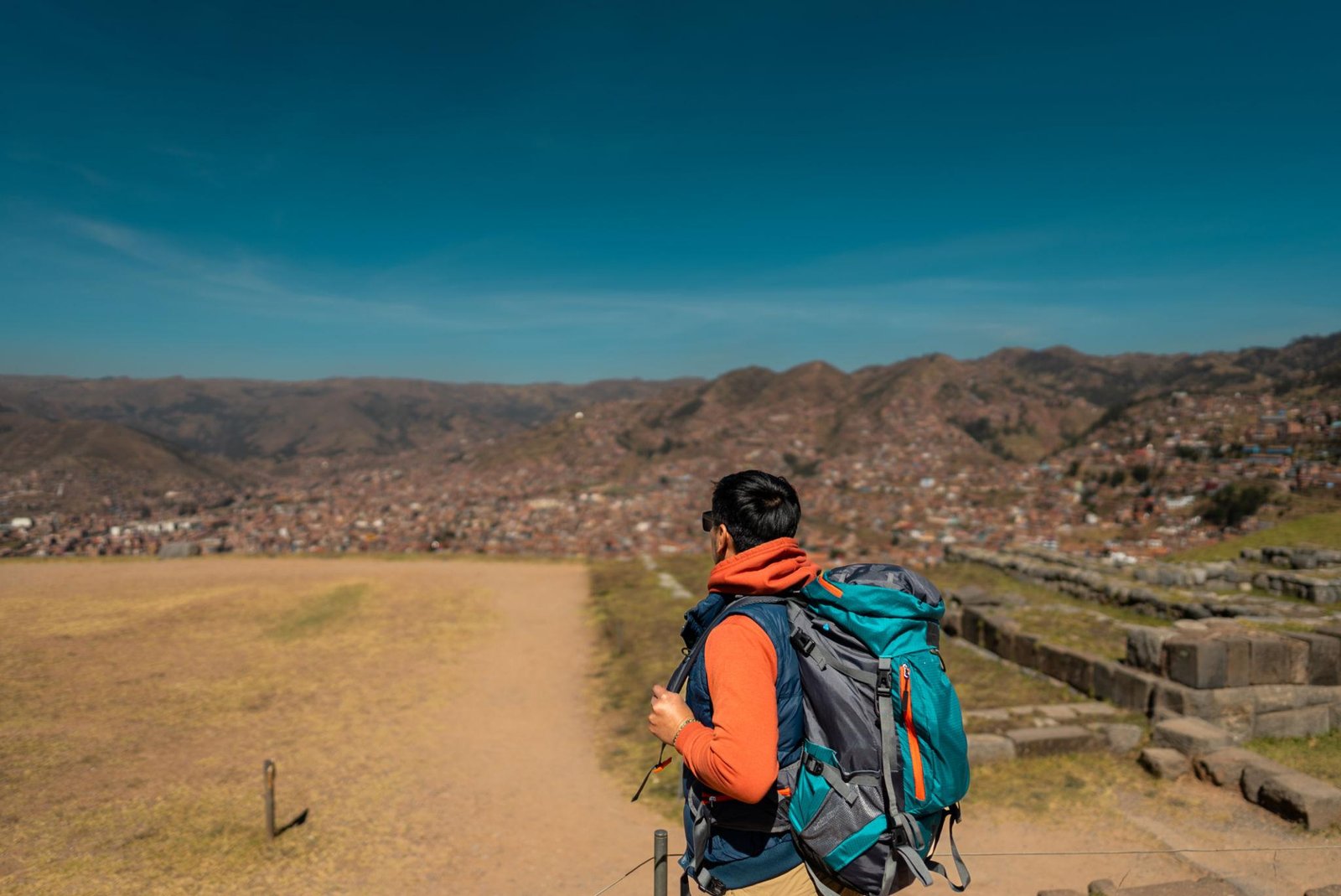
Peru: ideal for adventure and culture
Peru is one of the countries that best fits the classic idea of a backpacking trip.
You can combine:
- Lima.
- Arequipa.
- Cusco.
- Sacred Valley.
- Machu Picchu.
- Huaraz.
- Lake Titicaca.
The problem appears when the entire itinerary revolves around the most touristy activities.
Cusco, for example, may be relatively inexpensive in some areas, but certain experiences and excursions can add considerably to the budget. Even specialized backpacking guides warn that more touristy areas require more careful financial planning.
My advice would be to set aside a portion of the budget specifically for the experiences you really want to do.
Bolivia: adventure without needing a huge budget
Bolivia can be an excellent option for travelers looking for spectacular landscapes and a different experience.
La Paz, Uyuni, Sucre and Potosí can be part of an interesting route.
The Salar de Uyuni is the perfect example of something that may seem expensive when you look at an isolated excursion, but that makes much more sense when you incorporate it into a complete route through Bolivia.
Guatemala: volcanoes, culture and nature
Guatemala is another very interesting alternative for backpackers.
Antigua Guatemala, Lake Atitlán, Semuc Champey, Flores and Tikal allow you to build a fairly varied route.
Here I would combine cheap accommodation with public transportation and reserve more money for activities that are really worthwhile.
Mexico: huge and difficult to summarize
Mexico can be cheap or expensive depending entirely on where you go.
It does not cost the same to travel through extremely touristy areas as it does to explore less in-demand cities and regions.
For a first backpacking trip, you can combine Mexico City with Oaxaca, Chiapas, Yucatán or other areas according to your interests.
The trick is not to assume that “Mexico is cheap” means that everything will be cheap.
Portugal: a gateway to Europe
Western Europe is usually not the first region I recommend when the budget is extremely tight.
But Portugal can be an interesting option for anyone who wants to start backpacking through Europe.
Lisbon, Porto, Coimbra and other cities allow you to create an interesting route using trains and buses, hostels and local food.
Of course: you have to pay special attention to the accommodation.
Hungary: Europe without Western European prices
Hungary and especially Budapest can work very well for a backpacking trip through Central and Eastern Europe.
From there you can connect with other European destinations and build a broader route.
One of the advantages of this region is that you can find an interesting combination of history, architecture, nightlife, gastronomy and transportation.
Backpacking routes that really make sense
A good route is not the one that contains the most countries.
It is the one that contains minus absurd displacements .
This is an idea that I consider fundamental.
Backpacking tour through Southeast Asia
A classic combination could be:
Thailand → Laos → Vietnam → Cambodia
Or:
Thailand → Cambodia → Vietnam
Given enough time you can add Indonesia, Malaysia or the Philippines, but I wouldn’t try to cram all of these countries into three weeks.
The route must be adapted to the time available.
Backpacking route through South America
One of the most interesting combinations would be:
Colombia → Ecuador → Peru → Bolivia
It is a particularly attractive route for Spanish-speaking travelers because it allows them to maintain the language as a practical advantage and combines great cultural and landscape differences.
Worldpackers also identifies this Andean region as one of the classic backpacking routes, along with Central America, Southeast Asia and Eastern Europe.
Backpacking route through Central America
Another possibility:
Mexico → Guatemala → Honduras → Nicaragua → Costa Rica → Panama
It is not necessary to visit all the countries.
You can choose three or four depending on the time available.
Backpacking route through Central Europe
For a European trip with a more controlled budget:
Poland → Czech Republic → Slovakia → Hungary → Romania
I find this region especially interesting for those who want architecture, history, nature and relatively compact cities.



How to Save Money During a Backpacking Trip
This is where the budget is really won or lost.
1. Travel in the low season when it makes sense
I don’t recommend choosing low season just because it’s cheaper.
I would first check:
- Climate.
- Rainy season.
- Hurricanes.
- Temperatures.
- Holidays.
- Conditions of carriage.
I would compare prices later.
The low season can help you reduce expenses, but only if the conditions allow you to enjoy the destination. Flexible planning and avoiding peak periods are also strategies highlighted in current backpacking guides.
2. Use hostels
A hostel does not have to be synonymous with poor quality.
I would search:
- Good recent reviews.
- Location.
- Lockers.
- Kitchen.
- Wi-Fi.
- Laundry nearby.
- Suitable environment to rest.
Sometimes paying a few euros more for a better located bed ends up being cheaper than sleeping in an uncomfortable place and having to change accommodation.
3. Cook when you can
You don’t need to cook three times a day.
By preparing breakfast and some lunch you can significantly reduce spending in certain countries.
Also, if the hostel has a kitchen, you can buy basic products at supermarkets or local markets.
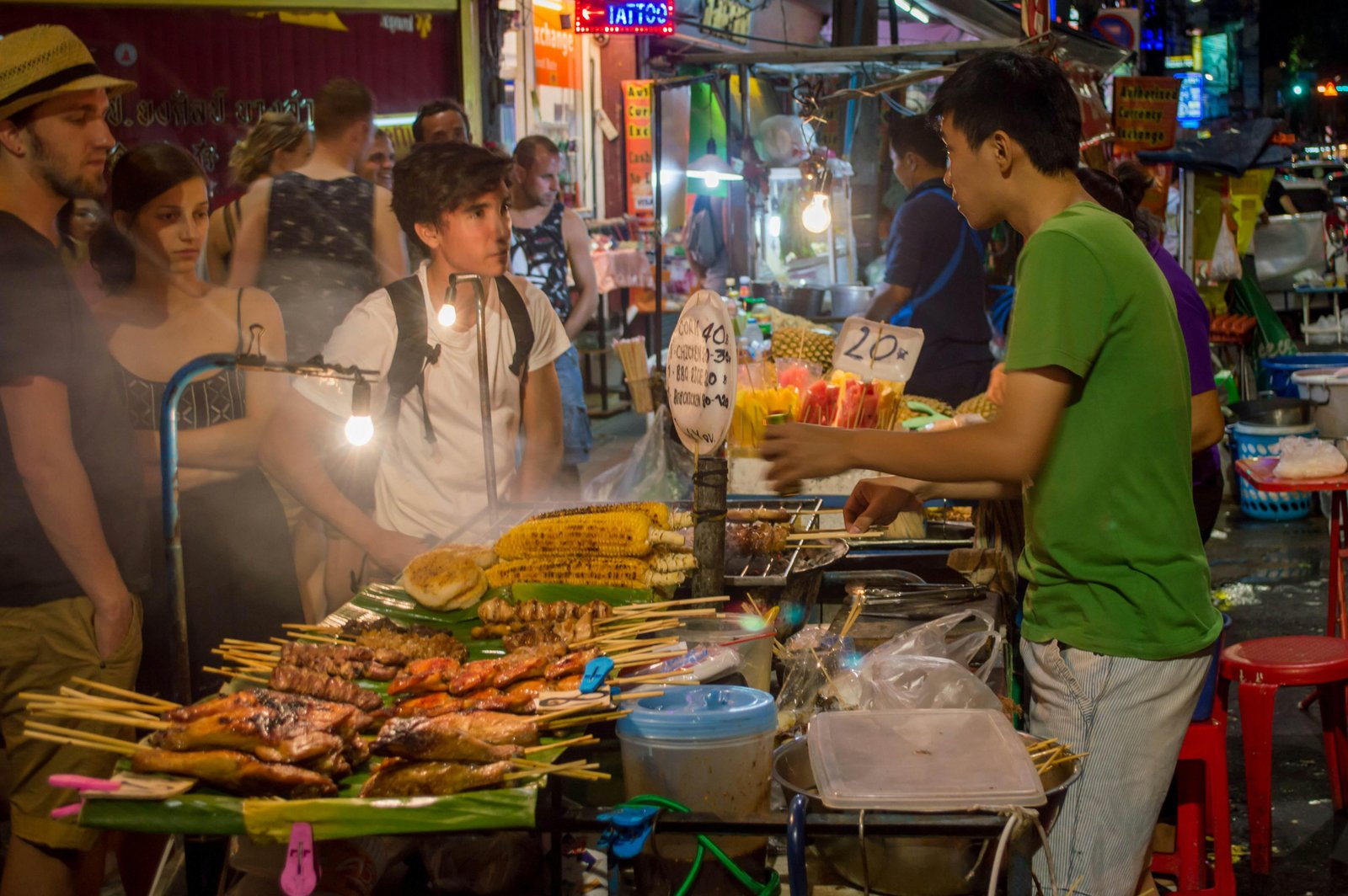
4. Eat like the locals
One of the best ways to travel cheap is to stop looking for restaurants designed exclusively for tourists.
Markets, street stalls, small restaurants and local food often offer much more interesting experiences.
But I also don’t recommend turning this into a competition to find the cheapest food.
The priority continues to be eating well and with common sense.
5. Walk
Walking is one of backpacking’s best tools.
You don’t just save money.
You also discover streets, neighborhoods, markets and small places that probably do not appear on the tourist itinerary.
6. Do not book all activities
When I start planning a destination, I usually separate three categories:
Essential: I want to do it no matter what.
Interesting: I will do it if I have time and money.
Expendable: I can leave it for another time.
This classification avoids spending money simply because an activity appears on a “10 things to do” list.
How to get cheap hosting
There are four strategies that I find especially useful:
Hostel
The easiest option for most backpackers.
Guesthouse
It can be interesting when you travel as a couple or want more privacy.
Job Exchange
Some platforms connect travelers with hosts who offer accommodation and, depending on the agreement, food or other benefits in exchange for certain hours of collaboration. Worldpackers, for example, currently maintains a wide international offer of this type.
House sitting
It consists of taking care of a home during the absence of its owners.
It can be an interesting alternative for long trips, although it requires meeting requirements and finding suitable opportunities.



What to carry in your backpack without carrying half the house
One of the best pieces of advice I can give is simple:
if you doubt whether you need something, you probably don’t need it.
The backpack should contain tools for traveling, not all the objects you use at home.
My basic list
- Light clothing.
- Sufficient underwear.
- A weather-adaptable jacket.
- Comfortable footwear.
- Sandals.
- Lightweight towel.
- Small toiletry bag.
- Sunscreen.
- Basic first aid kit.
- Padlock.
- Universal adapter.
- Reusable bottle.
- Power bank.
- Chargers.
- Telephone.
- Documentation.
- Digital copies of important documents.
It would also include bags to separate clean and dirty clothes.
The recommendation to carry only the essentials is not new, but it is still one of the most useful: everything you put in your backpack will have to be carried for weeks or months. ( eAcnur )
Documentation: the section that you cannot improvise
Before purchasing an international flight, I would always check:
- Passport validity.
- Visa.
- Maximum residence time.
- Entry requirements.
- Vaccinations or certificates when applicable.
- Travel insurance.
- Exit ticket if required.
- Transit requirements.
- Special permissions.
And here’s a rule I wouldn’t break:
do not rely solely on a blog to find out about immigration requirements.
The conditions may change and also depend on your nationality.
The Worldpackers guide also recommends checking the requirements according to the traveler’s nationality and consulting official immigration sources or embassies before purchasing tickets.
Travel insurance: saving here can be very expensive
If I have to choose where to cut my budget, travel insurance would not be one of my favorite candidates.
An accident, hospitalization, major luggage loss, or an emergency during a long trip can turn a tight budget into a serious financial problem.
That’s why I would compare:
- Medical coverage.
- Hospitalization expenses.
- Repatriation.
- Luggage.
- Cancellations.
- Sports activities.
- Maximum trip duration.
- Exclusions.
It’s not about taking out the most expensive insurance.
It’s about hiring one that really corresponds to the type of trip you are going to take.
How to travel for months without running out of money
Here appears one of the most interesting strategies of long-term backpacking: reduce the fixed cost of each day .
If you spend €70 a day, 180 days requires a huge amount.
If you manage to travel with €35 a day, the same period changes completely.
That’s why many long-term travelers combine:
- Hostels.
- Work exchanges.
- House sitting.
- Cook.
- Land transportation.
- Long stays.
- Low season.
- Remote work.
- Free activities.
But there’s one thing I would never do: travel without any emergency funds.
If you have €2,000 for six months and you spend the €2,000, you don’t have a six-month trip.
You have a problem waiting to happen.
Can you work while backpacking?
Yes, but two concepts must be separated here.
It is one thing to work legally in another country and quite another to generate income remotely while traveling.
Among the remote work possibilities are:
- Design.
- Programming.
- Editorial.
- Translation.
- Digital marketing.
- Video editing.
- Social media management.
- Customer Service.
- Web development.
There are also work exchanges, but these must be done respecting the country’s immigration laws and conditions.
I would never assume that having a tourist visa allows you to work legally.
The apps I would take on a backpacking trip
You don’t need to fill your phone with applications.
I would stick with a few categories:
Offline maps: to not always depend on the Internet.
Translator: especially useful when visiting countries where you don’t speak the language.
Reservations: accommodation and transportation.
Expense control: to know how much you are really spending.
Currency converter: to avoid errors.
Cloud storage: for documents.
Messaging: to keep in touch.
And a very simple recommendation: download important information before leaving the hosting.
You won’t always have a connection when you need it.
How to control expenses while traveling
I would divide the money into three bags:
Daily Money
Food, local transportation and small expenses.
Money for experiences
Excursions, tickets, activities and visits.
Emergency Fund
This money does not exist to buy souvenirs.
It exists to solve problems.
It would also carry more than one payment method. If a card fails or is lost, having an alternative can avoid a pretty unpleasant situation.




The mistakes that can make you lose the most money
Wanting to visit too many countries
Moving constantly is difficult.
More flights, more buses, more taxis, more nights of accommodation and more wasted time.
Choose accommodation solely by price
A bed five euros cheaper can be an hour from the center.
Then the transportation costs appear.
Don’t check the weather
You can save on a flight and end up spending a lot more because you arrived during a difficult season.
Book everything too early
It’s not always a bad thing to book early, but a backpacking trip needs some room to adapt.
Not having emergency money
This is probably the worst mistake.
Carrying too much luggage
A heavy backpack affects everything: transportation, lodging, hiking, and comfort.
Travel only following recommendations from social networks
Networks can be a fantastic source of inspiration, but they also create saturated paths.
I would use them to discover ideas and then do my own research.
How to organize your first backpacking trip step by step
If you have never taken a trip of this type, I would not try to start by organizing a trip around the world.
I would do this:
Step 1: Choose a region
Southeast Asia, South America, Central America or Europe.
Step 2: Define how much time you have
Two weeks? A month? Three months?
Time determines the route.
Step 3: Set a maximum budget
Not the ideal budget.
The actual maximum you can afford.
Step 4: Select 2-5 top destinations
Then leave room to improvise.
Step 5: Calculate the daily cost
Accommodation + food + transportation + activities.
Step 6: Add mandatory flights and expenses
Visas, insurance, vaccinations when applicable and international transportation.
Step 7: Add an emergency fund
Don’t spend it unless it’s really necessary.
Step 8: Prepare a light backpack
The less you charge, the better.
Step 9: Save documentation offline
Passport, reservations, insurance, tickets and other documents.
Step 10: Leave room to change plans
This last part is important.
A backpacking route shouldn’t look too much like a spreadsheet.
Worldpackers highlights flexibility as one of the advantages of traveling this way: along the way you can discover new destinations, change your itinerary or end up traveling with people you met in a hostel.
Frequently Asked Questions (FAQs)
What is the best country to backpack?
Depends on what you’re looking for. For a first experience, Thailand, Vietnam, Colombia, Peru, Guatemala and Hungary are very interesting options due to the combination of experiences, infrastructure and affordable accommodation possibilities.
How much does it cost to backpack for a month?
It completely depends on the country and travel style. As an initial reference, an economical traveler could calculate between €900 and €1,500 for 30 days of daily expenses, but to this would have to be added flights, insurance, visas and other important expenses.
Can you backpack with little money?
Yes. The key is to reduce daily expenses without eliminating the experiences you really want to have. Cheap accommodation, local food, public transport and longer stays help a lot.
Is it better to travel alone or with someone?
Both options have advantages. Traveling alone offers a lot of freedom and makes it easy to meet other travelers. Traveling accompanied allows you to share certain expenses and may be more comfortable for some people.
How much should a backpacking backpack weigh?
There is no universal weight, because it depends on the body, duration and type of trip. But my philosophy would be very simple: the less you can carry without sacrificing what is necessary, the better .
Which countries are cheapest for backpackers?
Generally speaking, several areas in Southeast Asia, South America, Central America and Central Europe can offer good possibilities for tight budgets. But the final cost depends a lot on the city, season and style of travel.
Can I backpack without knowing English?
Yes. Not speaking English can complicate some situations, but it does not prevent you from traveling. Learning a few basic words of the local language, using an offline translator and having important information saved on your phone helps a lot.
Is it mandatory to take out travel insurance?
It depends on the destination, nationality and entry requirements, but even when it is not mandatory, I would seriously consider hiring it for international trips, especially if they are long.
Can I backpack for a year?
Yes, but a year-long trip requires very different financial planning than a vacation. In that case, reducing the daily cost becomes much more important and work exchanges, house sitting, remote work and long stays can make special sense.
My formula to travel the world without breaking the bank
If I had to boil this entire guide down to one simple strategy, it would be this:
Travel slow.
Choose countries where your money works.
Don’t change cities every two days.
Sleep cheaply, but not necessarily in the cheapest place.
Eat local.
Walk as much as you can.
Use public transportation.
Set aside money for the experiences that really matter to you.
Avoid filling your backpack.
Don’t travel without an emergency fund.
And, above all, don’t confuse traveling cheap with traveling badly.
For me, the true luxury of backpacking is precisely having time. Time to stay one more night because you liked a city. Time to take a bus instead of a plane. Time to chat with someone you just met. Time to deviate from the route.
The backpack is just the tool.
The real savings are in learning to move around the world without constantly paying for comfort, speed or things you don’t really need .
And when you master that, the planet becomes much bigger than your budget.