
I’ve always found it curious how two people can travel on the same plane, sit practically next to each other and have paid completely different prices.
One may have paid €500 and another €250.
Is it luck? Sometimes. Is it because one person knows a “secret trick” that the airline is trying to hide? Normally not.
When I have had to organize trips on a tight budget, I have found that the difference is usually how you search, what dates you compare, what airports you consider and how much time you are willing to spend to find a good rate .
So instead of promising you that there is a magic button to buy any flight at half price, I prefer to show you the tricks that can really increase your chances of finding cheap flights, cheap airline tickets and real savings opportunities .
Also, some of the advice that is repeated on the internet is quite outdated. For example, always searching in incognito mode or deleting cookies should not be the focus of your strategy. Even Viajando acknowledges that there is no clear scientific basis for these tricks.
The real advantage lies elsewhere.




Can you really buy flights for half price?
Yes, it is possible to find huge discounts , but you have to understand well what “half price” means.
I don’t want to sell you smoke.
There is no method that automatically converts a €600 flight into a €300 flight every time you search for it.
What you can do is discover a fare that is considerably lower than the usual price for that route.
For example:
- A flight normally costs €500 and is listed at €260.
- A route that is usually €350 temporarily drops to €190.
- Two one-way flights cost less than a traditional round trip.
- An alternative airport offers a much cheaper fare.
- Changing the dates by two days considerably reduces the price.
- A different airline has a promotion that doesn’t appear on the first search.
That’s where the opportunities appear.
Bidding specialists themselves recommend combining different strategies instead of relying on a single trick. Travelzoo, for example, proposes comparing dates, airports, companies and fare types to find better prices.
The first trick: find out how much your flight should really cost
Before you try to buy a half-price flight, you need to know what half-price means.
If you’ve never looked for Madrid-New York, for example, you don’t know if €350 is a bargain or just a normal fare.
I would research the usual price first.
Compare:
- Different dates.
- Different airlines.
- Different airports.
- Round trip.
- One way.
- Direct flights.
- Flights with stops.
- High and low season.
A fare of €300 can be extraordinary for one route and completely normal for another.
That’s why I don’t just look at the number that appears on the screen.
I wonder:
“How much does this flight usually cost?”
When you have that reference, it is much easier to recognize a real offer.
1. Be flexible with dates
If you can only travel exactly from August 15 to 22, your chances of saving decrease.
But if you can leave on the 13th, 14th, 16th or 17th and come back a few days later, you have many more combinations.
This is probably one of the strategies I recommend the most.
Viajando precisely points out that moving the departure or return by one day can considerably modify the fare.
Skyscanner also maintains full month search tools to locate the cheapest days within a travel window.

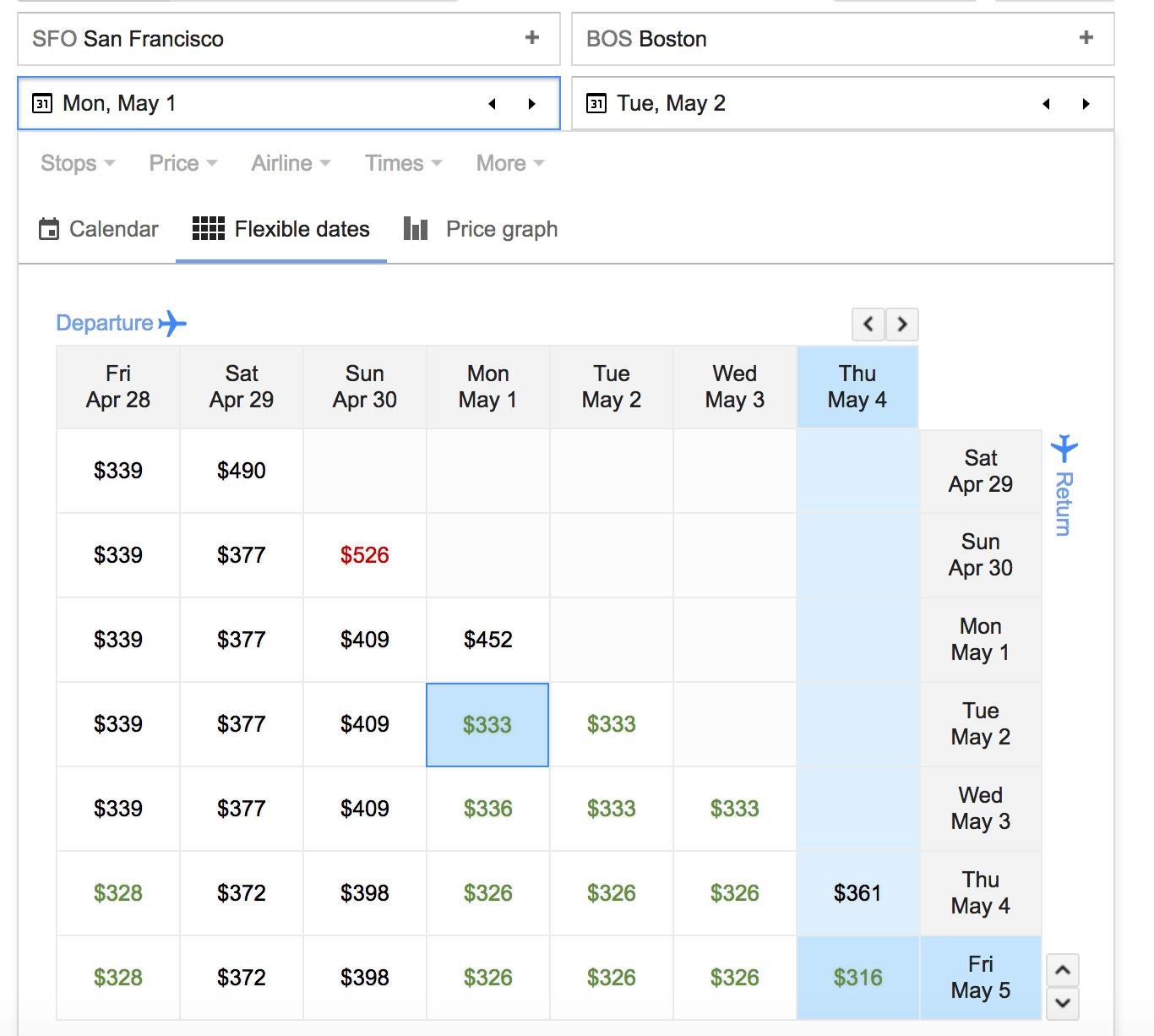

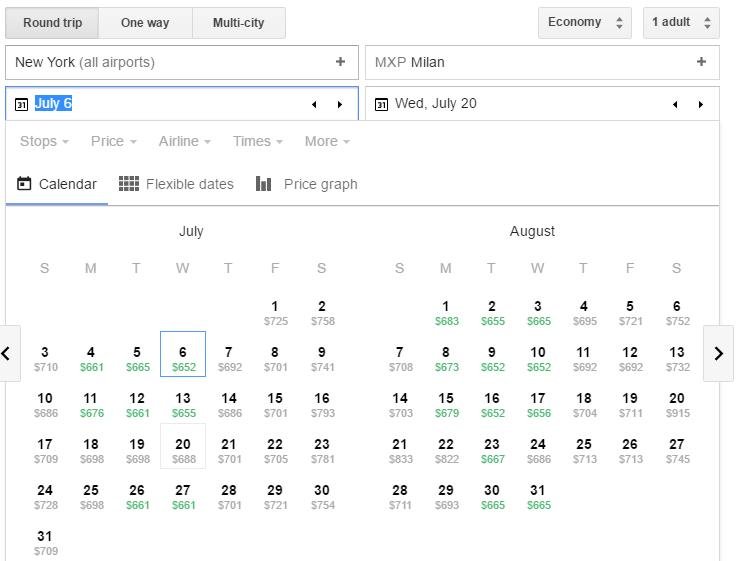

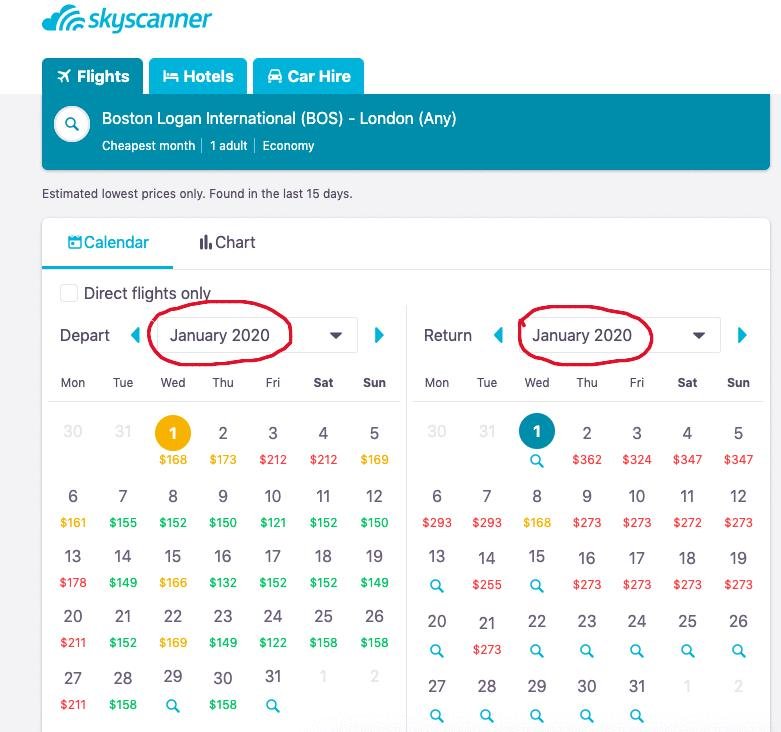

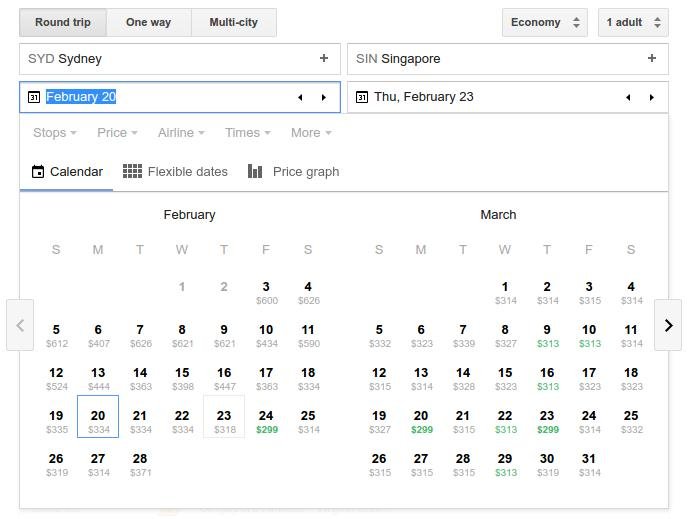
The trick of moving the trip a couple of days
You don’t have to have a whole month free.
Simply try:
Departure Friday + return Sunday
vs:
Departure Tuesday + return Monday
Or:
Departure Wednesday + return Wednesday
Then compare the total price.
Sometimes you’ll find that changing just one or two days has a bigger impact than you expected.
2. Don’t just search “round trip”
This is one of the tricks that can most easily go unnoticed.
When you search:
Madrid → Rome → Madrid
you are assuming that this combination is the most economical.
But it may be cheaper to buy:
Madrid → Rome
and then:
Rome → Madrid
as two separate bills.
You can even try a combination with different airlines.
Travelzoo recommends comparing two one-way tickets because, depending on the route and the companies available, they may be cheaper than a traditional round trip.
When is it worth it?
Especially when:
- There are several airlines competing on the route.
- One company is cheap for the trip and another for the return.
- Dates are flexible.
- You don’t need to check too much luggage.
Of course: check the dates, times and airports very carefully before paying.
3. Compare different airlines for each route
For a long time there was the idea that the normal thing was to buy back and forth with the same company.
Not always.
You can find something like:
One way: Airline A → €80
Return: Airline B → €65
Total:
€145
While the same route with a single company could cost you €190.
Travelzoo also highlights the possibility of flying with one company on the way and another on the return when the price difference justifies it.
I would always check.
4. Search for alternative airports
This is one of my favorite tricks because many people search exclusively for the main airport.
And that’s a mistake.
Some cities have multiple airports and the price differences can be significant.
For example, if you want to travel to Milan, you can check different airports in the area instead of limiting yourself to just one.
Travelzoo specifically recommends not ruling out alternative airports, both at origin and destination.
There is also recent data showing that certain secondary or less popular airports may offer good fares depending on competition and available routes.
But there is a condition
Don’t obsess over the price of the plane.
Calculates:
Flight + transportation to the airport + transportation from the airport + possible additional nights.
If you save €60 on the ticket but spend €80 to get to the alternative airport, you end up paying more.
5. Also search for airports near your city
The same strategy works with the departure airport.
If you have several cities relatively close, compare them all.
For example, depending on your location, it may make sense to check:
- Main airport.
- Secondary airport.
- Airport of another city.
- Airports of neighboring countries.
- Large international hubs.
Turismocity highlights precisely the possibility of comparing departure and arrival airports and points out that, in certain cases, it can even compensate to travel to another city to get a lower rate.
This trick can be especially interesting for international flights.






6. Use a metasearch engine before buying
I wouldn’t start by entering ten airlines one by one.
First I would use a metasearch engine.
The advantage is simple: you can compare many options in a single search.
Tools worth checking out include:
- Google Flights.
- Skyscanner.
- Kayak.
- Momondo.
- Turismocity.
- Other specialized search engines according to your country.
Viajando uses Skyscanner as one of its main tools and highlights options such as comparing stopovers, dates, airports, combinations and alerts.
Skyscanner also currently offers tools to search by entire month, explore destinations, add nearby airports and create price alerts.
My advice is not to marry any seeker.
Use it as radar.
Then check the price directly with the airline.
7. Activate price alerts
This trick is very simple and can save you a lot of work.
If you already know that you want to travel to a certain destination but you don’t have to buy today, activate an alert.
This way you can observe the evolution of the price without constantly checking it.
Skyscanner, for example, allows you to create alerts and receive notices when the price of a route goes up or down.
This changes the strategy quite a bit.
Instead of:
search → look at price → buy out of fear
you can do:
search → set reference → monitor → buy when an interesting rate appears.
8. There is no “magic day” to buy flights
This is one of the myths that I like to debunk the most.
You’ve probably heard:
“Buy on Tuesday and you will pay less.”
Or:
“Flights are cheapest at midnight.”
I wouldn’t take any of those statements as a universal law.
Prices depend on route, demand, season, availability and other factors.
Even Viajando recognizes that, in its experience, there is no exact moment that always guarantees the minimum price.
Travelzoo does recommend not limiting searches to weekends and notes that certain promotions may appear on weekdays, but that’s very different from stating that every Tuesday flights are cheaper .
The difference is important.
9. Try different days to fly
The day you buy is one thing.
Another completely different one is on the day you fly .
Here it is worth comparing.
Test:
- Tuesday.
- Wednesday.
- Thursday.
- Saturday.
- Sunday.
- Friday.
Not because there is a magic rule, but because demand changes depending on the route.
Travelzoo recommends trying certain off-peak days and, above all, avoid limiting your search to the most popular dates.
And here appears one of the best combinations:
buy when a good rate appears + travel on a less popular date.
10. Travel out of high season
If you have the freedom, this strategy can be brutal.
It is not the same to search for:
Paris in August
than:
Paris in October.
Nor:
New York at Christmas
than:
New York in February.
The season influences demand and, therefore, the possibilities of finding cheaper rates.
Travelzoo recommends considering destinations out of season because lower crowds may impact flights and accommodation.
Turismocity also highlights the low season as one of the important factors to find better prices.





11. Travel with hand luggage if you really can
Here you can save money without changing your date or destination.
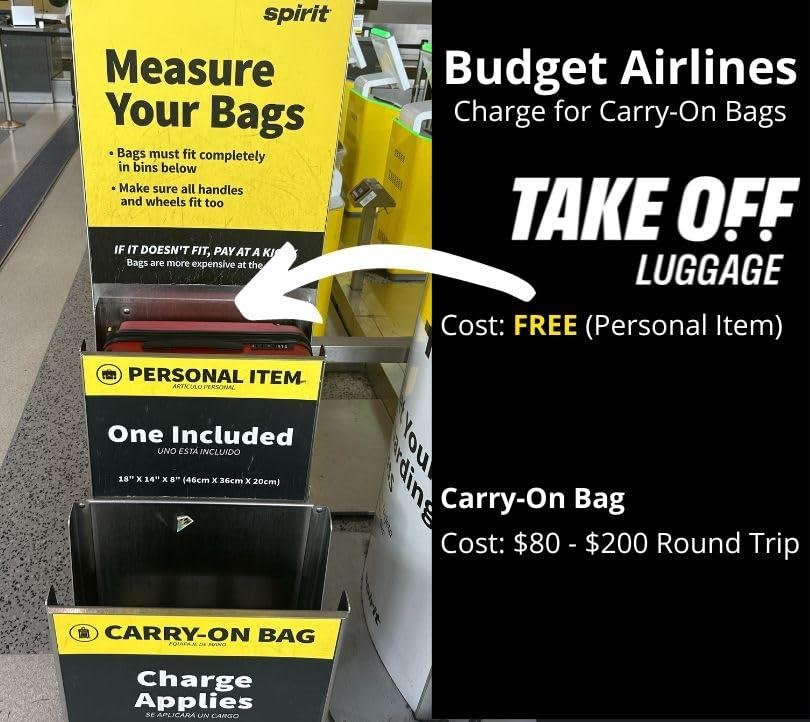
Many economy fares do not include checked baggage.
If you are traveling for four days and can fit everything in a backpack or permitted cabin luggage, you may not need to pay for a suitcase.
Turismocity points out carry-on luggage as a strategy to reduce cost, especially on short trips.
But be careful with the dimensions and conditions of each rate.
I wouldn’t assume all airlines include the same thing.
Before purchasing, please check:
- Maximum dimensions.
- Weight.
- Parts number.
- Luggage under the seat.
- Cabin luggage.
- Checked suitcase.
- Price to add luggage later.
A €40 fare isn’t really €40 if you need to add another €70 in luggage.
12. Compare the final price, not the advertised price
This is one of the most important points of the entire guide.
Suppose:
Flight A: €100
Flight B: €130
It seems that A is better.
But:
Flight To
- Luggage: €50
- Seat selection: €20
- Airport transportation: €25
Total: €195
While:
Flight B
- Luggage included.
- Best airport.
- No need to choose a seat.
Total: €155
Where was the cheap flight?
That’s why I always make a comparison with the actual cost of the trip .
13. Try flights with stopovers
I wouldn’t automatically rule out a flight with a stopover either.
It can be much cheaper than a direct one.
Furthermore, depending on the route, a stopover can become an opportunity to get to know another city.
Travelzoo recommends considering stopovers and even mentions the possibility of taking advantage of certain stopover programs to make a connection part of the trip.
But here is a rule:
Don’t accept an 18-hour layover to save €20.
The scale has to compensate.
My ideal scale
If the price difference is significant and the schedule is reasonable, a stopover may make sense.
If it is a connection that is too long or involves changing airports, I would review all the costs very carefully.
14. Be very careful with separate bills
This trick can reduce the price a lot, but it also increases the risk.
Imagine:
Flight 1: Madrid → London
Flight 2: London → New York
If there are two independent reservations and the first flight is delayed, the second airline does not have to protect you against missing the connection.
That’s why when I make combinations like this, I leave a considerable margin.
And if the savings are small, I prefer a protected connection.
Saving €50 is not worth it if you can end up buying another €400 flight.
15. Try multi-destination flights
If you want to visit multiple cities, it doesn’t always make sense to return to the airport you started from.
For example:
Madrid → Rome → Paris → Madrid
may be more practical than:
Madrid → Rome → Madrid
and then buy another separate trip to Paris.
Turismocity includes multi-destination flights among its strategies to find better combinations, especially when you want to visit more than one city.
You can also compare:
Madrid → Rome
Paris → Madrid
and move between Rome and Paris in another way.
This opens up many possibilities.
16. Purchase round trip separately
Don’t assume that a round-trip ticket will always be cheaper.
Compare:
Round trip in a single reservation
vs:
Independent return + independent return.
And then try:
Airline A for the outbound + Airline B for the return.
Travelzoo specifically recommends making this comparison because important differences may appear.
It’s a little extra work, but it can be worth it.
17. Search for “any destination” when you don’t have one decided
This trick can completely change the way you travel.
Instead of saying:
“I want to travel to Rome.”
you say:
“I want to travel cheap.”
Then you look for which destinations have the best rates from your airport.
Skyscanner maintains an ‘Everywhere’ search and destination exploration feature, while its full month tools allow you to combine destination and date flexibility.
Ideal for:
- Getaways.
- Trips of a few days.
- People with flexible holidays.
- Travelers who simply want to see a new place.
And personally I find it a much more fun way to search for trips.
18. Check the low cost airlines
Low-cost companies can be a great ally.
But you have to know how to use them.
The initial price is usually low because certain services are charged separately.
You can save if you really need little.
For example:
3-day trip + small backpack + no seat selection
may be perfect for a low cost rate.
But:
20-day trip + large suitcase + seat + priority + changes
can make a traditional airline more competitive.
Don’t just compare base rates.
Compare what you need.





19. Accumulate miles and points, but don’t be a slave to them
If you travel frequently, loyalty programs can help you.
You can accumulate:
- Miles.
- Points.
- Credits.
- Bonuses.
- Card benefits.
- Category improvements.
Turismocity also recommends using frequent flyer programs to accumulate points that can later be used on new trips or benefits.
But I wouldn’t pay €100 more for a flight just to accumulate points that may not make up the difference.
First:
price.
After:
benefits.
20. Compare flights and flight + hotel packages
If you also need accommodation, it doesn’t hurt to check both options.
Do two calculations:
Flight + hotel separately
and
Flight + hotel in package.
Travelzoo points out that there is no formula that is always cheaper: it depends on the destination, season, demand and type of trip.
So a simple comparison can reveal an interesting difference.
21. Is it useful to search incognito?
You can do it.
But I don’t consider it a great “hack”.
Viajando includes incognito mode and deleting cookies among its advice, but the article itself acknowledges that there is no clear scientific basis to claim that these methods automatically reduce the price.
I wouldn’t waste too much time on this.
If you want to use a private window, perfect.
But I would put a lot more effort into:
dates + airports + airlines + alerts + luggage.
There you have more possibilities to achieve real savings.
22. Does changing browsers reduce the price?
I wouldn’t take it as a primary strategy either.
You can check Chrome, Firefox or any other browser if you want to experiment, but if a different price appears, I would first try to find out if it’s really due to the browser or just an availability update.
Traveling says that it has observed differences using different devices and browsers, but it does not present this as a universal scientific rule.
My advice:
check it once if you are curious and move on.
Don’t turn flight search into a collection of open browsers.
23. The trick of searching from different devices
It is similar to the previous one.
You can check the price from:
- Computer.
- Mobile.
- Tablet.
Viajando reports that he has observed differences in certain searches between devices.
However, I would apply the same logic again:
if there is a difference, check the final price before attributing it to the device.
Prices may change simply because availability has been updated between searches.
24. Don’t wait forever for a perfect price
This is one of the mistakes that can make you lose the most money.
You find a flight to:
€280
You think:
“I’m going to wait and see if it drops to €220.”
Two days later:
€390.
It doesn’t always happen, obviously.
But if you’ve already researched the route and know that €280 is a good fare, waiting indefinitely can be a bad strategy.
The key is not to find the all-time low price.
It’s recognizing when you have a good opportunity .
25. How far in advance should you buy?
There is no magic number here either.
Turismocity currently recommends, for certain routes from Argentina, different windows depending on the type of trip and destination, while Travelzoo points out that the optimal time depends on the route, season and demand.
As a rule of thumb:
- Domestic flights: compare several weeks in advance.
- International flights: start monitoring with several months to spare.
- High season: advance the search.
- Rigid dates: Don’t wait too long.
- Flexible dates: you can observe longer.
What I wouldn’t do is think:
“Exactly 63 days in advance will always be cheaper.”
That’s too simplistic.
My strategy to try to pay half
If I had to search for a flight today and wanted to maximize my chances of getting a big deal, I would do this:
Step 1: I set my budget
For example:
Maximum €300
Step 2: I search for the destination
First I check how much it normally costs.
Step 3: Expand the dates
I test several days before and after.
Step 4: I check airports
Both departure and arrival.
Step 5: I compare round trip
Then I try two independent flights.
Step 6: Compare airlines
Including low cost.
Step 7: I test
scalesBut calculating the time and total cost.
Step 8: Check multi-target
Especially if I’m visiting multiple cities.
Step 9: I activate an alert
If I still don’t need to buy.
Step 10: I check the airline directly
Before you pay.
Step 11: calculate luggage
I don’t want to discover additional costs on the last screen.
Step 12: I make the decision
If I find a rate that is clearly lower than the usual price and the conditions seem good to me, I buy.
I don’t keep looking for three weeks to try to save another €10.
A quick table to compare your next flight
| Strategy | Savings Potential | Difficulty | Do I recommend it? |
|---|---|---|---|
| Flexible Dates | High | Low | Yes |
| Alternate Airports | High | Low | Yes |
| Price Alerts | Medium/High | Very Low | Yes |
| Compare airlines | High | Low | Yes |
| Round trip separately | Medium/High | Medium | Yes |
| Multi-destination flights | Medium/High | Medium | Yes |
| Travel out of season | High | Low | Yes |
| Carry-on | Medium | Low | Yes |
| Scales | Medium/High | Medium | Yes |
| Miles and points | Medium | Medium | Yes |
| Incognito mode | Low/uncertain | Very low | Optional |
| Clear cookies | Low/unclear | Low | Optional |
| Change Browser | Low/Unclear | Low | No priorityrio |
The 7 tricks that I would prioritize
If you don’t want to read the entire guide every time you have to buy a ticket, stick with these:
1. Date flexibility.
It’s probably your best tool.
2. Compare airports.
Don’t limit yourself to the nearest airport.
3. Compare several airlines.
Including low cost ones.
4. Search round trip separately.
A much cheaper combination may appear.
5. Activate alerts.
Let the tools watch over you.
6. Calculate the final price.
Luggage and transportation also count.
7. Know how to recognize a good offer.
You don’t need to get the lowest price ever; you need to know when the current price is good enough.


Frequently Asked Questions (FAQs)
Is it possible to buy flights at half price?
Yes, it can happen when a promotional rate appears or when you find a combination that is much cheaper than usual. However, there is no method that guarantees paying exactly 50% less on any route.
What is the best trick to buy cheap flights?
If I had to choose one, I would say flexibility . Being able to change the dates, airports or even the destination multiplies the chances of finding an affordable rate.
Is it cheaper to buy flights in advance?
Buying early can help, especially when dates are rigid or high season, but there is no universal number of days that guarantees the lowest price. Rates depend on the route, demand and availability.
What day is cheapest to buy flights?
There is no universally cheaper day. Some promotions may appear during the week, but it is more useful to compare regularly than to wait exclusively for Tuesday. Travelzoo recommends not limiting searches to the weekend.
Is it cheaper to fly during the week?
On certain routes it may be because the demand may be different, but it is not an absolute rule. It is best to compare several dates before deciding.
Does searching for flights incognito make them cheaper?
You should not consider it a guaranteed method. Although some travelers use it, there is no solid basis for saying that airlines automatically increase the price because you have repeated a search.
Does clearing cookies help you find cheap flights?
You can do it, but I don’t consider it a fundamental trick. The potential savings are much less important than comparing dates, airports and fares.
Should I search in different browsers?
You can compare if you want, but I wouldn’t expect great results. Differences may be due to normal changes in availability and pricing, not necessarily the browser used.
Is it better to buy round trip or separately?
Depends on the path. Always compare both options because two one-way tickets, even with different companies, can be cheaper.
Do secondary airports have cheaper flights?
In some cases yes. Alternative airports may have lower-cost routes or greater competition, although you should add the additional transportation to know if you are really saving.
Are low-cost airlines always cheaper?
No. They can have a very low initial fare, but then add baggage, seat selection, priority and other services. Always compare the final price.
How to get cheap last minute flights?
It is possible to find offers, but it is not advisable to depend on them if you have mandatory dates. If you have flexibility, compare different days, airports and destinations.
What are multi-destination flights?
These are itineraries that allow you to fly to one city and return from another, or combine several routes within the same search. They can be very useful for trips through several cities or countries.
Do stopovers make flights cheaper?
Many times they can reduce the price, although it depends on the route. Before choosing them, compare the savings with the additional time and possible expenses.
How do I know if I found a good deal?
Compare the current price with other dates, airlines and fares on the same route. Then add luggage and transportation. If the price remains clearly competitive, it’s probably a good opportunity.
The real way to pay less for your flights
After trying different ways to search for travel, I wouldn’t put too much faith in so-called secrets that promise to get any flight at 50% off.
The true savings are usually much less spectacular, but much more real.
It is in better look for .
If a person searches:
a city + a date + an airport + an airline
and you search:
multiple dates + multiple airports + multiple airlines + round trip + one way + stopovers + multi-destination + alerts
you are already playing with many more possibilities.
And if you can travel out of season, take only hand luggage and accept an alternative airport, even better.
For me, that is the real secret of the tricks to buy flights at half price : not trying to cheat the system, but learning to search in a much smarter way.
Because the cheapest ticket is not always the best.
The best ticket is the one that combines a really good fare with conditions that still make sense for your trip.
And when you find one like that, there you go: buy and stop looking at prices . 😄